Updated October 2026
Quick answer
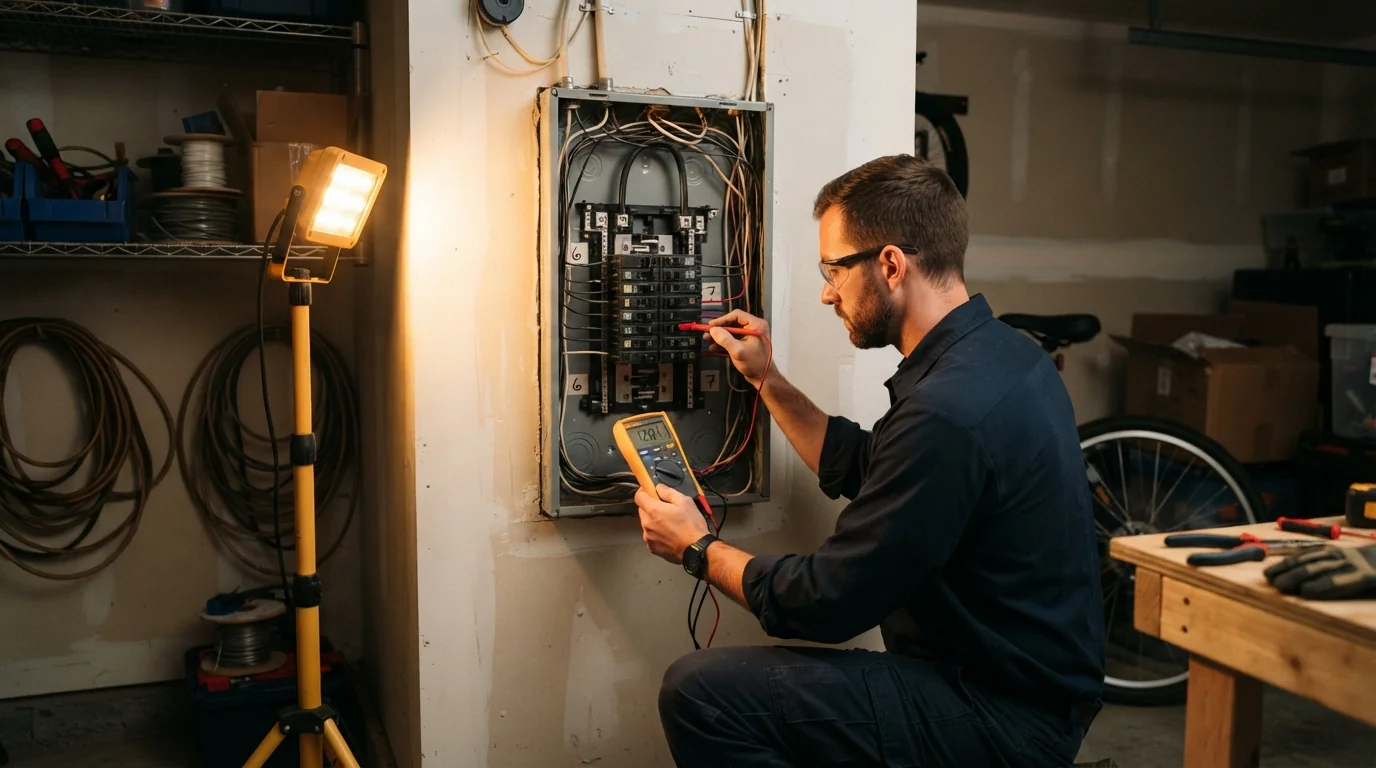
AC disconnect and HVAC wiring in Oklahoma City covers the electrical side of heating and cooling equipment: the disconnect box beside the condenser, the flexible whip into the unit, the breaker and wire sized to the nameplate, and dedicated circuits for mini-splits, furnaces and air handlers. We replace corroded or burned parts, correct undersized breakers and wire new equipment for the HVAC installer.
Where the HVAC tech hands off to the electrician
What the electrical side of an AC system includes
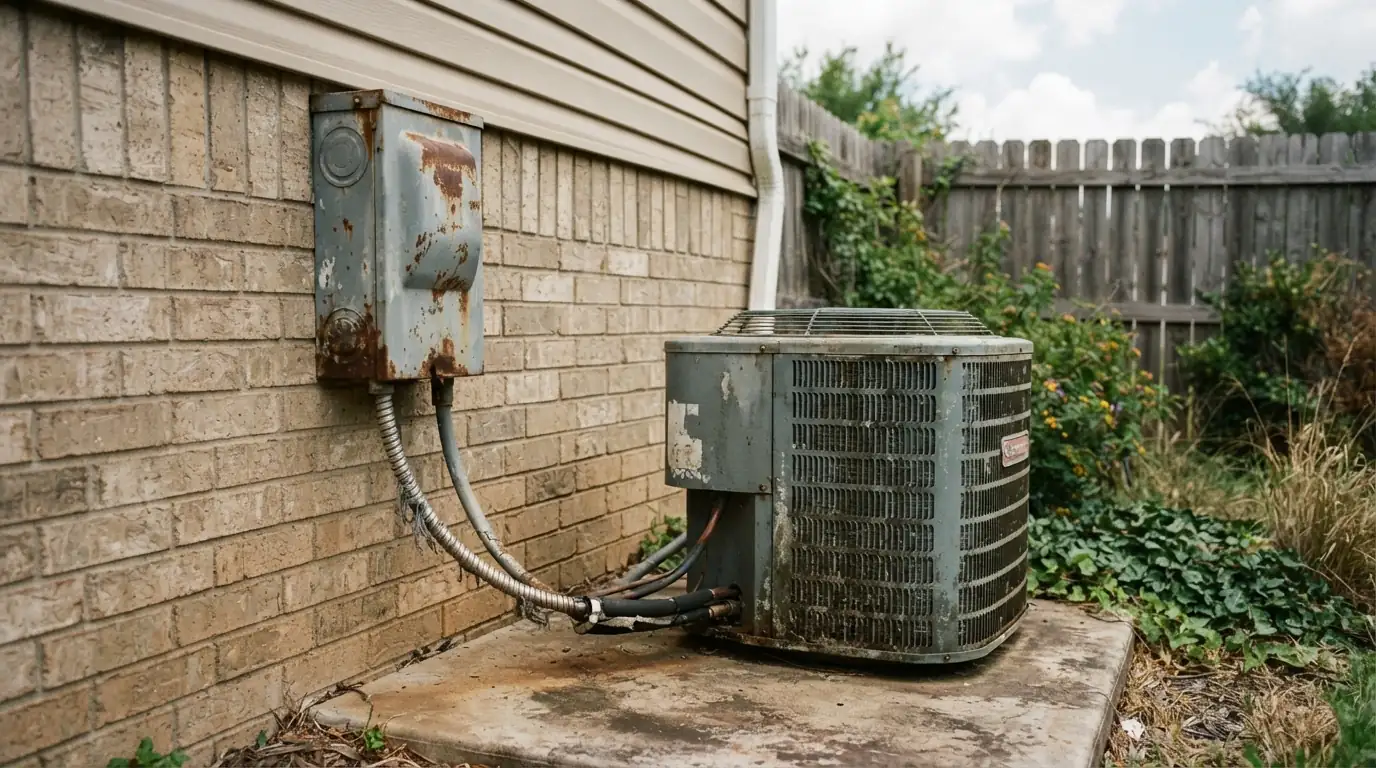
An outdoor condenser sits in the sun and the rain for fifteen or twenty years, and the small gray disconnect box beside it ages with it. Contacts corrode, pull-out blocks burn, the flexible whip into the unit cracks and lets water in. The symptom looks like an air conditioner problem: no cooling, a tripped breaker, a unit that clicks and quits. Often the fix is a part that costs far less than a compressor.
We work alongside HVAC contractors rather than instead of them. When the problem is the supply to the equipment, we fix it. When new equipment goes in, we size the breaker and wire to the nameplate, set a new disconnect within sight of the unit, and run dedicated circuits for mini-split heads, furnaces and air handlers so the HVAC installer can connect and commission.
What moves the price
What sets the price of HVAC electrical work
- Part replaced A whip is quick; a disconnect and breaker together take longer.
- Wire size correction Undersized wire back to the panel means a new run.
- Distance to the panel New circuits for mini-splits scale with length.
- Number of indoor heads Multi-zone mini-splits need more wiring.
- Panel space A full panel may need tandems or a subpanel.
- After-hours calls Summer evening emergencies cost more than scheduled work.
- Permits New circuits are permitted; like-for-like repairs usually are not.
National 2026 figures put residential service calls at about $79 to $179 and dedicated circuits at roughly $200 to $900 each. Planning ranges, not our price.
Sub-jobs this page covers
The three HVAC electrical jobs we do most
Condenser disconnect replacement
The disconnect lets a technician kill power to the condenser at the unit. Old ones rust through, pull-out blocks overheat, and fused disconnects sometimes hold fuses sized for a different unit. We replace the box, the pull-out or fuses to match the condenser nameplate, and the whip, and seal the entries against water. It is a common summer call and usually a same-day fix. If the breaker at the panel shows heat damage too, we replace it in the same visit.
Whip and breaker sizing
Every condenser has a nameplate listing the minimum circuit ampacity and the maximum breaker size. Undersized wire or a breaker larger than the maximum is a common finding when equipment has been replaced over the years without the circuit being updated. We check the nameplate against the wire gauge and the breaker, correct whatever does not match, and replace a cracked or sun-rotted whip with a liquid-tight one. A correctly sized circuit protects both the wire and the compressor, and it stops the nuisance trips that come from a breaker working at its limit.
Mini-split and furnace circuits
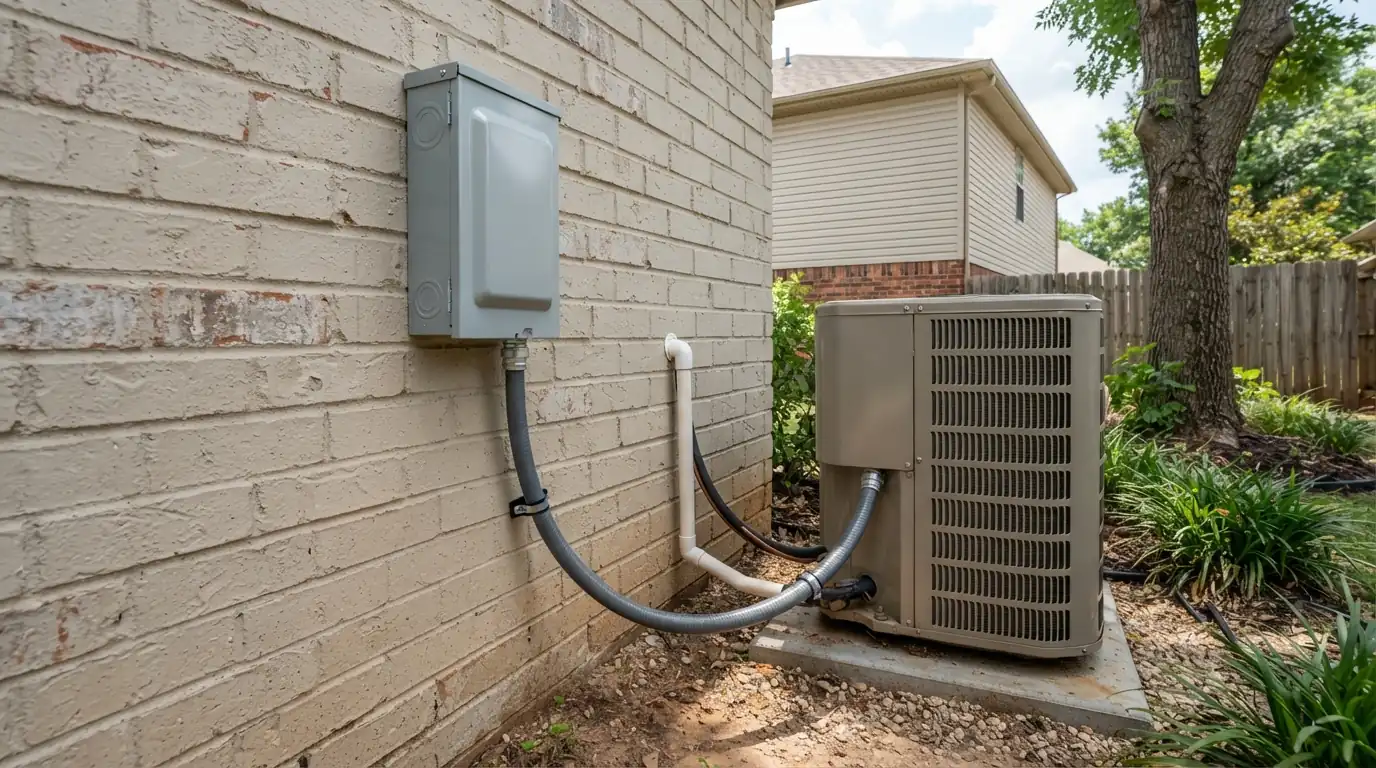
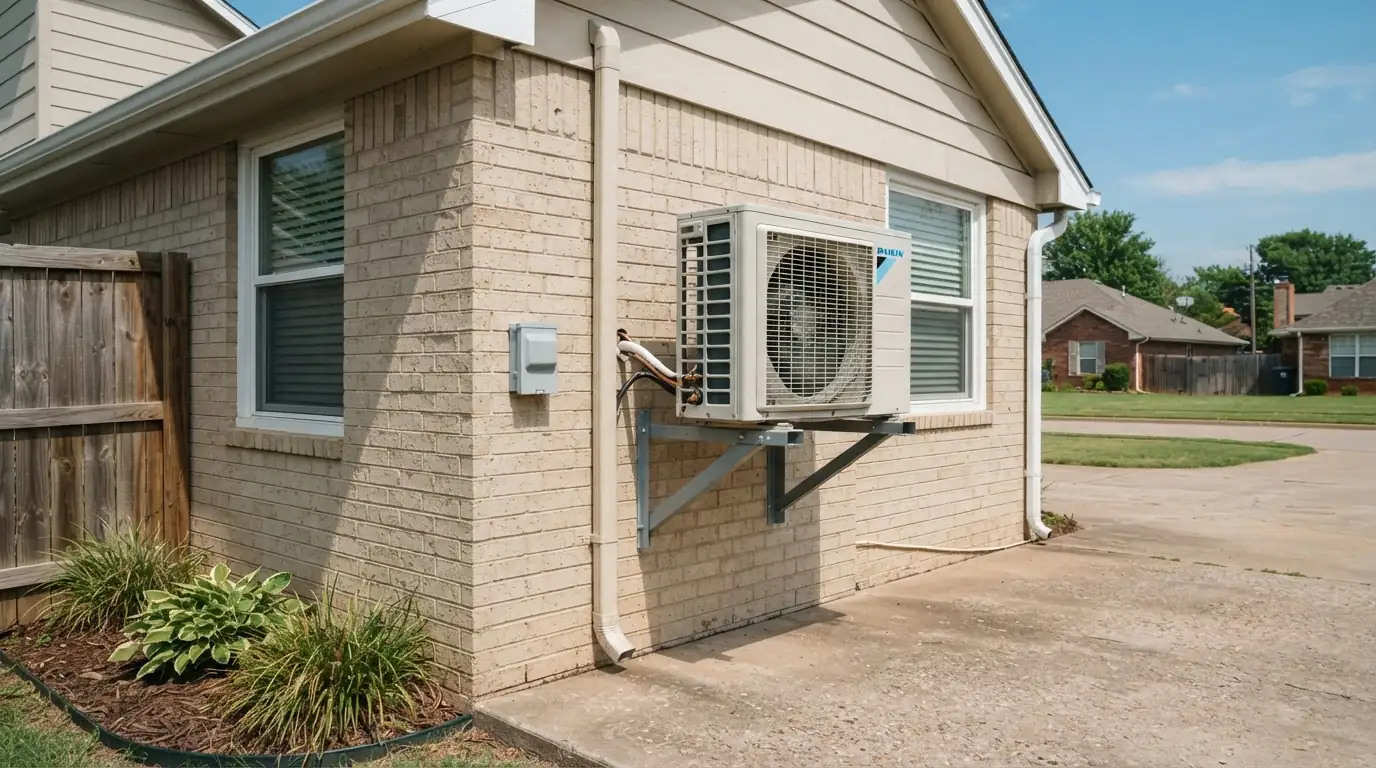
Ductless mini-splits need a dedicated circuit to the outdoor unit, a disconnect beside it, and in most systems a communication cable to each indoor head that the HVAC installer runs or we run with them. Furnaces and air handlers need their own circuit and a service switch at the unit. When a garage, addition or shop gets a mini-split, we plan the circuit from the panel or subpanel before the installer arrives, so installation day is not held up by the wiring.
Oklahoma City conditions
Summer load on Oklahoma City condensers
Air conditioning in Oklahoma City works hard for a long season. The first 90-degree day typically arrives around the first week of May, and the heat runs into September, which means condensers, disconnects and breakers spend months at full load in direct sun. That is why most of our disconnect and whip replacements happen in June and July, when a part that has been weakening for years finally fails on the hottest afternoon of the week.
DIY or call
What a homeowner can check before calling
| Check | Homeowner-safe? | What it tells you |
|---|---|---|
| Reset a tripped AC breaker once | Yes | A second trip means stop and call |
| Look at the disconnect for rust or burn marks | Yes, without opening it | Whether a replacement is due |
| Change the thermostat batteries | Yes | Rules out the simplest cause |
| Open the disconnect and test voltage | No | Live parts inside |
| Replace a whip or disconnect | No | Sizing and sealing matter |
Warning signs
Signs the problem is electrical, not the AC
- Condenser hums, clicks and quitsCould be electrical supply, not the compressor.
- Rust or scorch marks on the disconnectReplacement is due.
- Cracked or brittle whip into the unitWater can reach the connections.
- AC breaker warm or trippingCircuit or breaker problem.
- Lights dim when the AC startsA loose connection or undersized supply.
- Burning smell at the outdoor unitSwitch it off at the breaker and call.
- New unit installed on the old circuitNameplate and breaker may not match.
Step by step
From a dead condenser to a cooling house
- Check the supply
Voltage at the disconnect and the unit with the call running.
- Find the failed part
Disconnect, whip, breaker or wire, tested directly.
- Match the nameplate
Breaker and wire sized to the equipment label.
- Repair or wire
Replace parts or run the new circuit and disconnect.
- Hand back to cooling
Unit started with you watching, or ready for the HVAC installer.
Questions we get about this job
AC disconnect and HVAC wiring questions
It can be. We check voltage at the disconnect and the unit before anyone replaces a capacitor or a contactor.
Yes. We handle the electrical supply and they handle the equipment.
A failing breaker, a worn whip, undersized wire or a compressor drawing too much current. We test the circuit first.
Yes, a dedicated circuit with a disconnect at the outdoor unit.
The line is answered 24/7 and summer outages go to the front of the schedule.
It can be. Corroded contacts overheat and a rusted box can let water reach live parts.
New circuits do. Replacing a disconnect or whip like for like usually does not.
Same category
More outdoor and commercial work
Hot Tub & Pool Wiring
Spa GFCI disconnect and more.
About Hot TubRV Outlet Installation
30 amp RV outlets and more.
RV Outlet Installation detailsParking Lot Lighting Repair
Pole lights out or cycling and more.
See Parking Lot Lighting RepairStorm Shelter Electrical
Shelter lighting and outlet and more.
How we handle Storm Shelter ElectricalAC quit on a hot afternoon?
Call any hour. We check the electrical supply to the unit first and fix the disconnect, whip or breaker if that is the problem.