Updated October 2026
Quick answer
Electrical troubleshooting in Oklahoma City is a diagnostic visit for problems without an obvious cause: lights that flicker or dim, dead outlets on one wall, a breaker that keeps tripping, or a panel that buzzes or feels warm. We map the affected circuit, test voltage under load, check connections with a thermal camera, and trace the fault to the device, splice, breaker or service connection responsible, then repair it.
Warning signs
Symptoms worth a diagnostic visit
- Lights flicker across several roomsPossible neutral or service problem.
- Outlets dead with the breaker onA failed connection or tripped GFCI.
- Breaker trips repeatedlyOverload, fault or failing breaker.
- Buzzing at the panelA poor connection heating up.
- Warm switch or outlet platesA loose or burning connection.
- Lights dim when appliances startUndersized circuit or loose connection.
- Mild shocks from appliancesA grounding fault; call now.
Step by step
How we trace a fault
- Ask the right questions
When, where and under what conditions it happens.
- Map the circuit
Which outlets, lights and switches share it.
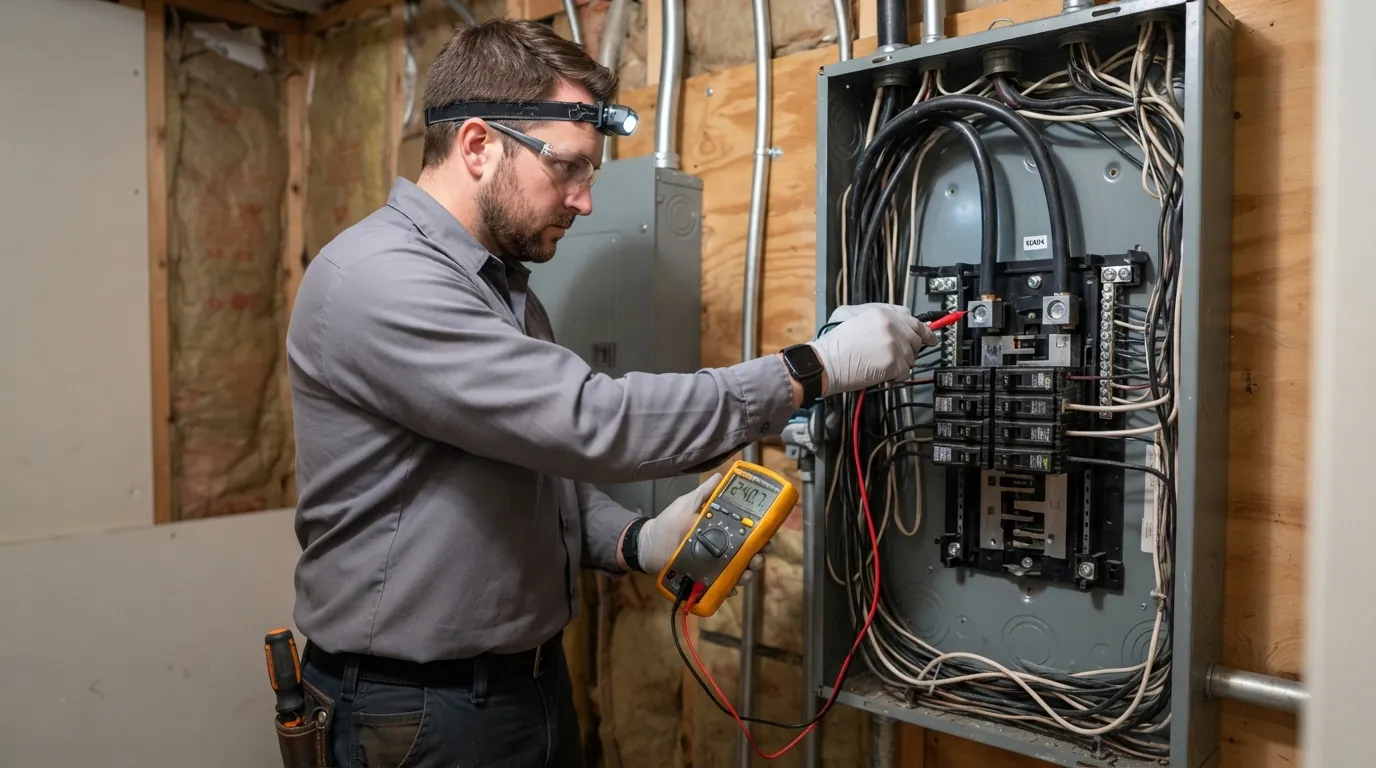
- Measure and scan
Voltage under load, thermal check at the panel and devices.
- Open in order
Boxes checked along the chain until the fault appears.
- Repair and retest
Fixed, then retested under the same conditions.
Why the symptom is rarely where the fault is
What a troubleshooting visit involves
Circuits run from the panel through a chain of outlets, switches, lights and splices. When one connection in the chain loosens or burns, everything downstream can go dead or flicker, while the failed point itself sits hidden in a box on another wall. Replacing the outlet that stopped working rarely fixes it. Following the chain does.
Our visits start with questions: when it started, what was running, whether it happens in wind or heat or when the AC kicks on. Then we map which outlets and lights share the circuit, measure voltage at rest and under load, look for heat with a thermal camera at the panel and at suspect devices, and open boxes in order until the loose, burned or backstabbed connection turns up. The repair comes after the cause is found.
Sub-jobs this page covers
The four problems we trace most
Flickering or dimming lights
Lights that flicker when the AC or a microwave starts can point to a loose neutral, an overloaded circuit, a failing connection at the panel or a problem on the utility side. Flicker in one fixture is usually the fixture, the bulb or the dimmer; flicker across the house is more serious. We measure voltage on both legs under load, check the neutral connection at the panel and meter base, and trace single-circuit flicker to the loose connection responsible. If the fault is on the utility side, we document the readings and contact the utility.
Dead outlets on one wall
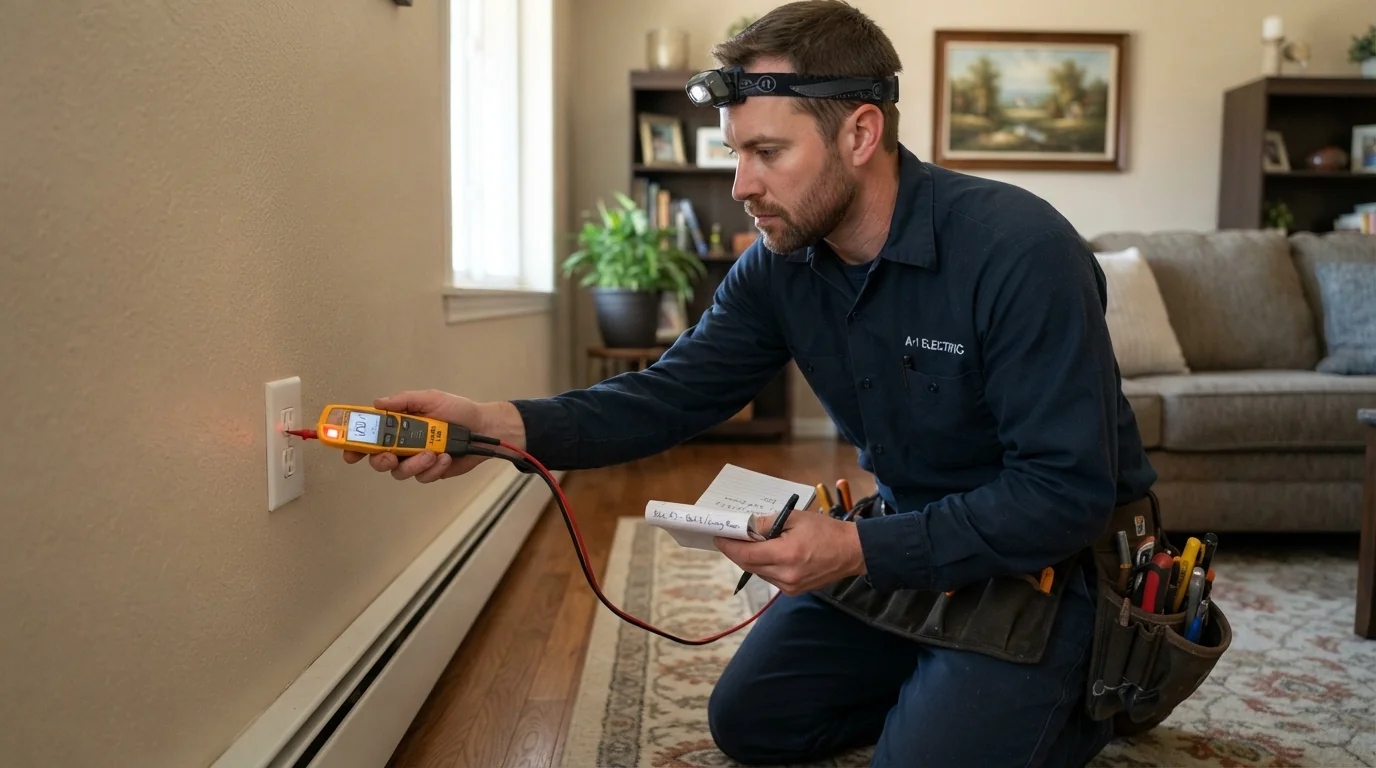
A run of dead outlets usually means a tripped GFCI somewhere else, often in a bathroom, garage or outside, or a connection that has failed at the last working outlet in the chain. We check for tripped GFCIs first, then open the boxes in order from the last live outlet, where backstabbed connections and burned splices are common. The failed connection is remade on screw terminals and the rest of the chain is checked for the same problem, since one failed backstab usually means others on the run are not far behind.
Breaker that keeps tripping
A breaker that trips repeatedly is responding to an overload, a short, a ground fault or an arc fault, or it has failed itself. We measure the current on the circuit, unplug and test the loads, check the wiring for damage, and test the breaker with the circuit disconnected. The fix might be moving a heavy appliance to its own circuit, repairing a damaged cable, replacing a failed device or replacing the breaker, but never simply fitting a larger one.
Buzzing or warm panel
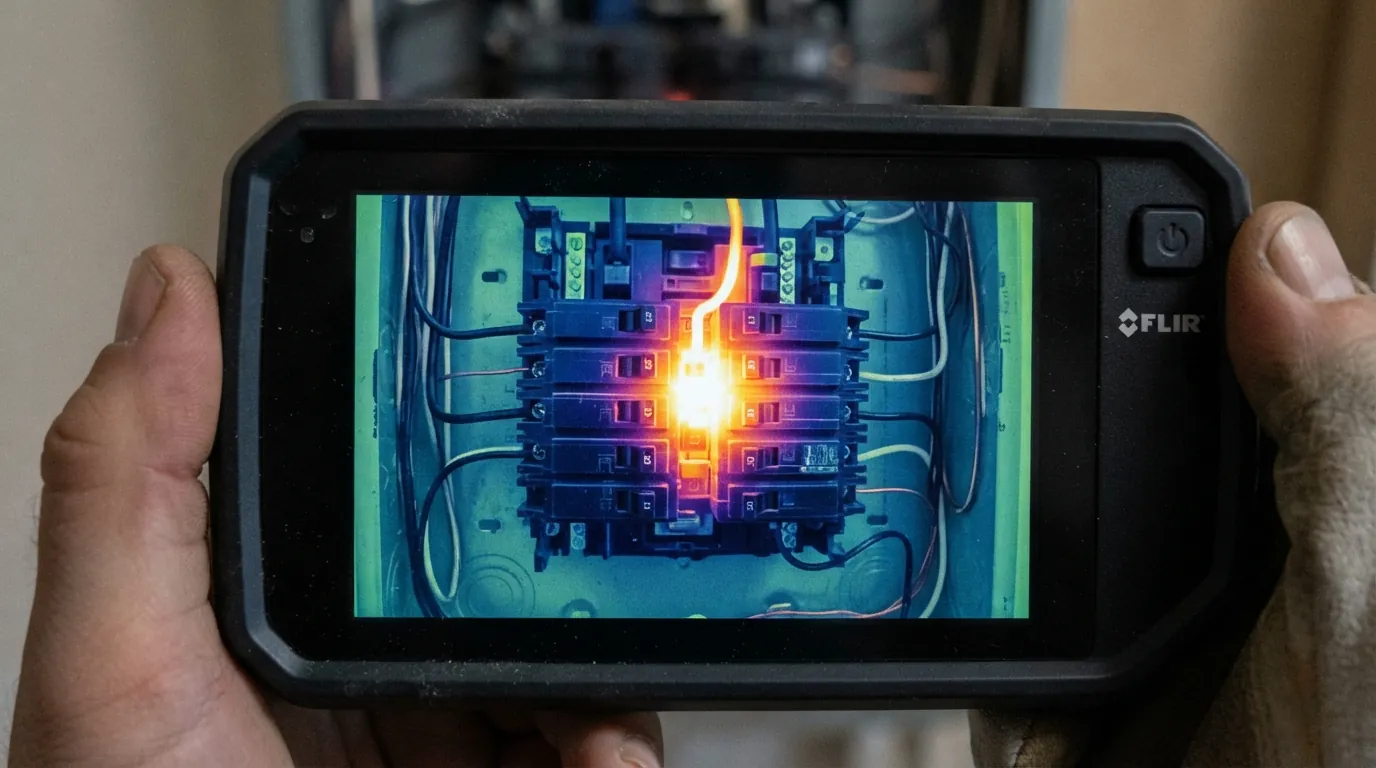
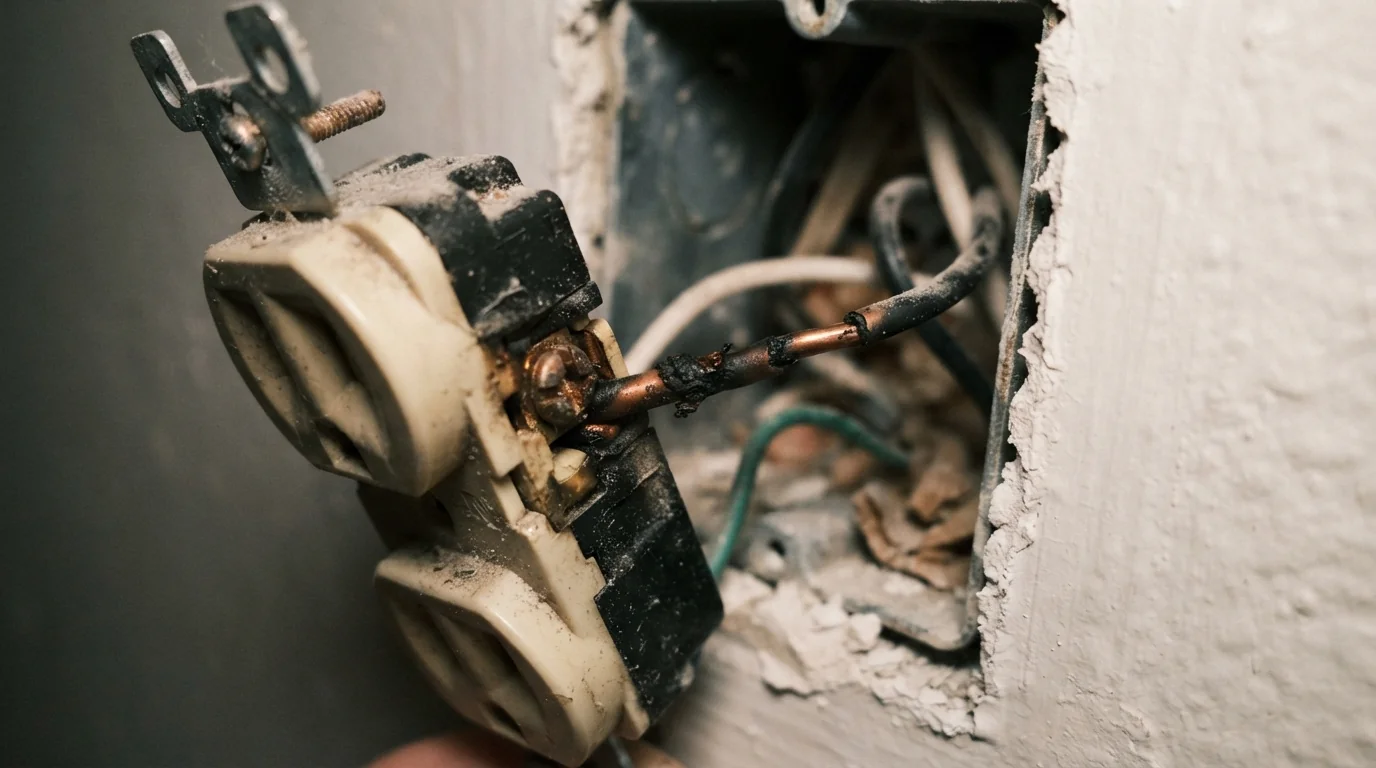
A panel should be silent and cool. Buzzing, crackling or warmth means current is flowing through a poor connection somewhere inside, often a loose lug, a breaker not seated on the bus, or a corroded connection. We check it with a thermal camera, tighten or repair the connection, replace damaged breakers and inspect the bus. If the panel is a Federal Pacific or Zinsco unit or shows bus damage, we recommend replacing it, and we explain the thermal image so you can see exactly which connection was running hot.
Oklahoma City conditions
What older and newer Oklahoma City homes tend to fail at
Oklahoma City has houses from almost every decade of the last hundred years, and they fail in different ways. Older homes tend to show loose splices, worn devices, ungrounded circuits and, in some, aluminum branch wiring or knob and tube. Newer homes are more likely to trip AFCI and GFCI breakers doing exactly what they were designed to do, catching a real fault on the circuit. Knowing the age of the house tells us where to start looking, but the testing is what finds the answer.
Something electrical not right, but not sure what?
Call and describe it. We ask the right questions, trace the circuit and fix the actual fault.
What is included
What a diagnostic visit includes
- Questions about when and how the problem happens
- Circuit mapped outlet by outlet
- Voltage tested at rest and under load
- Thermal scan of the panel and suspect devices
- Boxes opened in order along the chain
- Fault repaired on screw terminals or new parts
- Retest under the same conditions
What moves the price
What sets the price of troubleshooting
- Time to find the fault Some faults show up in minutes; intermittent ones take longer.
- Number of circuits affected One circuit versus several.
- What the fault is A loose connection is quick; damaged cable in a wall is not.
- Access Attic and crawlspace splices take longer to reach.
- Parts Devices, breakers or panel parts.
- After-hours Night and weekend calls cost more.
- Follow-up repairs Larger repairs quoted separately once found.
National 2026 figures put residential service calls at about $79 to $179 and labor at $75 to $150 per hour. Troubleshooting is billed for the time it takes to find the fault.
Questions we get about this job
Troubleshooting questions
A tripped GFCI elsewhere or a failed connection at the last working outlet.
A slight dip can be; noticeable flicker across the house should be checked.
Usually, with the right questions and testing under the conditions that cause it.
It can be. It means a poor connection is heating up. Call soon.
Many faults are found within an hour or two; intermittent ones can take longer.
Most faults are repaired once found; bigger repairs are quoted first.
No. Reset once; if it trips again, leave it off and call.
Same category
More emergency and troubleshooting work
Electrical Safety Inspection
Pre-purchase inspection and more.
Electrical Safety InspectionService Mast & Meter Base Repair
Bent or pulled mast and more.
About Service MastStorm Damage Electrical Repair
Downed service drop and more.
Storm Damage Electrical Repair detailsCircuit Breaker Replacement
Breaker that will not reset and more.
See Circuit Breaker ReplacementNeed someone to actually find the problem?
Call any hour. We test until the fault shows itself, then fix it and retest under the same conditions.