Updated October 2026
Quick answer
Commercial generator installation in Oklahoma City means sizing a standby unit to the business loads that must keep running, often on three-phase service, installing an automatic transfer switch rated for the building, coordinating the fuel supply and the pad, and permitting the work. We plan which loads are carried, from refrigeration and servers to lighting and point of sale, and set up a maintenance schedule after startup.
What makes a commercial install different
What a commercial generator project involves
A commercial generator project starts with a question the business owner answers, not the electrician: what has to keep running? For a restaurant it is refrigeration, freezers and enough lighting to close safely. For a clinic it may be medical equipment, lighting and the network. For a warehouse it may be refrigeration, security and the servers. The answer decides whether the generator carries the whole building or a critical loads panel.
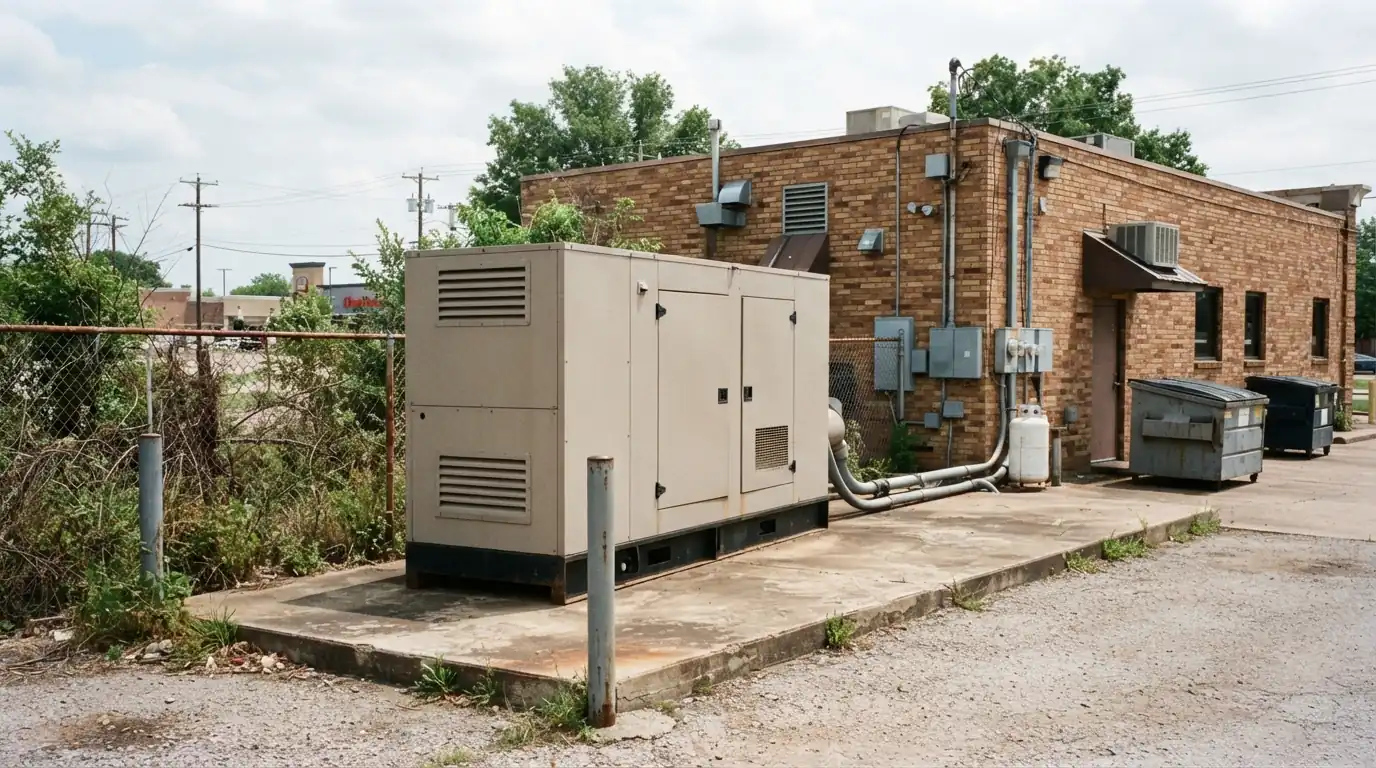
From there the job is larger than a home install. Many businesses run on three-phase power, so the generator and the transfer switch must match it. The unit may be air cooled for smaller loads or liquid cooled for larger ones, fuel may be natural gas or diesel, and the pad, clearances and exhaust have to suit a commercial site. We plan all of it, coordinate with the gas supplier and the utility, and permit the work.
Choosing between the options
Whole building or critical loads
| Approach | Best for | Trade-off |
|---|---|---|
| Whole-building backup | Businesses that must run normally in an outage | Largest unit and cost |
| Critical loads panel | Refrigeration, lighting, network only | Other loads wait for the grid |
| Portable generator hookup | Small shops with light loads | Manual setup, limited runtime |
| Battery plus generator | Data or medical loads that cannot blink | Most equipment and planning |
What moves the price
What decides the cost of a commercial generator
- Generator size Load decides the unit, from air cooled to liquid cooled.
- Service type Three-phase transfer switches cost more than single-phase.
- Fuel Natural gas piping versus diesel tank and delivery.
- Pad and site work Clearances, exhaust and access for service.
- Critical loads panel Separating selected circuits adds work.
- After-hours installation Work outside business hours.
- Permits and utility Electrical, gas and utility coordination.
Commercial generators are quoted from a load study. National 2026 figures put electrician labor at about $75 to $150 per hour; the generator, transfer switch and fuel work make up most of the cost.
What is included
What a commercial generator project includes
- Load study from real equipment and bills
- Generator sized to the chosen loads
- Transfer switch matched to voltage and phase
- Fuel supply planned and permitted
- Pad, clearances and exhaust suitable for the site
- After-hours cutover scheduled
- Documented load test and maintenance plan
Sub-jobs this page covers
Units, transfer switches and maintenance
Standby units for businesses
We install Generac and Kohler commercial standby generators sized to the loads the business must keep running. Smaller businesses often fit air-cooled units in the same range as large homes, while restaurants, clinics and warehouses usually need liquid-cooled units. We run the load study from actual equipment nameplates and utility bills, not guesses, so the unit is neither undersized for the lunch rush nor oversized and underloaded, which shortens engine life. The study also shows whether future equipment, such as another cooler, will fit on the same unit.
Three-phase transfer switches
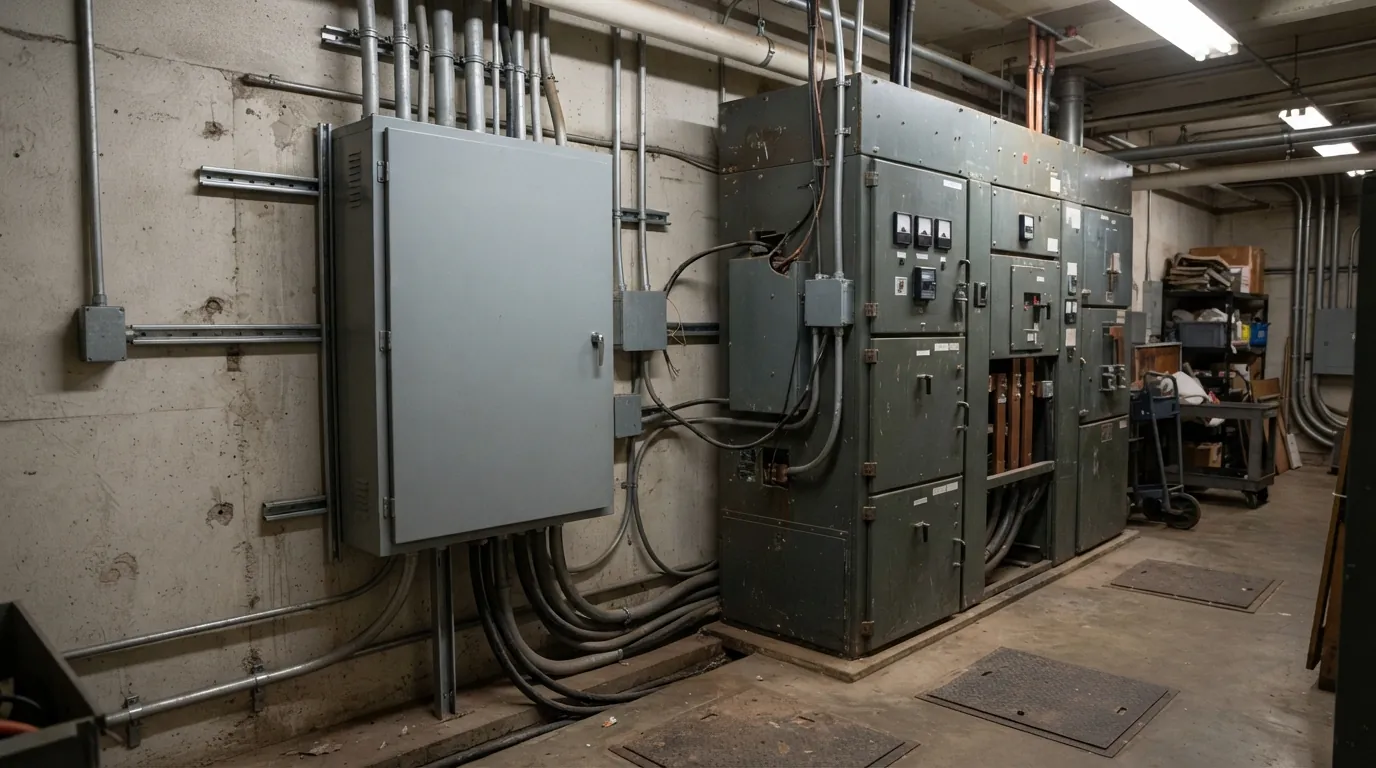
The transfer switch must match the building service: voltage, phase and ampacity. For three-phase buildings that means a three-phase automatic transfer switch, placed ahead of the distribution panel for whole-building backup or feeding a critical loads panel for selected circuits. We coordinate the outage needed to install it with the business, usually after hours, and with the utility where the service has to be disconnected. Signage at the switch and the panel tells staff what is on generator power and how the system behaves during an outage, and we walk the manager through a test transfer.
Generator load and maintenance plans
A commercial generator that is not exercised and serviced is the one that fails when it is needed. After startup we set the weekly exercise schedule, document the load test, and offer a maintenance plan covering oil and filters, battery load tests, coolant on liquid-cooled units, and a periodic transfer test under real load. The business gets a record it can show its insurer. Fault codes and missed exercise cycles are reviewed at every visit, so small problems are fixed before the next storm rather than during it.
Oklahoma City conditions
Outages and businesses in the Oklahoma City metro
Oklahoma City businesses face the same outages as homes, only with more at stake per hour. Severe storms and tornado season, and occasional ice in the colder months, bring outages that can last from minutes to days. For a business with refrigeration, medical equipment or servers, those events are the reason a standby generator pays for itself, and the planning is the same whether the building is in the city or out in the metro.
Step by step
From the load study to startup
- Load study
Equipment and bills reviewed, critical loads chosen.
- Choose unit and switch
Sized to the loads and matched to the service.
- Site, fuel and permits
Pad location, gas or diesel, permits filed.
- Install and transfer
After-hours cutover to the transfer switch.
- Startup and load test
Documented test, exercise schedule and maintenance plan.
Questions we get about this job
Commercial generator questions
It depends on the loads that must keep running. We size it from a load study.
Yes, if sized for it, or it can carry a critical loads panel to keep costs down.
Yes, with a matching three-phase transfer switch.
Natural gas runs as long as the supply holds; diesel needs a tank and deliveries but works where gas is not available.
Most work happens during business hours; the cutover is scheduled after hours.
Yes, with maintenance plans and documented load tests.
Yes, electrical and fuel permits, plus utility coordination.
Same category
More backup power and EV work
Home Battery Backup Installation
Tesla Powerwall and more.
See Home Battery Backup InstallationStandby Generator Installation
Generac and Kohler air-cooled units and more.
How we handle Standby Generator InstallationGenerator Transfer Switch Installation
Manual transfer switch and more.
Generator Transfer Switch InstallationEV Charger Installation
Level 2 hardwired charger and more.
About EV Charger InstallationBusiness that cannot afford to go dark?
Call to plan a load study. We size the generator to what has to keep running and handle the install around your hours.