Updated October 2026
Quick answer
Outlet and switch installation in Oklahoma City covers replacing worn or damaged receptacles, adding GFCI protection in kitchens, bathrooms, garages and outdoors, installing USB and tamper-resistant outlets, converting two-prong outlets to grounded three-prong where a ground exists or can be added, and swapping switches and dimmers. We test each circuit before and after, and fix loose or backstabbed connections we find along the way.
Why a simple swap is sometimes not simple
What outlet and switch work involves
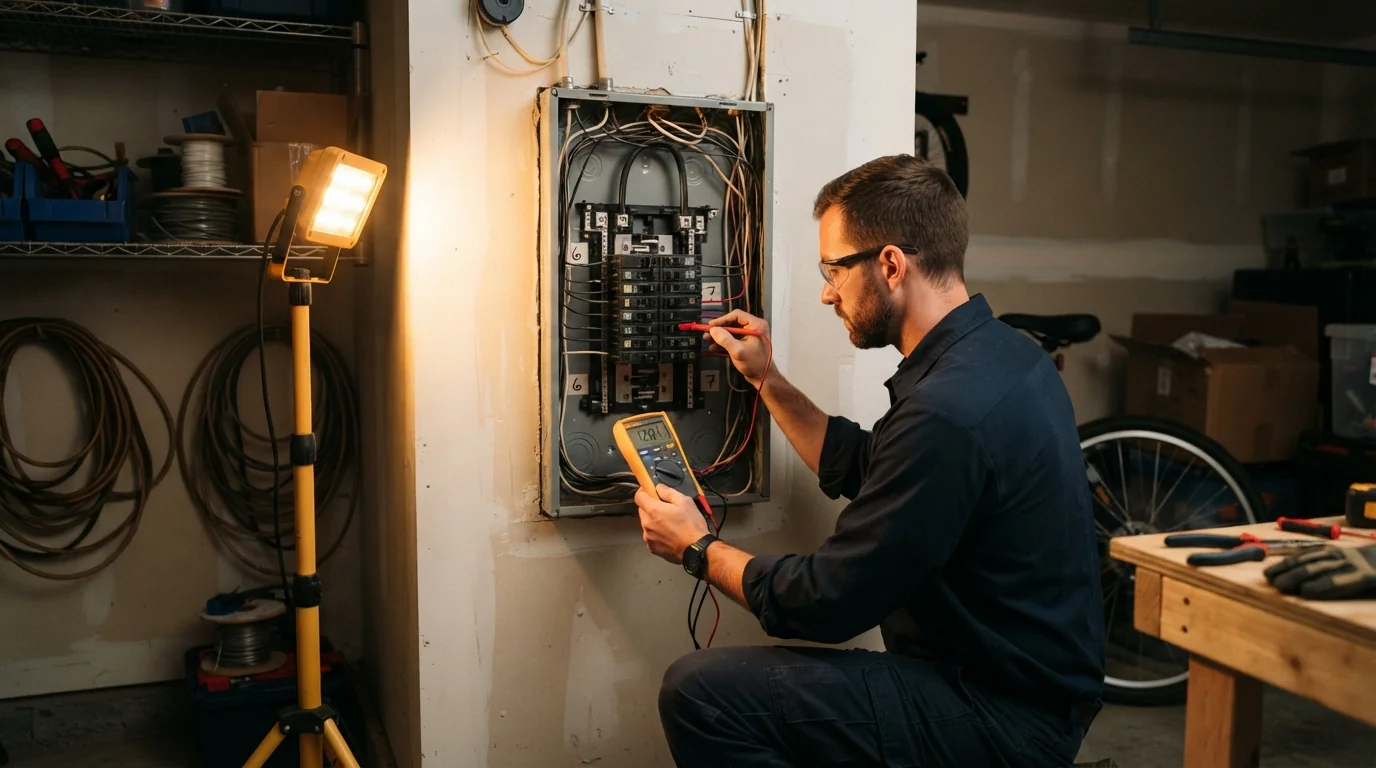
Replacing an outlet is one of the most common household electrical jobs, and one of the most commonly done wrong. Backstabbed connections pushed into the back of the device loosen over time; a two-prong outlet swapped for a three-prong one without a ground looks safer and is not; a GFCI wired backward protects nothing downstream. Most of what we fix on these calls is the result of a quick swap years ago.
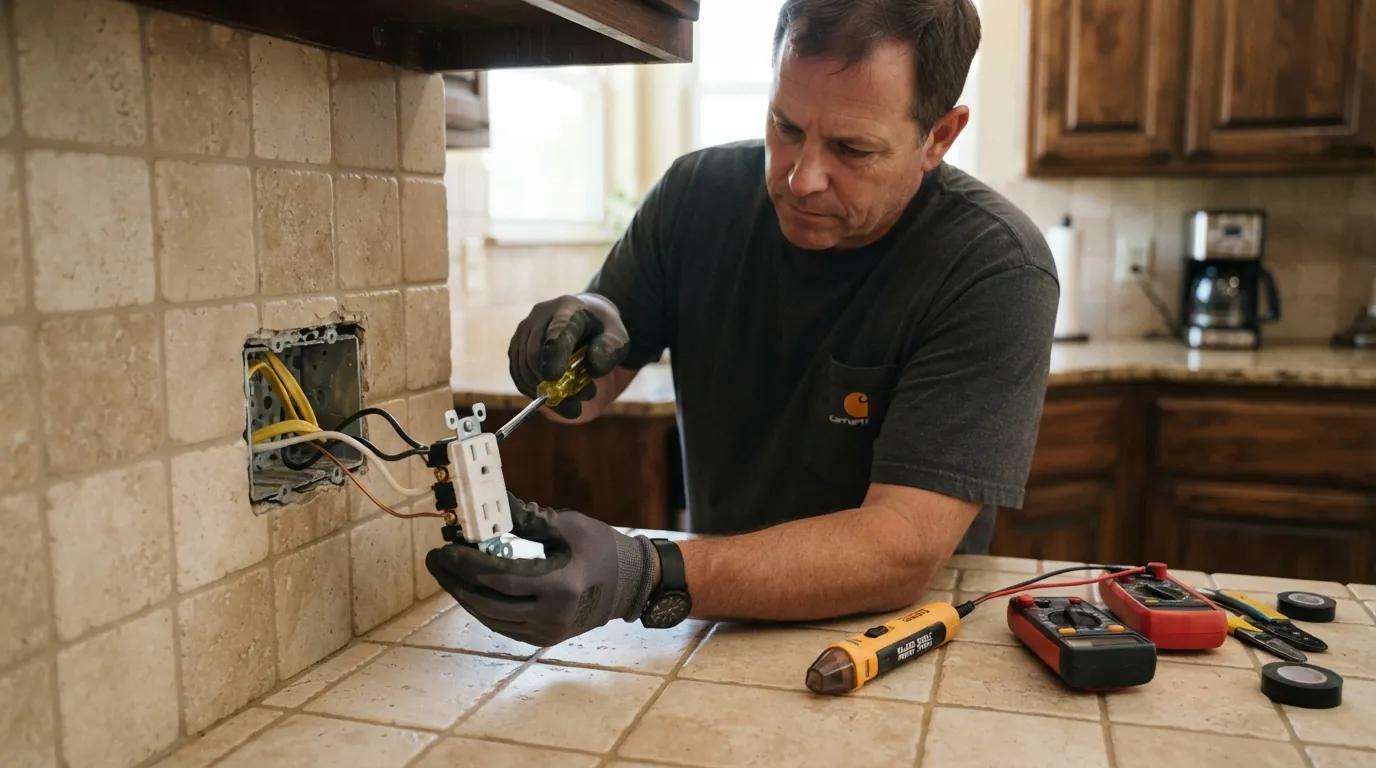
We test every circuit we touch: polarity, ground and GFCI function. Worn devices are replaced with screw-terminal connections rather than backstabs, loose connections are remade, and three-prong outlets go in only where a ground is actually present, or where code allows GFCI protection in its place with the correct label. The goal is outlets that work and stay working.
What moves the price
What sets the price of outlet and switch work
- Number of devices Several outlets or switches in one visit share the trip.
- Device type GFCI, USB and smart devices cost more than standard ones.
- Grounding Running a ground takes longer than a GFCI with a label.
- Box condition Shallow or damaged boxes may need replacement.
- Connections found Loose, burned or aluminum connections need extra work.
- New locations Adding an outlet where none exists needs new wiring.
- Permit Usually not needed for device swaps; new circuits are permitted.
Outlet and switch work is quoted by device count. National 2026 figures put residential service calls at about $79 to $179 and labor at $75 to $150 per hour.
Sub-jobs this page covers
The four outlet and switch jobs we do most
GFCI outlets in kitchens and baths
Kitchens, bathrooms, laundry areas, garages, exterior outlets and unfinished basements need GFCI protection, and many older homes have none. We add GFCI outlets at the first receptacle on each run so the downstream outlets are protected too, or use GFCI breakers where that is cleaner. Each protected outlet is tested so you know which button resets which outlets. A GFCI that will not reset or trips constantly is diagnosed, not just replaced. Where a GFCI protects outlets in another room, such as a garage outlet feeding the patio, we label it so the next reset is easy to find.
USB and tamper-resistant outlets
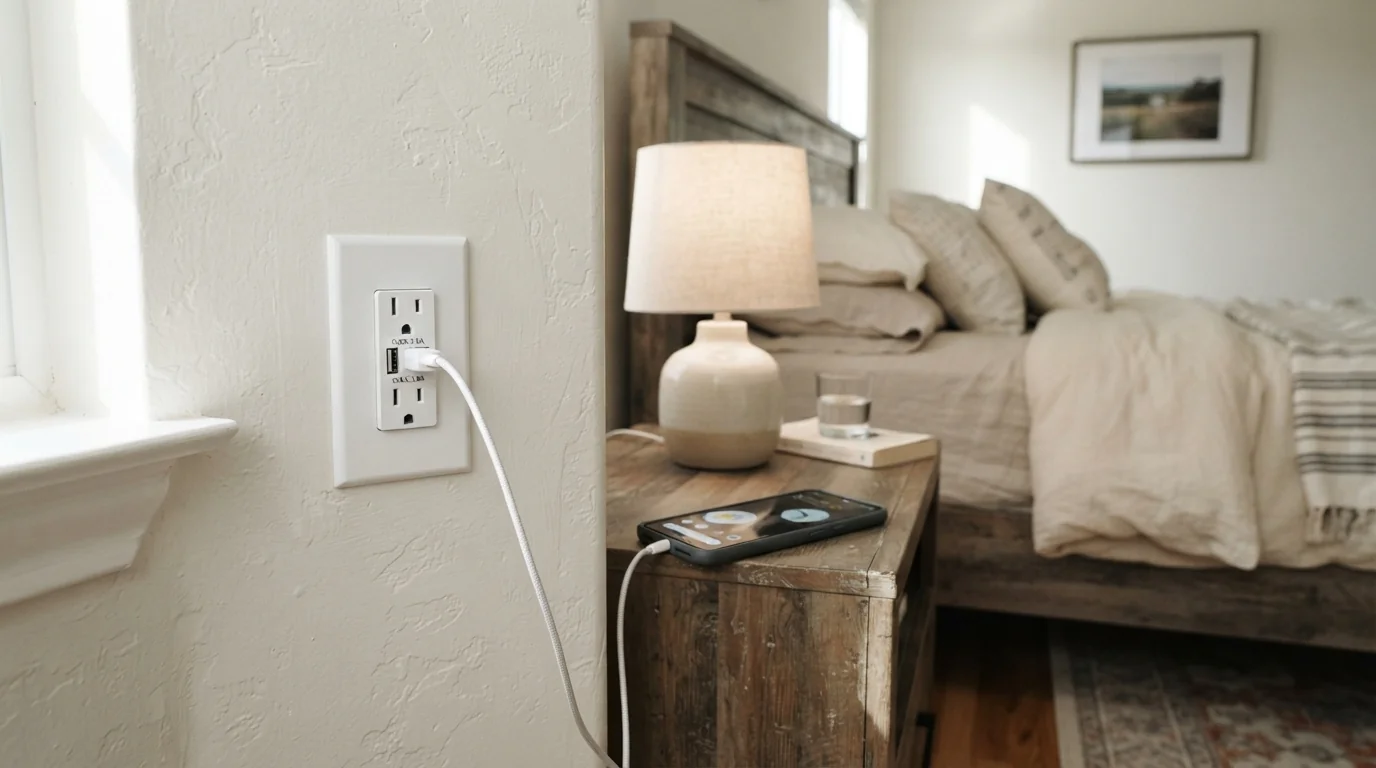
USB outlets at nightstands, desks and kitchen counters free up the plug and end the charger clutter. Tamper-resistant outlets have internal shutters that keep children from inserting objects, and current code expects them in homes. Both are simple swaps on a sound circuit. We check the box is deep enough for a USB outlet, which is bulkier than a standard one, and remake any loose or backstabbed connections while the device is out. Tamper-resistant USB outlets combine both features where children and chargers share a room, which is common at bedsides and kitchen islands.
Three-prong grounded replacements
Two-prong outlets mean the circuit likely has no ground. Swapping in a three-prong outlet without a ground hides the problem. The right fixes are to run a ground where the walls allow it, or to protect the ungrounded outlet with a GFCI and label it no equipment ground, which code permits. We test each outlet, tell you which option applies, and recommend a rewire when most of the house is ungrounded. Surge strips and some electronics need a true ground to work properly, which is worth knowing before choosing the GFCI route.
Switch and dimmer swaps
Worn switches, switches that feel warm, and dimmers that buzz or flicker with LED bulbs are all quick replacements. We match dimmers to the LED fixtures they control, replace worn toggles and rockers, and check whether the box has a neutral if you want a smart switch later. 3-way switches that no longer work together are traced with a tester rather than guessed from wire colors. Worn switches often turn out to be backstabbed as well, so we move the wires to the screw terminals while the switch is out and check the box for heat damage.
Oklahoma City conditions
Two-prong outlets and older wiring in Oklahoma City
Homes in Oklahoma City built or expanded between the mid-1960s and early 1970s may carry aluminum branch wiring, and the CPSC lists warm cover plates, flickering lights and dead circuits among its warning signs, all of which show up first at outlets and switches. Before replacing a device in a house of that age, we check whether the wire behind it is aluminum, because a standard outlet connected directly to aluminum is exactly the connection that fails.
DIY or call
What a homeowner can safely swap
| Task | Homeowner-safe? | What goes wrong |
|---|---|---|
| Swap a cover plate | Yes | Nothing |
| Reset a tripped GFCI | Yes | If it will not reset, stop |
| Replace a standard outlet on copper wire | With the breaker off and a tester | Backstabbed connections, reversed polarity |
| Install a GFCI | Better left to us | Line and load reversed, no downstream protection |
| Any device on aluminum wire | No | Standard devices are not rated for it |
Warning signs
Outlet and switch problems not to ignore
- Warm outlet or switch plateA failing connection behind it.
- Plugs fall out of the outletWorn contacts that arc.
- Scorch marks on a receptacleEvidence of arcing.
- Outlet dead with the breaker onA tripped GFCI or loose connection.
- Switch that buzzes or sparksA worn switch or loose wire.
- Three-prong outlet tester shows open groundNo ground behind the outlet.
- GFCI that will not resetA fault on the circuit or a failed device.
Step by step
How the visit runs
- Test before touching
Polarity, ground and GFCI on each circuit.
- Check what is behind the device
Wire type, box depth, connections.
- Replace or add
Screw-terminal connections, correct device type.
- Protect
GFCI where required, labels where used in place of a ground.
- Test again
Every outlet and switch confirmed working.
Questions we get about this job
Outlet and switch questions
Usually a tripped GFCI elsewhere on the run, or a loose connection upstream. We trace it.
Only with a ground, or with GFCI protection and a no-equipment-ground label.
Kitchens, bathrooms, laundry, garages, outdoors and unfinished basements, among other locations.
Yes, when they are listed devices installed in boxes deep enough for them.
Stop using it and call. Heat at an outlet means a failing connection.
Usually not for replacements. New circuits and new outlet locations can.
Yes, by extending a nearby circuit where code allows or running a new one.
Same category
More wiring and safety work
Detached Garage & Shop Wiring
Feeder to the outbuilding and more.
Detached Garage detailsKnob & Tube Replacement
Attic and wall removal and more.
See KnobSmoke & CO Detector Installation
Hardwired interconnected alarms and more.
How we handle SmokeUnderground Electrical & Trenching
Conduit and direct-burial cable and more.
Underground ElectricalOutlets that do not work or do not fit your plugs?
Call to book a visit. We test, replace and protect every outlet and switch on the list and leave them working.