Updated October 2026
Quick answer
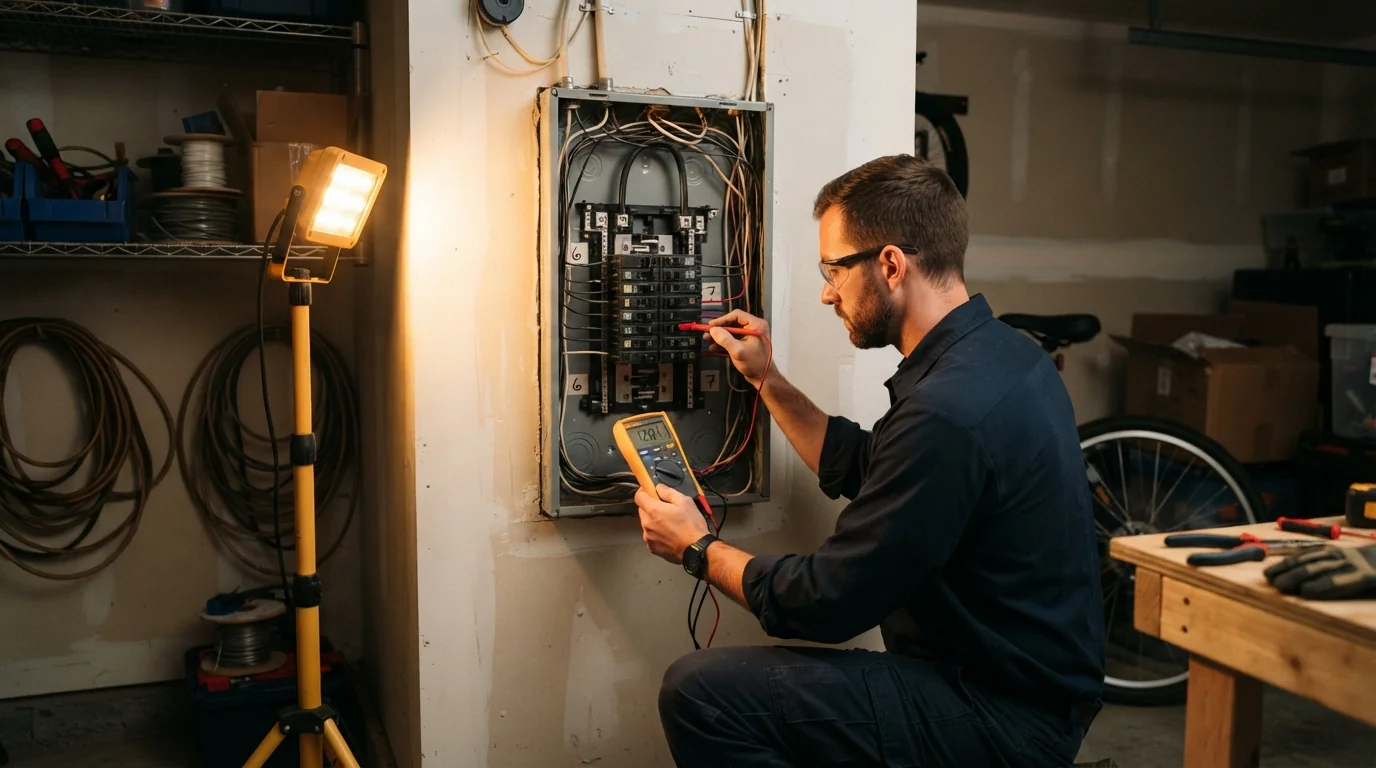
An electrical safety inspection in Oklahoma City is a room-by-room check of the panel, service entrance, grounding and bonding, a sample of receptacles and switches with a tester, GFCI and AFCI protection, smoke and CO alarms, and visible wiring in the attic and crawlspace. It ends with a written list of findings, ranked by urgency, with photos. It is not a municipal code inspection, and we say so on the report.
What is included
What we check
- Service entrance, meter base and mast
- Panel brand, condition, breaker sizing and heat
- Grounding electrode and bonding
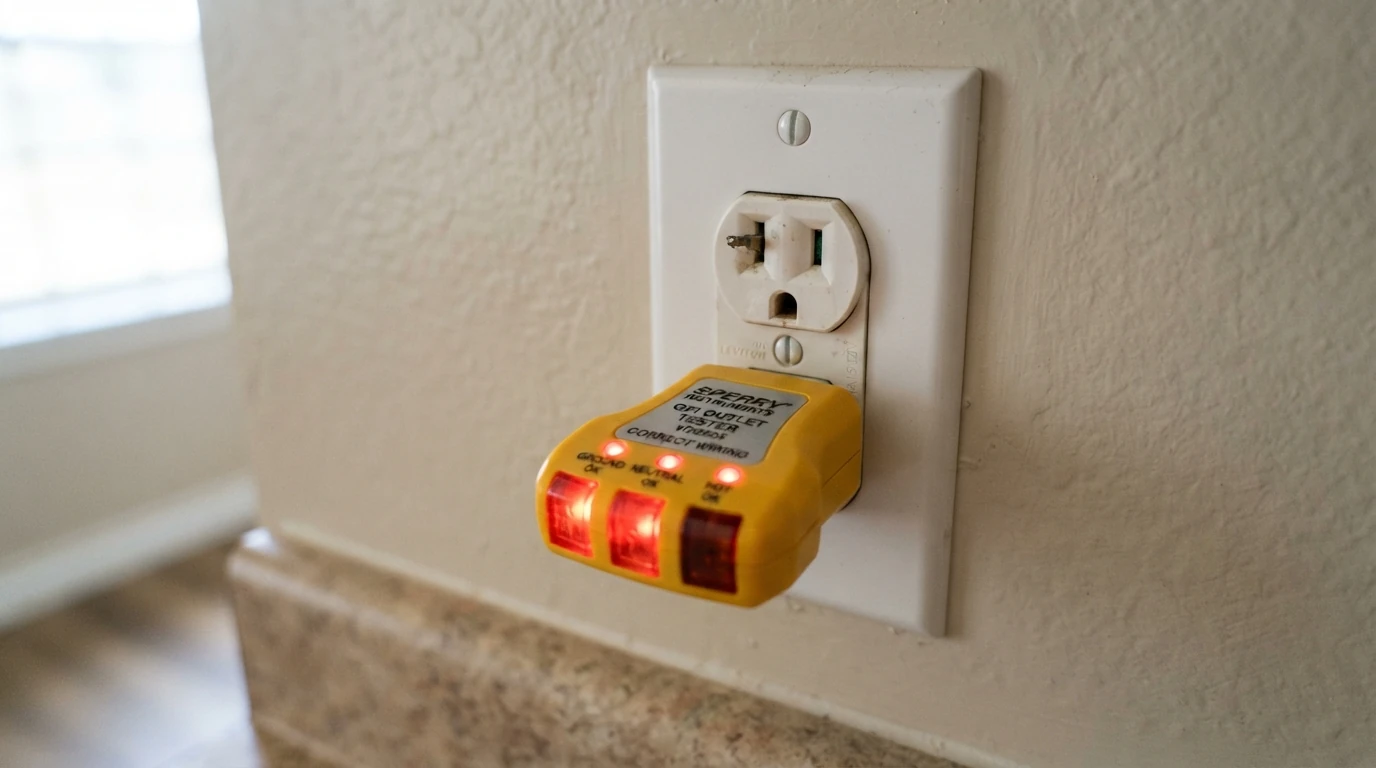
- Outlets tested for polarity, ground and GFCI
- AFCI and GFCI protection where required
- Smoke and CO alarms present and working
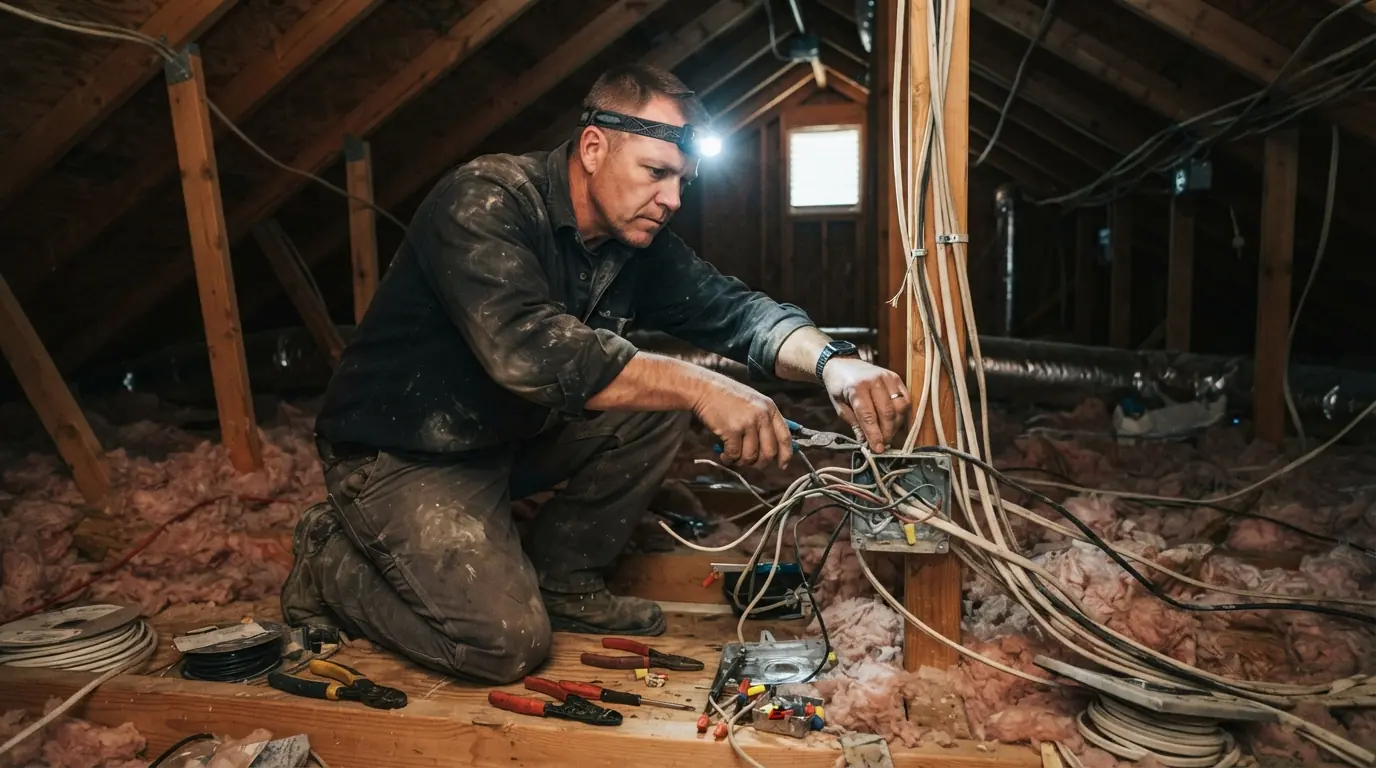
- Attic and crawlspace wiring and junction boxes
What an electrician sees that a general inspector may not
What an electrical safety inspection covers
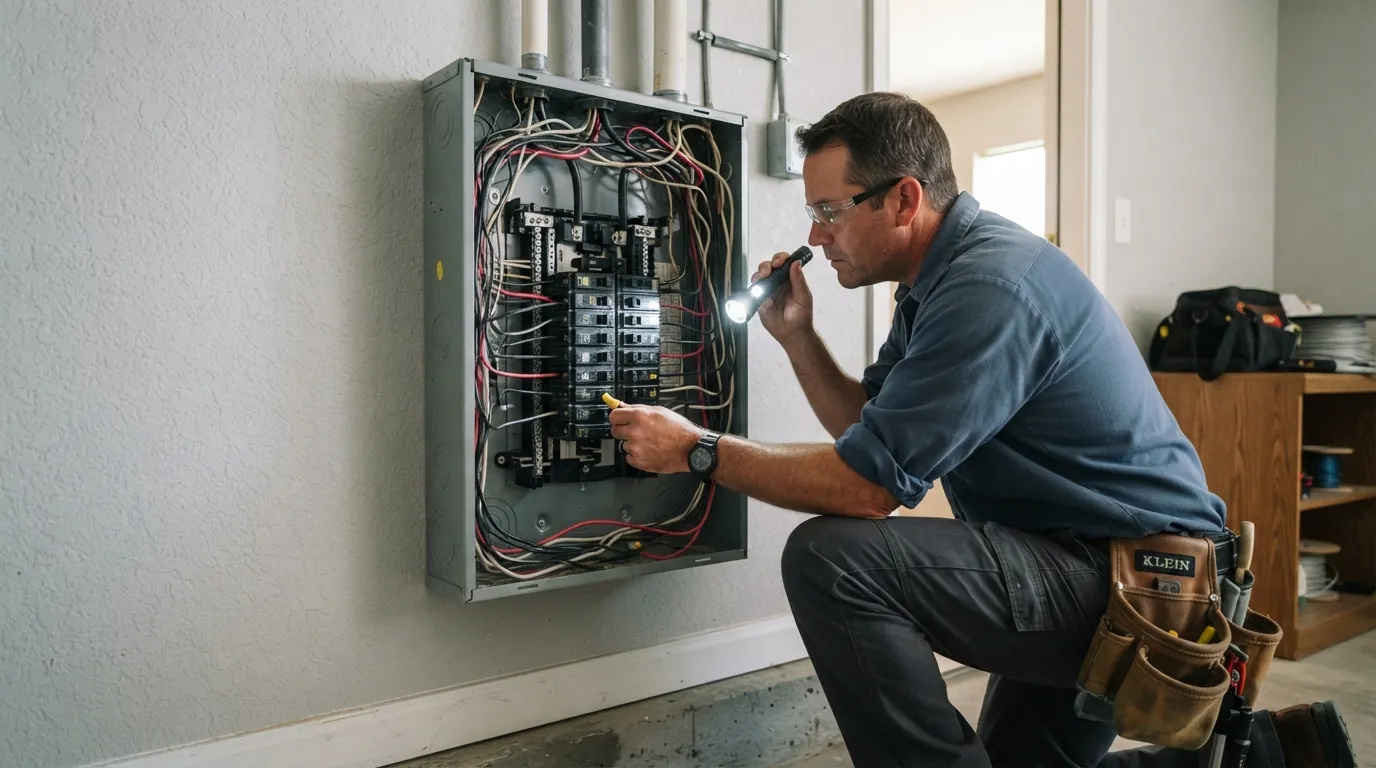
A home inspector covers the whole house in a few hours and flags electrical items for further evaluation. An electrical safety inspection is that further evaluation: the panel cover comes off, breakers are checked for heat and correct sizing, the grounding electrode and bonding are traced, outlets are tested for polarity, ground and GFCI function, and the attic is checked for open splices and damaged cable.
The result is a written report ranked by urgency: items to fix now because they are a fire or shock risk, items to plan for, and items that are simply out of date but acceptable. Photos go with every finding. If we find something dangerous, such as a scorched breaker or a live open splice, we make it safe on the spot and tell you before we leave.
Sub-jobs this page covers
The four reasons people book one
Pre-purchase inspection
Before you close on a house, especially one built before the 1980s, an electrician can tell you whether the panel is a known problem brand, whether there is aluminum branch wiring or knob-and-tube, and whether the service can carry what you plan to add. You get a ranked list you can use in negotiation, with photos. It takes a couple of hours and often pays for itself in the first repair credit. We also flag what the house would need for an EV charger, a heat pump or a remodel, so the budget after closing holds no surprises.
Insurance-requested inspection
Insurers sometimes ask for an electrical inspection on older homes, especially when a Federal Pacific or Zinsco panel, a fuse box, aluminum wiring or knob-and-tube is suspected. We inspect, document what is there, and write a report that answers the questions the insurer asked. If repairs are needed to keep the policy, the report lists them clearly so you can schedule them and send proof once they are done. We can also schedule those repairs directly, so the follow-up report and the invoice arrive together for the insurer.
Post-storm inspection
Lightning, flooding and wind can damage wiring in ways that are not obvious: a nearby strike that took out the garage door opener may also have damaged a breaker or a receptacle, and water in a crawlspace or basement can reach junction boxes. After a storm we check the service entrance, the panel, surge-exposed equipment and any areas that took water, and document damage for an insurance claim. Photos, the date and the affected equipment go into a short report your adjuster can use, and anything unsafe is switched off until it is repaired.
Rental turnover check
Landlords and property managers use a turnover check between tenants to catch damaged outlets, missing cover plates, dead GFCIs, missing smoke alarms and anything a tenant tampered with. We move through the unit quickly, fix small items on the spot where agreed, and list the rest. It keeps units safe and heads off the complaint call from the next tenant in the first week. We can keep a simple record per unit, so each turnover starts from what was checked last time and repeat problems stand out quickly.
Oklahoma City conditions
After a spring storm season
Central Oklahoma sees some of the densest spring lightning in the country: the Oklahoma Climatological Survey maps cloud-to-ground strikes across the state from two decades of detection data, and the March to May season stands out. After a spring like that, many of our inspections start with a homeowner who lost a garage door opener or an HVAC board and wants to know whether anything else in the house took a hit. We check the likely paths and document it for the claim.
How long it takes
How long it takes
Most single-family inspections take two to three hours on site. Larger homes, outbuildings and houses with limited attic access take longer. The written report with photos follows the same day or the next, so it can be used before a closing or an insurance deadline.
Step by step
How the inspection runs
- Agree the purpose
Purchase, insurance, storm or rental, and what the report needs to answer.
- Service and panel
Entrance, panel, breakers, grounding and bonding.
- Room by room
Outlets, switches, GFCI, AFCI, fixtures, alarms.
- Attic and crawlspace
Visible splices, cable condition, junction boxes.
- Written findings
Ranked by urgency, with photos, the same or next day.
What moves the price
What sets the price of an inspection
- House size More rooms and circuits take longer.
- Access Attic and crawlspace access affects time.
- Purpose Pre-purchase, insurance and storm reports differ in scope.
- Findings Making dangerous items safe on the spot adds time.
- Outbuildings Detached garages and shops add circuits to check.
- Report detail Photo documentation is included.
- Scheduling Rush inspections before a closing date may cost more.
Inspections are quoted by house size and purpose. National 2026 figures put residential service calls at about $79 to $179, with labor at $75 to $150 per hour.
Questions we get about this job
Electrical inspection questions
No. It is a private safety inspection by an electrician, not a municipal permit inspection.
Most single-family homes take two to three hours.
Dangerous items are made safe on the spot. Other repairs are listed and scheduled.
Yes, and the report can support repair requests or credits.
Yes. We write the report to answer the insurer questions.
If anything electrical failed during the storm, yes. Damage can be hidden.
Yes, including turnover checks between tenants.
Same category
More emergency and troubleshooting work
Service Mast & Meter Base Repair
Bent or pulled mast and more.
Service MastStorm Damage Electrical Repair
Downed service drop and more.
About Storm Damage Electrical RepairElectrical Troubleshooting
Flickering or dimming lights and more.
Electrical Troubleshooting detailsCircuit Breaker Replacement
Breaker that will not reset and more.
See Circuit Breaker ReplacementNeed a clear answer about the wiring?
Call to book an inspection. We check the house panel to outlet and give you a ranked, photographed list of what we found.