Updated October 2026
Quick answer
Commercial EV charging station installation in Oklahoma City covers networked Level 2 chargers for workplaces, retail, hotels and apartments, DC fast chargers on three-phase service, and depot charging for fleets. The job starts with a load study and a site layout, then the service capacity, conduit or trenching to the parking spaces, the charger mounting and networking, and the permit. Load management lets more ports share the power available.
Workplaces, retail, apartments and fleets
What a commercial charging project involves
A commercial charging project is decided by three things: how many vehicles need to charge, how long they stay parked, and how much power the building can spare. Employees parked for eight hours do well on Level 2 chargers sharing a circuit through load management. Customers stopping for half an hour need faster Level 2 or DC fast charging. A fleet that returns to the depot overnight needs enough ports and power to have every vehicle full by morning.
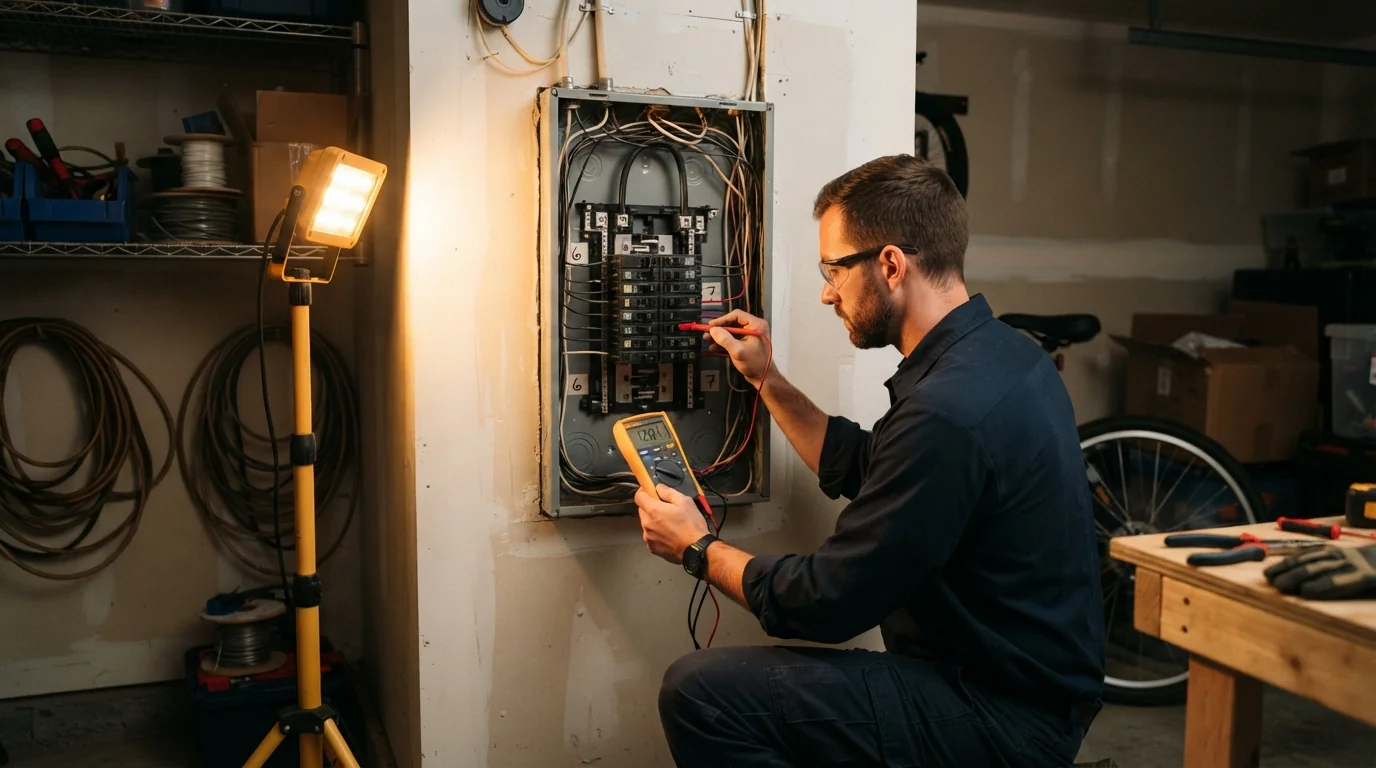
From there the work is a power project. We read the existing service and panel schedules, measure the actual load where we can, and lay out the chargers so the conduit runs are short and the parking spaces still work for drivers. DC fast chargers usually need three-phase service and often a new transformer or service change coordinated with the utility. Everything is installed to the electric vehicle charging article of the National Electrical Code and permitted.
Choosing between the options
Which charging setup fits your site
| Approach | Best for | Trade-off |
|---|---|---|
| Networked Level 2 | Workplaces, hotels, apartments | Slower per vehicle |
| DC fast charging | Retail stops and busy fleets | Highest power and cost |
| Mixed Level 2 and DC fast | Sites with short and long stays | More planning up front |
| Load-managed Level 2 | Many ports on limited power | Charging slows at peak use |
What moves the price
What decides the cost of a charging site
- Charger type Level 2 pedestals versus DC fast cabinets.
- Number of ports More ports mean more circuits or load management.
- Distance from the service Long trenches and conduit runs add cost.
- Service capacity Panel, transformer or service upgrades if needed.
- Networking Software, payment and access control.
- Site work Pads, bollards, signage and surface repair.
- Permits and utility Electrical permit and utility coordination.
Commercial charging is quoted from a load study and site layout. National 2026 figures put electrician labor at about $75 to $150 per hour; chargers, networking and any utility upgrade are priced separately.
What is included
What a commercial charging install includes
- Load study from bills and panel schedules
- Charger type matched to how long vehicles park
- Layout that keeps spaces usable and cables safe
- Service or panel capacity confirmed
- Spare conduit for future ports
- Chargers networked and tested
- Permit, inspection and utility coordination
Sub-jobs this page covers
Level 2, fast charging, fleets and load
Level 2 workplace and customer chargers
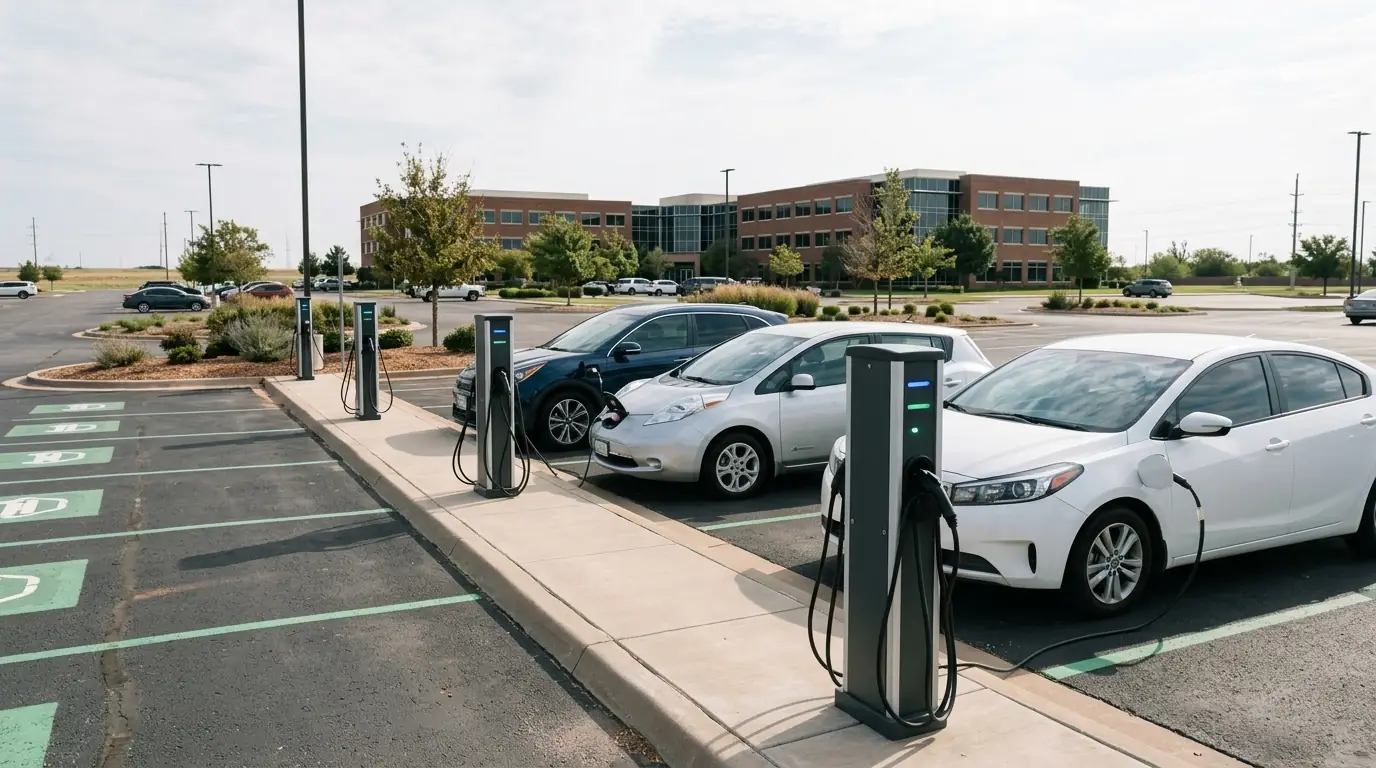
Most commercial sites start with Level 2: pedestal or wall-mounted chargers, often dual-port, on 208V or 240V circuits. We install networked units that let the owner set pricing or access, track sessions and share power between ports. Mounting heights, cable management and bollards are planned so cables are not run over and the spaces stay usable. In Oklahoma, chargers with less than 50 kilowatts of capacity, which covers Level 2 units, are exempt from the per-kilowatt-hour tax on electricity used for vehicle charging.
DC fast chargers
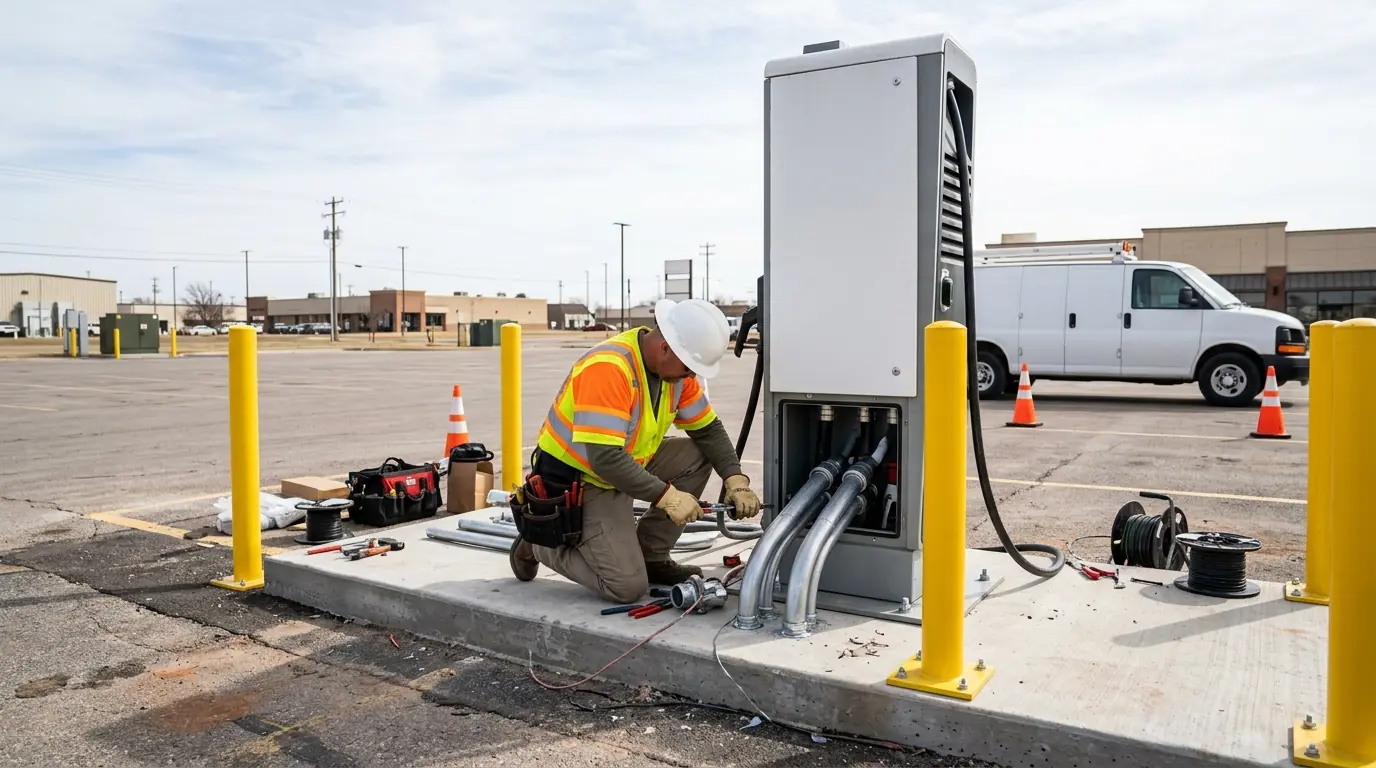
DC fast chargers deliver far more power and need it: typically three-phase service, heavy feeders and a pad for the charger cabinet. The electrical side often decides the project, from whether the existing transformer can carry the load to how far the chargers sit from the service. We work through the utility service request, the switchgear and feeders, the pads and conduit, and the commissioning with the charger manufacturer. Because fast chargers sit above the 50 kilowatt line in the state charging tax, operators plan their pricing with that in mind.
Fleet depot charging
Fleet charging is planned around the duty cycle: how many vehicles, how far they drive and how long they sit at the depot. Many fleets charge overnight on Level 2 with smart scheduling that spreads the load across the night, which keeps demand and service size down. Fleets with short dwell times or heavy vehicles may need a mix that includes DC fast charging. We size the service for the fleet you plan to have in a few years, and lay spare conduit for future ports while the trench is open.
Load management and service upgrades
Load management lets a group of chargers share a fixed amount of power, so a site can add ports without upgrading the service right away. When the building truly needs more capacity, we plan the service or panel upgrade, the utility coordination and the outage. Either way, the starting point is a load study from the utility bills and panel schedules, so the charging plan fits the building instead of tripping the main on the first hot afternoon. Many networked chargers can also cut back automatically when the building load peaks.
Oklahoma City conditions
EV growth around Oklahoma City
Oklahoma drivers are switching faster than many people expect. Electric vehicles registered in the state grew from about 5,000 in 2020 to about 57,000 in 2024, the fastest five-year growth of any state in one industry dataset, and public charging ports grew from 540 in 2023 to 640 in 2024. For Oklahoma City businesses, apartments and fleets, that means more drivers looking for a place to plug in while they work, shop or sleep.
Step by step
From load study to first charge
- Goals and load study
Vehicles, dwell times and available power reviewed.
- Layout and equipment
Charger type, ports and locations chosen.
- Permits and utility
Permit filed; service changes requested.
- Install and trench
Conduit, circuits, pads and chargers installed.
- Commission and train
Chargers networked, tested and handed over.
Questions we get about this job
Commercial EV charging questions
Level 2 suits long stays like workplaces and hotels; DC fast suits short stops and heavy fleet use.
Yes. Load management lets several ports share one supply.
Usually, and often a utility service change.
Yes, including shared parking with access control.
Networked chargers support pricing and access control set by the owner.
Yes. We file the permit and coordinate with the utility.
Yes. We lay spare conduit while the trench is open.
Same category
More EV and backup power work
Home Battery Backup Installation
Tesla Powerwall and more.
Home Battery Backup Installation detailsStandby Generator Installation
Generac and Kohler air-cooled units and more.
See Standby Generator InstallationGenerator Transfer Switch Installation
Manual transfer switch and more.
How we handle Generator Transfer Switch InstallationCommercial Generator Installation
Standby units for businesses and more.
Commercial Generator InstallationPlanning chargers for your business?
Call to set up a site visit and load study. We plan the chargers around your parking and your power.