Updated October 2026
Quick answer
Attic and whole-house fan installation in Oklahoma City covers powered attic ventilators on a thermostat and humidistat, solar attic fans that need no wiring, and whole-house fans that pull cool evening air through the house and push hot air out through the attic. We check that the attic has enough intake venting first, because a fan without intake air pulls conditioned air out of the house instead.
Why intake venting comes first
What an attic fan install involves
Heat builds in the attic all day and radiates into the ceilings below, which is why upstairs bedrooms and rooms under low roofs stay warm long after sunset. A powered attic ventilator switches on at a set temperature and pushes that air out, drawing cooler air in through the soffit vents. A whole-house fan does something different: in the evening, with windows open, it pulls outside air through the living space and exhausts it through the attic.
Both depend on intake air. If the soffit and gable vents are blocked or too small, a powered attic fan pulls air from the easiest source, which is often the conditioned house through ceiling gaps and light fixtures. That raises the cooling bill instead of lowering it. So we check the intake venting before recommending any fan, and tell you if adding vents is the better first step.
Choosing between the options
Which fan fits the house
| Fan | Best for | Trade-off |
|---|---|---|
| Powered attic ventilator | Hot attics with good intake venting | Needs a circuit and a thermostat |
| Solar attic fan | No easy power in the attic | Less airflow on cloudy days |
| Whole-house fan | Cooling the house on mild evenings | Needs open windows and a winter cover |
| More intake vents only | Attics with blocked or tiny soffits | Passive, no fan motor |
What moves the price
What sets the price of an attic fan
- Fan type Solar, powered attic or whole-house fans differ in price.
- Wiring Solar needs none; powered fans need a circuit.
- Roof or gable mount Roof penetrations need flashing and sealing.
- Intake venting Adding soffit or gable vents may come first.
- Whole-house fan size Larger houses need larger fans and more venting.
- Controls Thermostats, humidistats, timers or smart controls.
- Attic access Tight or hot attics slow the install.
Attic fan installs are quoted after an attic check. National 2026 figures put residential labor at about $75 to $150 per hour; fans and venting are priced separately.
Sub-jobs this page covers
Powered, solar and whole-house fans
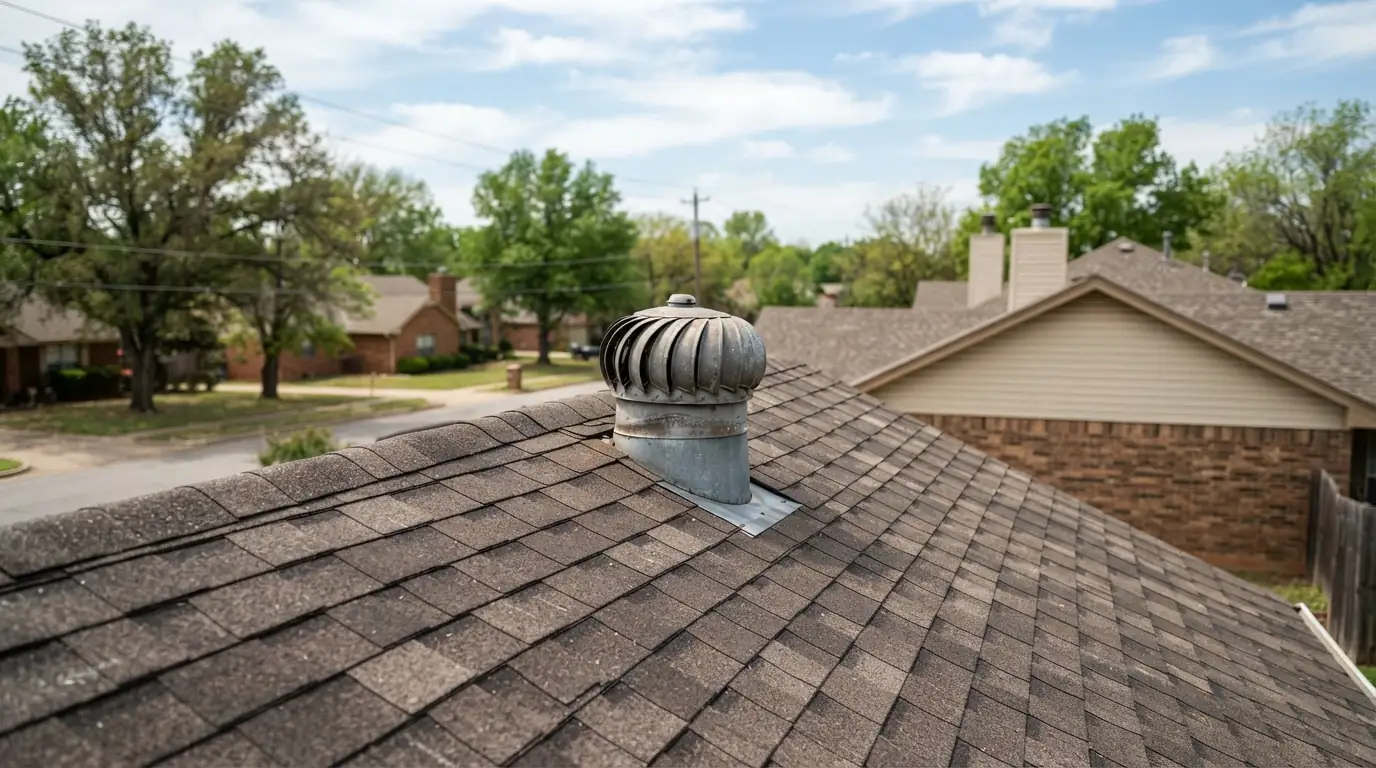
Powered attic ventilators
A roof or gable-mounted attic ventilator runs on a thermostat that switches it on when the attic reaches a set temperature, often with a humidistat for winter moisture. We wire it from a nearby circuit or a new one, mount the thermostat in the attic, and seal the roof or gable penetration properly. We set the thermostat so the fan runs when it helps and does not run all day pulling air from the house below. Any gaps around ceiling fixtures and the attic hatch are worth sealing at the same time.
Solar attic fans
Solar attic fans run from their own small panel with no wiring to the house, so they cost nothing to operate and suit houses where a new circuit to the attic is awkward. They move less air than a powered fan and slow down on cloudy days, which is fine for most attics. We check that the unit is sized for the attic volume and that the intake venting can keep up, then install it and seal the roof penetration.
Whole-house fans
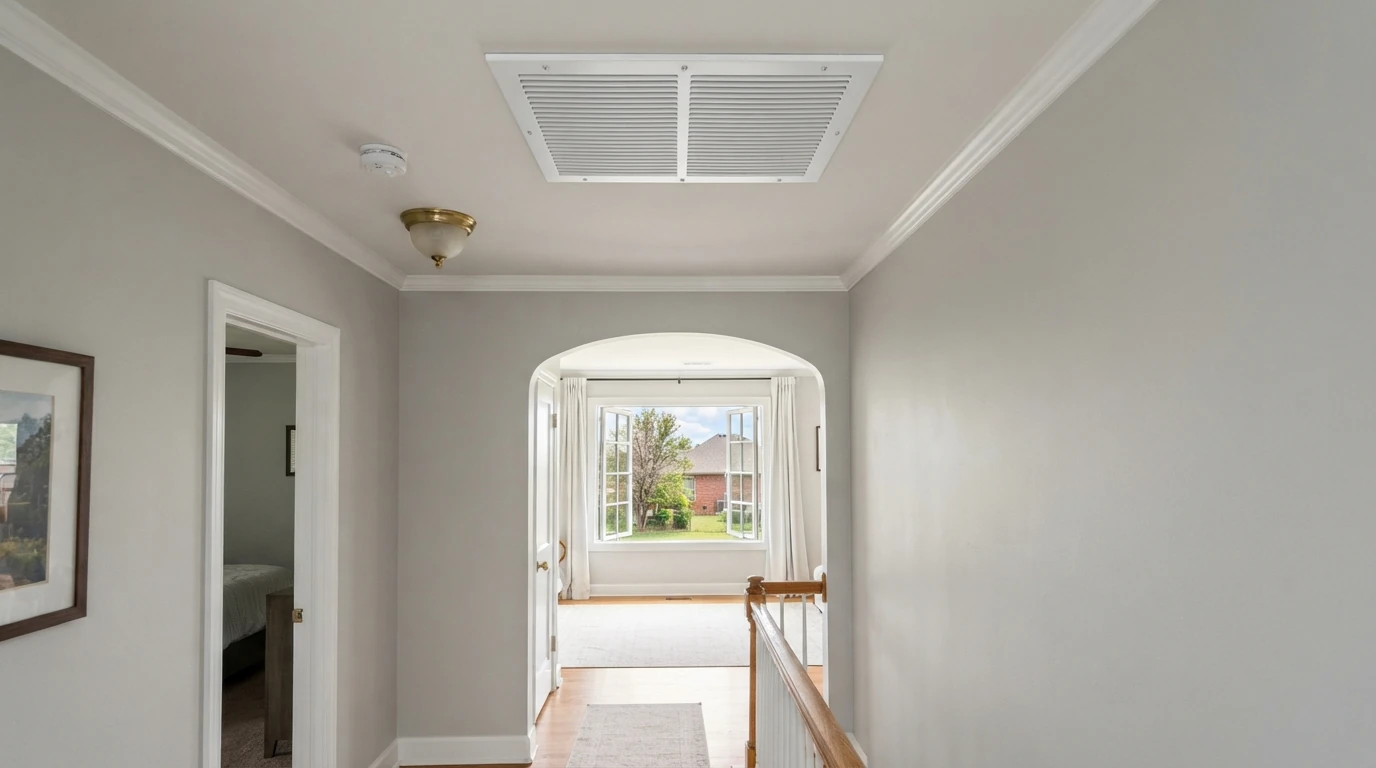
A whole-house fan is mounted in a hallway ceiling and exhausts air into the attic, pulling cool evening and night air through open windows. On mild nights it can replace air conditioning entirely for a few hours. It needs a dedicated circuit, a wall control or timer, an insulated cover for winter, and enough attic venting to let the air escape. We size the fan to the house and the attic venting and install the control where you want it.
Oklahoma City conditions
Oklahoma City summers and hot attics
Oklahoma City summers are long and hot, and attics bake from late spring into September, and homes with dark roofs and low-pitched roofs feel it most in the rooms directly below. On many spring and fall evenings the outside air drops well below the indoor temperature, which is exactly when a whole-house fan earns its keep. In winter the same attic needs its ventilation for moisture, which is why we pair powered fans with a humidistat.
How long it takes
How long the install takes
A solar or powered attic fan usually takes a few hours including the roof penetration and wiring. A whole-house fan takes most of a day, since it needs a ceiling opening, framing, a dedicated circuit and a control. If intake vents need adding, that is scheduled first so the fan works as intended.
Step by step
From the attic check to the first run
- Check the attic
Size, insulation and intake venting.
- Choose the fan
Powered, solar or whole-house.
- Plan wiring and controls
Circuit, thermostat, humidistat or timer.
- Install and seal
Mounted, wired and weather-sealed.
- Test
Fan run and airflow checked with you.
Questions we get about this job
Attic and whole-house fan questions
It can, if the attic has enough intake venting. Without it, a fan can pull cooled air out of the house.
An attic fan vents the attic; a whole-house fan pulls outside air through the living space.
Yes, for most attics, and they cost nothing to run.
On cool evenings and nights, often yes; not on hot afternoons.
Powered units need power from a circuit; whole-house fans need a dedicated one.
Not if it is flashed and sealed properly.
We check intake venting and tell you if more is needed first.
Same category
More lighting and fan work
Landscape Lighting Installation
Low-voltage path lights and more.
How we handle Landscape Lighting InstallationRecessed Lighting Installation
Canless LED wafers and more.
Recessed Lighting InstallationSecurity & Flood Lighting
Motion floodlights and more.
About SecurityLED Lighting Retrofit
Fluorescent to LED tubes and more.
LED Lighting Retrofit detailsUpstairs still hot at bedtime?
Call to book an attic check. We look at the venting first and recommend the fan that actually helps.