Updated October 2026
Quick answer
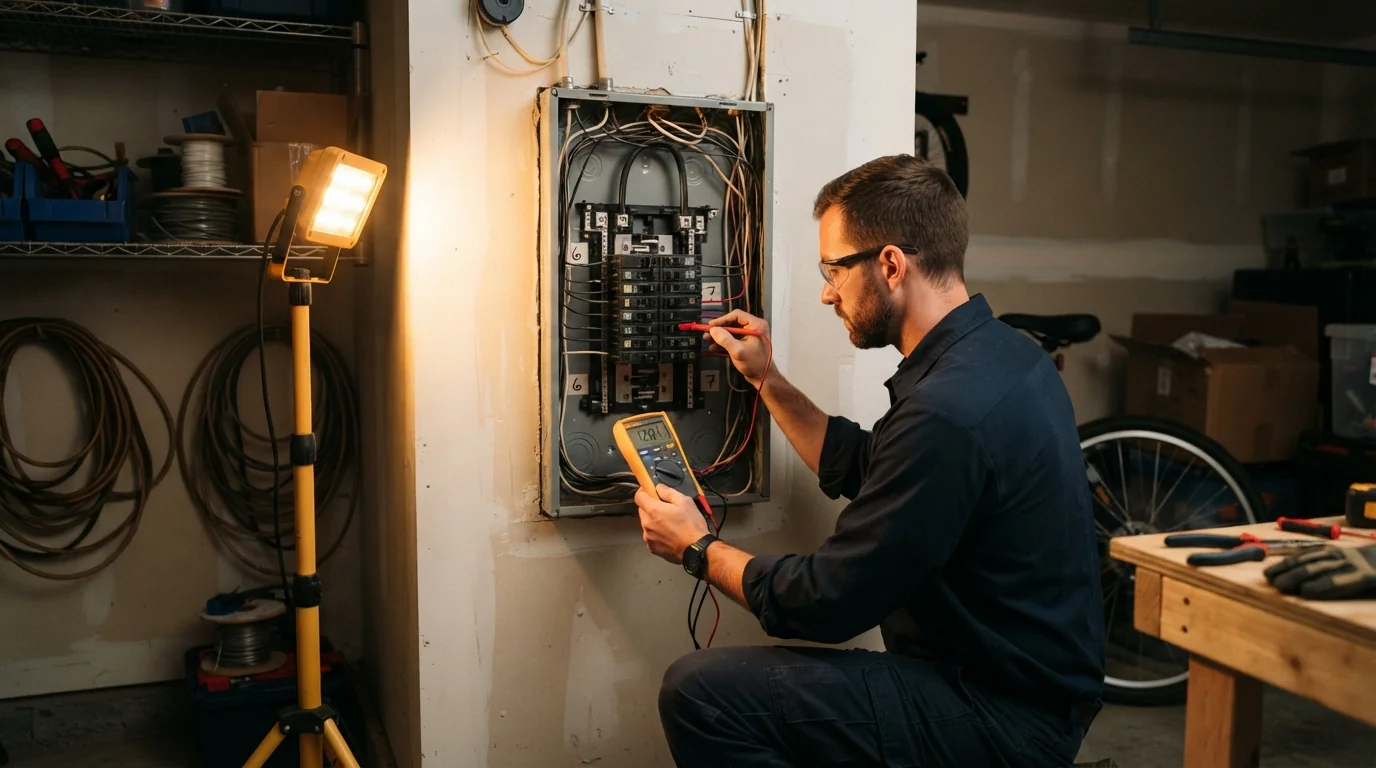
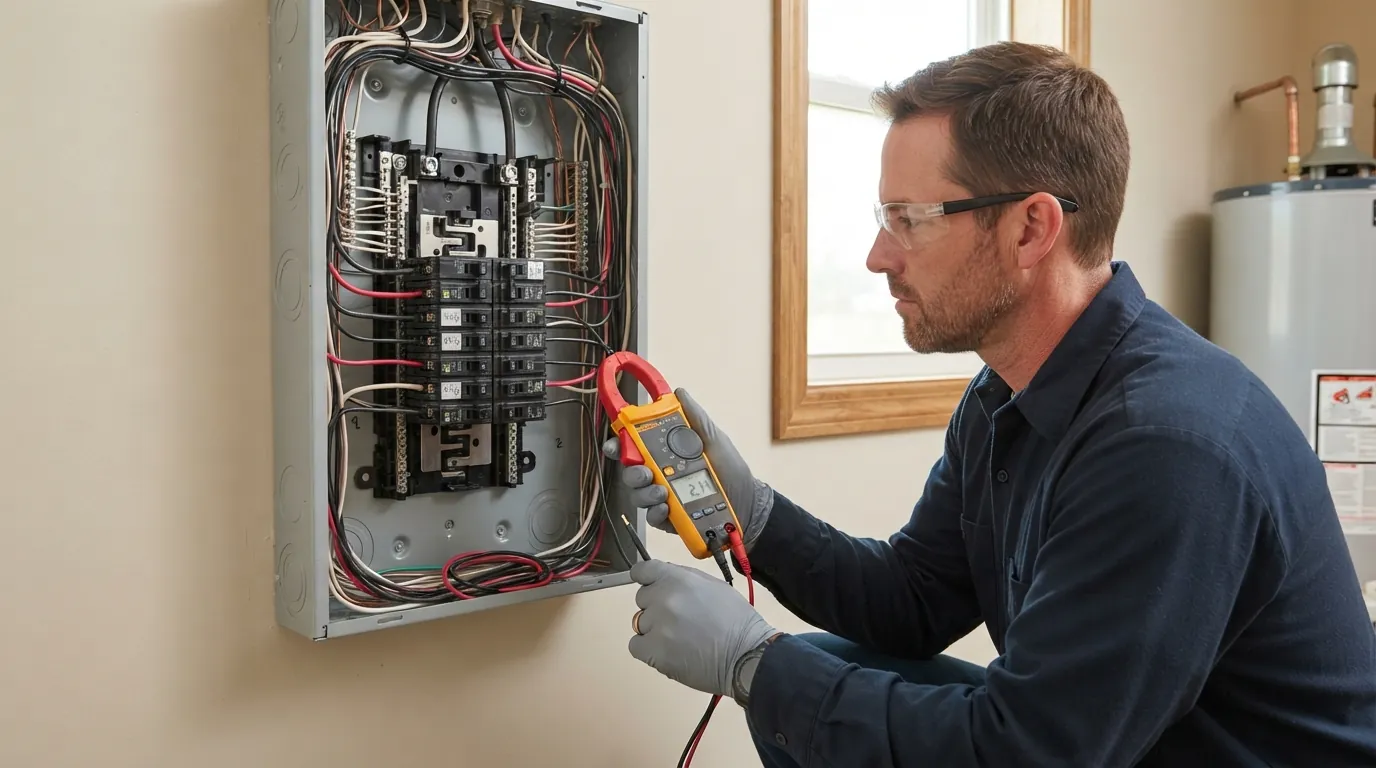
Circuit breaker replacement in Oklahoma City starts with testing: the breaker for heat and function, and the circuit for shorts, ground faults and overload. When the breaker itself has failed, we replace it with one listed for your panel, whether a standard, AFCI, GFCI, dual-function or double-pole 240-volt breaker, torque the connection to spec and confirm the circuit runs cool under load.
Warning signs
Signs a breaker needs attention
- Breaker trips and will not resetA fault or a failed breaker.
- Breaker feels warm or hotHeat at the breaker or bus connection.
- Burning smell at the panelSwitch off the main if safe, and call.
- Breaker trips with little loadPossibly failing below its rating.
- 240V appliance only half worksOne pole of a double-pole breaker may have failed.
- Scorch marks around a breakerArcing at the connection.
- Breaker handle loose or will not latchThe breaker has failed mechanically.
Step by step
From the test to a cool-running circuit
- Ask what happened
When it trips, what was running, any smell or heat.
- Test the breaker and circuit
Circuit isolated, breaker tested on its own.
- Find the real cause
Overload, short, ground fault, arc fault or failed breaker.
- Replace with a listed breaker
Matched to the panel, torqued to spec.
- Load test
Circuit run under load and checked for heat.
The breaker or the circuit?
What a breaker replacement involves
Breakers fail less often than people think. A breaker that trips is usually doing its job: the circuit is overloaded, an appliance has a fault, or there is a short in the wiring. Replacing it with a new one that trips just the same wastes money, and replacing it with a larger one to stop the trips is dangerous. So the first half of the visit is testing the circuit.
Breakers do fail, though. They wear out after many trips, overheat at a loose bus connection, stop resetting, or trip below their rating. When testing points at the breaker, we replace it with one listed for the panel brand and type, because a breaker that merely fits the slot is not necessarily approved for it. The connection is torqued to specification, and we check the bus stab it clips onto for heat damage.
Sub-jobs this page covers
The four breaker jobs we do most
Breaker that will not reset
A breaker that snaps back off as soon as you reset it is responding to a fault it can still detect, or it has failed internally. We disconnect the circuit wire and test the breaker on its own. If it holds with nothing connected, the problem is on the circuit and we trace it: a shorted device, a damaged cable, a failed appliance. If it will not hold with nothing connected, the breaker is replaced, and we check the bus connection for heat before the new one goes in.
AFCI and GFCI breakers
AFCI breakers detect arcing faults and are required on many bedroom and living-area circuits; GFCI breakers protect against shock in wet areas; dual-function breakers do both. They can trip for reasons a standard breaker never would, such as a shared neutral, a worn appliance cord or a damaged staple through a cable. We find the cause rather than swapping the breaker for a standard one, and install AFCI, GFCI or dual-function breakers where code or a remodel calls for them.
Double-pole 240V breakers
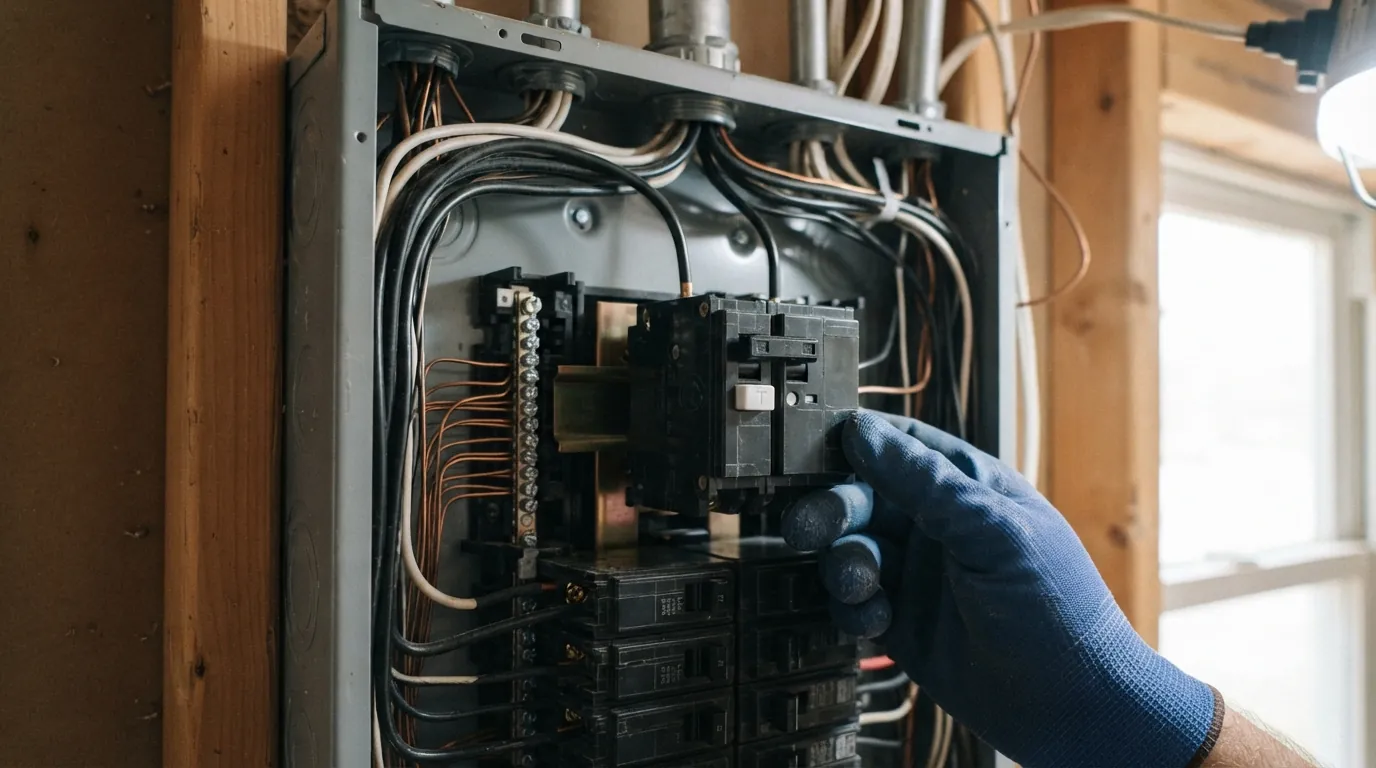
Ranges, dryers, water heaters, AC condensers, EV chargers and well pumps run on double-pole 240-volt breakers. When one fails, the appliance may lose one leg and half-work, which confuses people into calling the appliance repair service first. We test both legs, confirm the breaker size matches the appliance nameplate and the wire gauge, and replace it with the correct listed breaker. Undersized wire on an oversized breaker is corrected at the same visit, and we check the appliance end of the circuit so a failing element or motor is not mistaken for a breaker fault.
Main breaker replacement
The main breaker protects the whole service and shuts off the house. A main that trips, runs hot or will not switch cleanly is a serious problem. Replacing it usually requires the utility to pull the meter so the service conductors can be de-energized, and in older panels a failing main is often a sign the panel itself should be replaced. We assess the panel, explain whether a main breaker or a panel replacement is the sensible choice, and coordinate the utility step.
Oklahoma City conditions
Older panels and replacement breakers in Oklahoma City
Oklahoma City has houses from many decades, so the panels we open range from early breaker panels to current models. In older panels, replacement breakers can be harder to find, and a failing breaker may be the first sign of wear on the bus. Federal Pacific and Zinsco panels in particular are better replaced than repaired, so we do not keep swapping breakers in them. In newer homes, AFCI protection is standard on many circuits, and a trip there usually means the breaker caught a real fault.
DIY or call
Why breaker swaps are not a homeowner job
| Task | Homeowner-safe? | What goes wrong |
|---|---|---|
| Reset a tripped breaker once | Yes | Repeated resets on a fault |
| Unplug loads on a tripping circuit | Yes | Helps find an appliance fault |
| Replace a breaker | No | Live bus bars inside the panel |
| Install a larger breaker | Never | Wire overheats before the breaker trips |
| Use an unlisted breaker | Never | Poor bus connection, fire risk |
What moves the price
What sets the price of a breaker replacement
- Breaker type AFCI, GFCI and dual-function breakers cost more than standard ones.
- Panel brand and age Breakers for older panels can be harder to source.
- Fault on the circuit Tracing and repairing a short adds time.
- Bus damage Heat damage at the bus may mean the panel needs replacing.
- Main breaker Needs utility coordination to de-energize the service.
- After-hours Night and weekend calls cost more.
- Permit Main breaker and panel work may need one.
National 2026 figures put residential service calls at about $79 to $179 and labor at $75 to $150 per hour. Breaker prices vary widely by type and panel brand.
Questions we get about this job
Circuit breaker questions
We test the breaker with the circuit disconnected. If it holds, the fault is on the circuit.
No. The breaker protects the wire. A larger breaker on the same wire is a fire risk.
Arcing, shared neutrals, damaged cables or worn cords. We find the cause rather than removing the protection.
Yes, especially after many trips or heat at the connection.
No. Breakers must be listed for the panel brand and type.
We recommend replacing the panel instead of individual breakers.
Yes, with utility coordination, after checking whether the panel should be replaced.
Same category
More emergency and troubleshooting work
Storm Damage Electrical Repair
Downed service drop and more.
See Storm Damage Electrical RepairService Mast & Meter Base Repair
Bent or pulled mast and more.
How we handle Service MastElectrical Safety Inspection
Pre-purchase inspection and more.
Electrical Safety InspectionElectrical Troubleshooting
Flickering or dimming lights and more.
About Electrical TroubleshootingBreaker that will not behave?
Call any hour. We test the circuit and the breaker, fix the real cause and replace the breaker with the right one.