Updated October 2026
Quick answer
Bathroom exhaust fans in Oklahoma City need a duct that reaches the outdoors, a fan rated for the room size (about 1 CFM per square foot of floor for a typical bath), and a switch or humidity sensor that gets it running. We install all three in one visit, including the roof or wall cap and the wiring back to the circuit.
Why the duct matters more than the fan
What a proper fan install includes in an Oklahoma City bathroom
Most fans we replace in the metro were builder-installed at the minimum size, ducted with a flex hose that sags and holds water, and left venting into the attic insulation. The symptom is a fogged mirror that will not clear, paint lifting off the ceiling, or a black bloom in the grout. A new fan on the same duct fixes none of that.
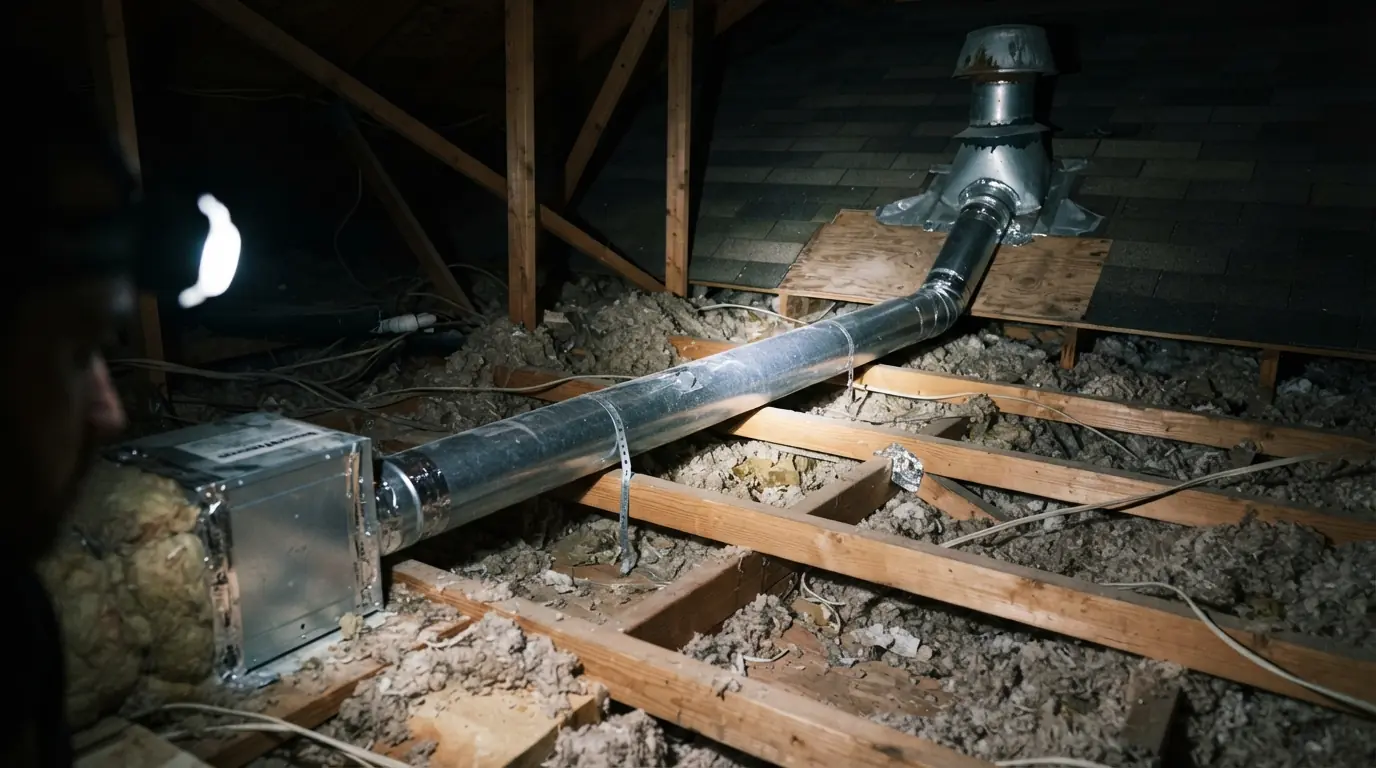
Our install starts at the exit. We run rigid duct to a roof or wall cap with a backdraft damper, keep the run short, then choose a fan with enough CFM to pull the room through it. The wiring is the easy part: a switch, a timer, or a humidity sensor that starts the fan when a shower runs.
Choosing between the options
Which fan fits your bathroom
| Fan type | Best for | Trade-off |
|---|---|---|
| Standard ceiling fan | Most hall and guest baths | Cheapest; sone rating decides how loud it is |
| Quiet low-sone fan | Master baths and rooms near bedrooms | Costs more; needs a good duct to stay quiet |
| Fan-light or fan-heater combo | Baths with one ceiling opening | Heater models need a circuit check |
| Inline fan with remote grilles | Large baths or two rooms on one fan | Highest cost; mounted in the attic |
What moves the price
What changes the price of a fan install
- Duct route A straight run to a roof cap is the cheap case; snaking around trusses or through a brick gable adds labor.
- Fan size and type Bigger CFM, quieter sone ratings and inline units cost more.
- Control Plain switch, timer or humidity sensor, in that order of price.
- Existing wiring A box with a neutral is quick; a new circuit from the panel is not.
- Ceiling access No attic above the ceiling means cutting and patching drywall.
- Roof or wall penetration A new roof cap needs flashing; reusing a good cap saves that step.
- Number of rooms Two or three baths in one visit share the trip.
No flat price here because the duct route decides most of it. US electrician labor ran about $75 to $150 per hour in mid-2026 (HomeGuide and Angi), and a fan install is usually a half-day.
What is included
What is included in a fan install
- Fan sized to the room and the duct run
- Rigid or smooth-wall duct to an exterior cap
- Backdraft damper at the exit
- Roof cap flashed and sealed, or wall cap with a hood
- Control wired: switch, timer or humidity sensor
- Housing sealed to the ceiling so it pulls from the room, not the attic
- Test run with the shower on and the door closed
Sub-jobs this page covers
The three versions of this job we do most
New fan and duct run
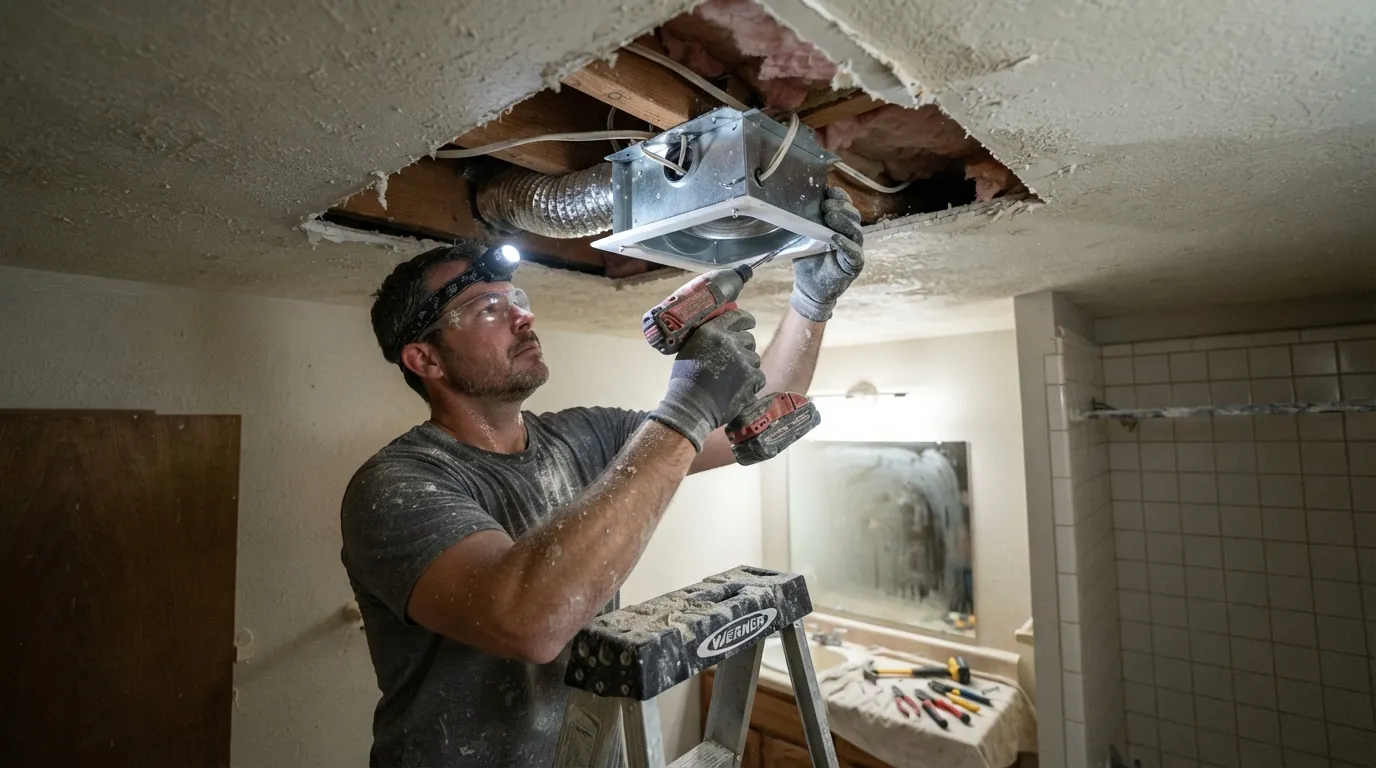
This is the full job: a room that never had a fan, or one that vents into the attic. We cut the ceiling opening, hang the housing from the joists, and run duct to the nearest exterior point, which in most Oklahoma City ranches is the roof. The cap gets a damper and flashing so it never becomes a leak. Then we pull the circuit, usually from the bathroom light, and set the control on the wall. Master baths with a separate shower room may need two fans or one inline unit with two grilles.
Humidity-sensing controls
The best fan is the one nobody has to remember to turn on. A humidity-sensing switch replaces the wall switch, starts the fan when the room crosses a set moisture level and runs until it clears. The fan can be the one you already have if it is properly ducted. We check that the switch box has a neutral, which some 1960s two-wire boxes do not, and pick a control that fits. A timer switch is the simpler alternative when a sensor is not wanted.
Fan-light combo replacement
A combo unit puts the fan, a light and sometimes a heater in one grille, common in hall baths where the fan is the only ceiling fixture. Replacing one means matching the housing to the existing opening or trimming it, and splitting the circuits so light and fan switch independently. Heater models draw more current, so we confirm the circuit can carry it first. Most swaps take two to three hours with the duct checked and reconnected at the same time.
Oklahoma City conditions
Attics, roof caps and humid Oklahoma summers
Two Oklahoma City conditions drive this job. The first is the attic. The median home in the city was built in 1982 and most sit on a single story with a vented attic, so a fan that dumps moist air up there in a humid July is feeding condensation onto the underside of the roof deck. The second is the summer itself: the first 90-degree day usually lands around May 6, and from then until September bathrooms hold moisture for hours after a shower unless the fan is pulling it out through a real duct.
Step by step
How the install goes from the first call to the last cap
- Look at where the air goes now
Existing duct, attic and the nearest exterior point, checked before quoting.
- Size the fan to the room
Floor area sets the CFM; the duct run sets the margin.
- Cut in the housing and run the duct
Housing hangs from the joists; rigid duct goes to a capped, dampered exit.
- Wire the control
Switch, timer or humidity sensor on the existing circuit if it has capacity.
- Test with the door closed
We run a shower, confirm the mirror clears, then seal and clean up.
Questions we get about this job
Bathroom fan questions we get on the phone
A like-for-like swap usually does not. A new circuit or a roof penetration on a permitted remodel does, and we file it.
No. Moist air condenses on the roof deck regardless of attic venting. The duct has to reach a roof cap, wall cap or a soffit vent made for it.
Roughly 1 CFM per square foot for baths under 100 square feet, more for long duct runs, jetted tubs or separate shower rooms. We size it on site.
Usually a sagging flex duct holding water, a stuck damper at the cap, or a fan never sized for the room. We check all three first.
Yes. A timer runs the fan for a set number of minutes after you leave; a humidity sensor also starts it on its own.
Most sensor switches need a neutral in the box. Some 1960s and 70s boxes lack one; we check first and pick a model that fits.
A replacement is two to three hours; a new fan with a duct run and roof cap is about half a day. The bathroom is usable as soon as we leave.
Same category
Other lighting and fan work we handle
Security & Flood Lighting
Motion floodlights and more.
About SecurityCeiling Fan Installation
Fan-rated box replacement and more.
Ceiling Fan Installation detailsLED Lighting Retrofit
Fluorescent to LED tubes and more.
See LED Lighting RetrofitDimmer & Smart Switch Installation
LED-compatible dimmers and more.
How we handle DimmerReady for a bathroom that dries out on its own?
Call to book a fan install anywhere in the Oklahoma City metro. Tell us how the fan vents now and we will tell you what the visit involves.