Updated October 2026
Quick answer
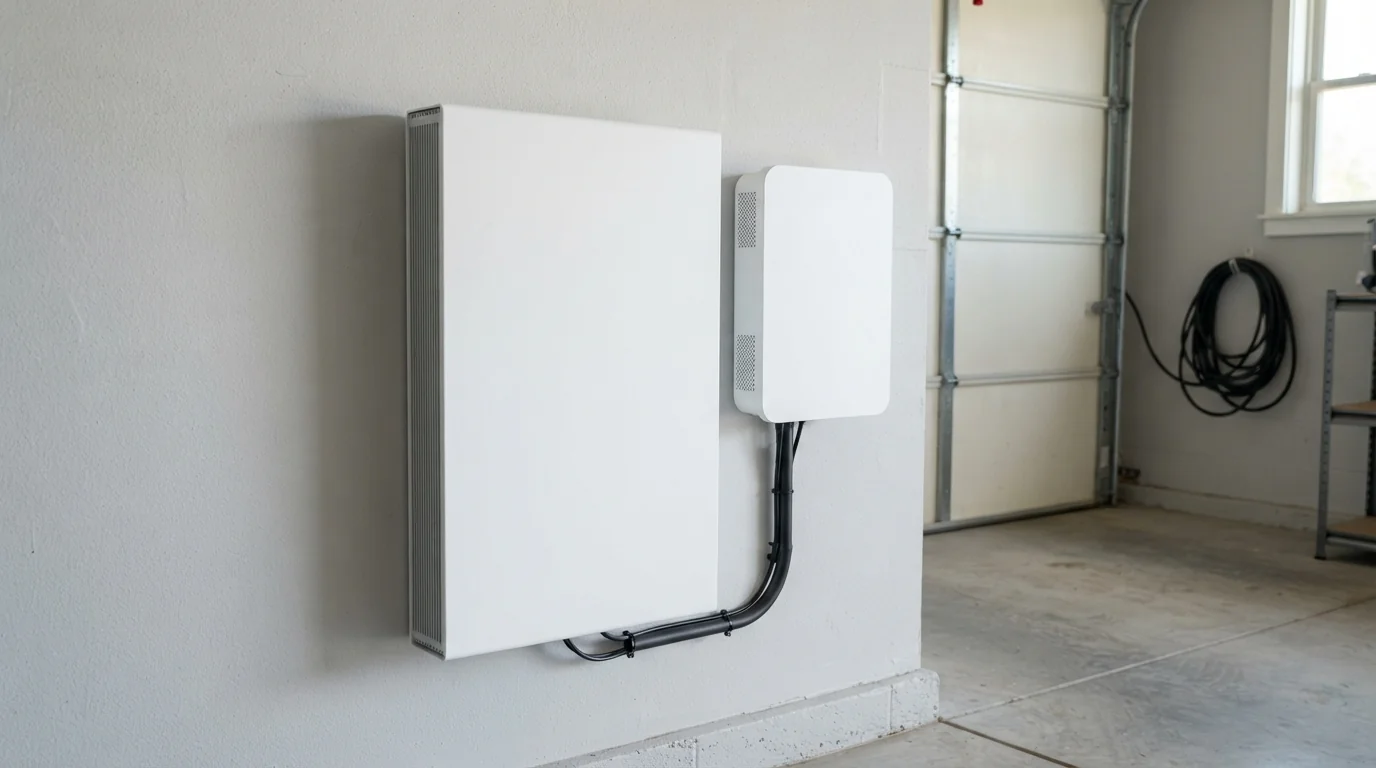
Home battery backup in Oklahoma City is a wall-mounted lithium battery system such as a Tesla Powerwall or an Enphase battery, a gateway that disconnects the house from the grid during an outage, and usually a critical loads panel that holds the circuits the battery will carry: refrigerator, lights, network, a furnace blower, medical equipment. We size it, install it, and file the permit and the utility paperwork.
Battery or generator, and why some homes choose both
How a home battery keeps an Oklahoma City house running
A battery answers the outage the way a UPS answers a computer: the grid drops, the gateway opens, and the house keeps running before the lights have time to blink. There is no engine to start, no fuel to store, no weekly exercise noise. For homes with solar panels, the battery also recharges from the roof during a long outage, which stretches its runtime considerably.
Capacity is the honest limit. A single battery holds enough energy to run essentials for a day or more, not central air around the clock. So the design work is the load list: which circuits move into a critical loads panel, and which stay on the main panel and wait for the grid. We build that list with you, then size the number of batteries to it.
Choosing between the options
Battery, generator or both
| Backup type | Strength | Limit |
|---|---|---|
| Home battery | Silent, instant, no fuel | Capacity; long outages drain it |
| Battery plus solar | Recharges during long outages | Higher cost, depends on sun |
| Standby generator | Runs for days on natural gas | Engine noise, maintenance |
| Battery plus generator | Instant switchover and long runtime | Most equipment and cost |
What moves the price
What decides the cost of a battery system
- Number of batteries Capacity scales with units, and so does cost.
- Whole home or critical loads Whole-home backup needs more capacity and a larger gateway.
- Critical loads panel Moving circuits into a subpanel adds labor and material.
- Existing solar Compatible solar can simplify the install and extend runtime.
- Mounting location Indoor garage walls are simplest; exterior mounts need weather clearances.
- Panel condition An old or full main panel may need work first.
- Permits and utility interconnection Paperwork and inspection are part of every install.
Battery pricing depends heavily on the brand, the number of units and incentives available at the time, so we quote from the load list rather than a published range.
Sub-jobs this page covers
The systems we install and the panel that makes them work
Tesla Powerwall
The Powerwall pairs the battery with a gateway that senses the outage and islands the house, and it can back up the whole panel or a chosen set of circuits depending on how many units are installed. It works with or without solar. We mount it indoors in a garage or outdoors on a wall with the clearances the manufacturer sets, run the conduit to the gateway at the service, and commission it in the app with you so you can see charge level and backup reserve. Multiple units stack for larger homes.
Enphase and Franklin batteries
Enphase batteries are modular, which suits homes that already have Enphase microinverters on the roof or want to start small and add capacity later. Franklin systems pair a battery with its own control panel and work with a range of solar equipment. The right choice depends on what is already on the house and how the backup is meant to work, whole home or critical loads. We look at the existing solar, the panel and the load list before recommending a brand, rather than fitting the house to a product.
Critical loads panel
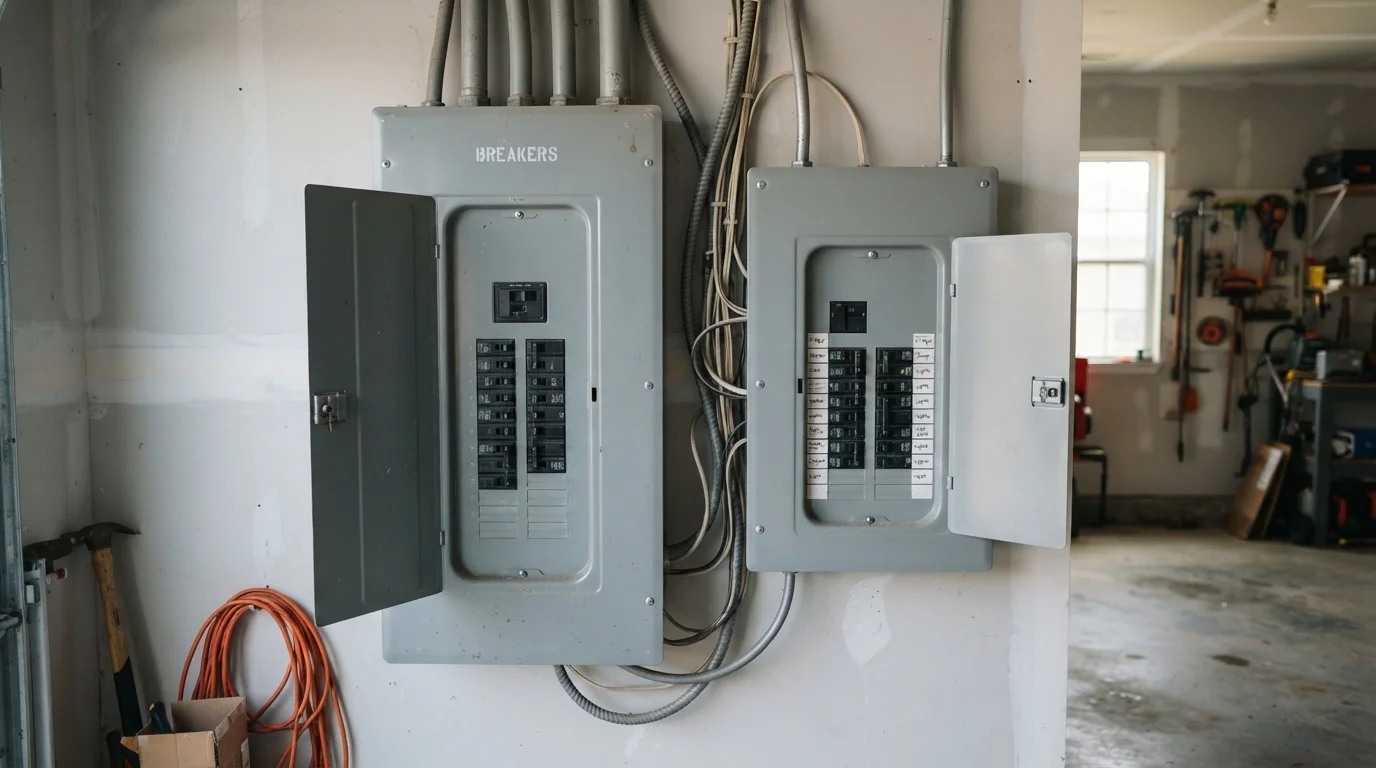
Most battery installs move the essential circuits into a small subpanel that the battery feeds during an outage. We build the list with you: refrigerator and freezer, lights in the rooms you live in, the network and a few receptacles, the gas furnace blower in winter, a well pump, any medical equipment. Big loads like the range, dryer and central air usually stay off it unless the battery bank is large. The circuits are moved at the main panel, labeled, and tested with the grid switched off.
Oklahoma City conditions
Long outages are why batteries get sized carefully here
Outage length is what drives battery sizing in Oklahoma City. Eleven days after the October 2020 ice storm began, the state was still counting more than 42,000 outages in Oklahoma City alone, and local installers report home batteries becoming a growing request alongside generators because of the storm and tornado seasons. We size batteries for the outage you want to ride out, and we tell you plainly when a generator, or a battery plus solar, is the better answer for multi-day events.
How long it takes
How long the install takes
Most battery installs take one to two days on site, depending on the number of units and whether circuits move into a critical loads panel. Power is off for a few hours while the gateway and panel work is done. The permit and utility paperwork usually take longer than the install, so we start them as soon as the system is chosen.
Step by step
From the load list to the first outage test
- Build the load list
Which circuits must run during an outage, and for how long.
- Choose the system
Brand, number of units, whole-home or critical loads.
- Permit and paperwork
Electrical permit and the utility interconnection forms.
- Install and commission
Battery, gateway, critical loads panel, app setup.
- Pull the plug test
Grid switched off, house on battery, loads checked with you.
Questions we get about this job
Home battery questions
It depends on the battery count and the loads. One battery on essentials can run a day or more; with solar recharging it can go longer.
Some larger systems can, briefly, with enough batteries. Most installs leave central air off the backed-up circuits.
No. A battery can charge from the grid and hold its reserve for outages. Solar extends runtime during long ones.
A generator runs for days on natural gas; a battery is silent and instant but limited by capacity. Many homes are served best by one or the other, and a few by both.
Yes, along with Enphase and Franklin systems.
Yes. The electrical work is permitted and inspected, and utility paperwork is required.
Very little. The system monitors itself in the app; we check it if it reports a fault.
Same category
More backup power and EV work
Commercial Generator Installation
Standby units for businesses and more.
About Commercial Generator InstallationGenerator Transfer Switch Installation
Manual transfer switch and more.
Generator Transfer Switch Installation detailsGenerator Maintenance & Repair
Annual service and more.
See Generator MaintenanceStandby Generator Installation
Generac and Kohler air-cooled units and more.
How we handle Standby Generator InstallationWant backup power without an engine?
Call to build the load list with us. We size a Tesla, Enphase or Franklin system to the circuits that matter and handle the permit and paperwork.