Updated October 2026
Quick answer
A dedicated circuit in Oklahoma City is one breaker and one run of wire serving a single appliance: a 240-volt 30 to 50 amp line for a range or dryer, a 20-amp line for a microwave, dishwasher or disposal, or a 240-volt tool circuit in a garage. We check panel capacity and open slots first, size the wire and breaker to the appliance nameplate, and file the permit.
Why one breaker per appliance matters
When an Oklahoma City home needs a dedicated circuit
The symptom is familiar: the microwave and the toaster run together and the kitchen goes dark, or a new induction range arrives and the old receptacle behind the stove does not match its plug. Both come from the same place. The house was wired for the appliances of its day, and the circuit that fed one outlet now feeds four loads.
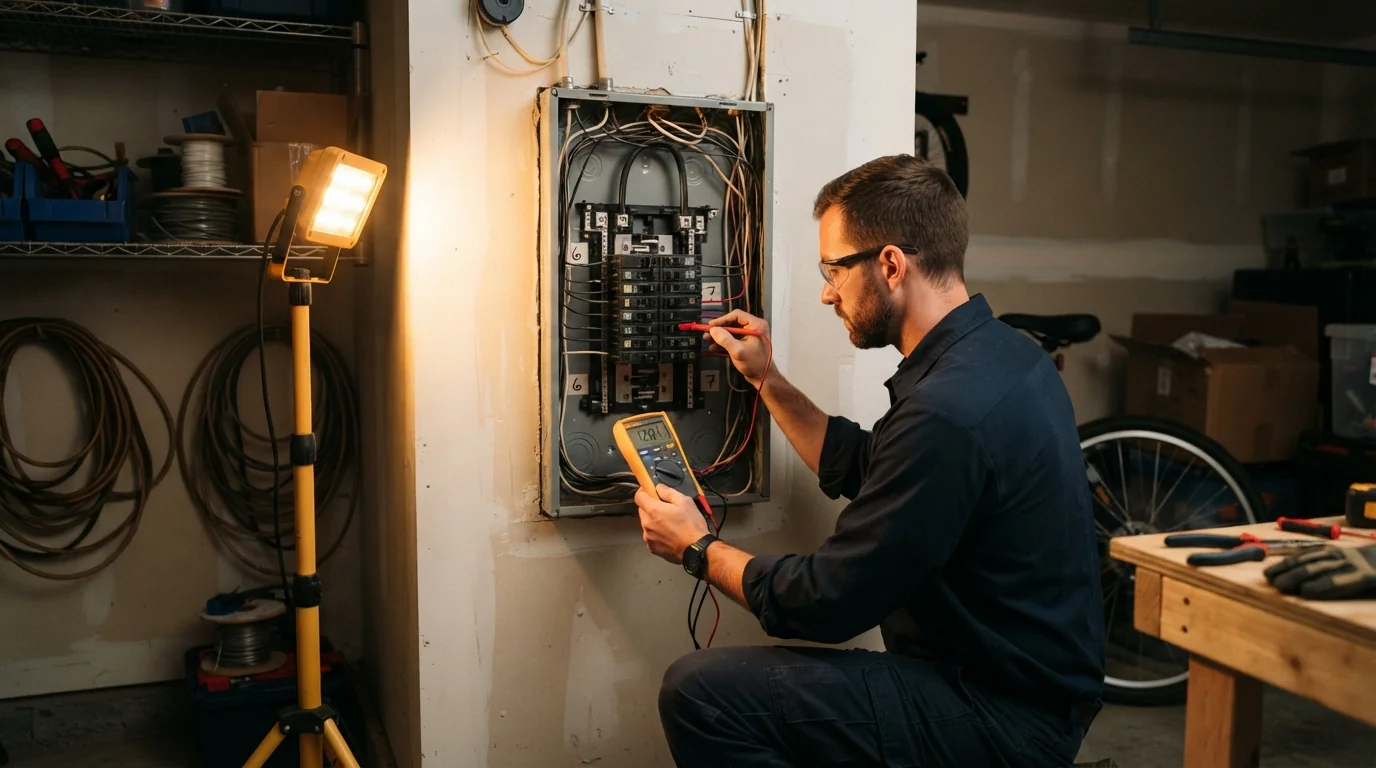
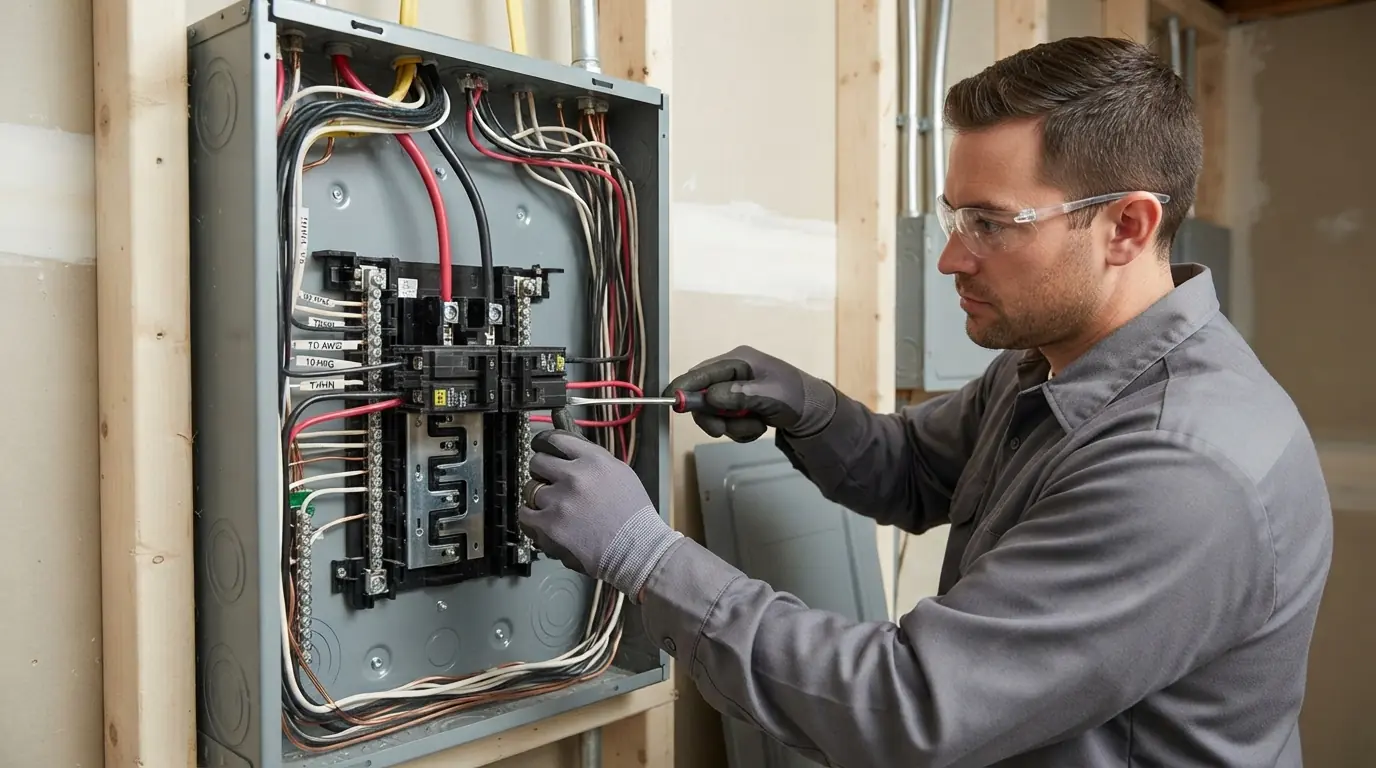
A dedicated circuit fixes it at the source. We run new wire from the panel to one receptacle or one hardwired appliance, sized to its nameplate current, on a breaker that serves nothing else. The job starts at the panel, because a new 240-volt circuit needs two open slots and enough service capacity to carry it alongside the air conditioner and everything else in the house.
What moves the price
What sets the price of a new circuit
- Distance from the panel A laundry beside the panel is quick; a kitchen across the house is not.
- Voltage and amperage A 50-amp range circuit uses heavier wire than a 20-amp microwave line.
- Route Open attic or crawlspace is faster than finished walls.
- Panel space No open slots may mean tandems or a subpanel.
- Protection required GFCI and AFCI breakers cost more than standard ones.
- Receptacle or hardwire Some appliances connect directly with a disconnect.
- Number of circuits Several circuits in one visit share setup time.
2026 estimates put a single dedicated circuit at roughly $200 to $900 depending mostly on run length. A national planning range, not our price.
Sub-jobs this page covers
The circuits we run most, by appliance
Range and dryer 240V outlets
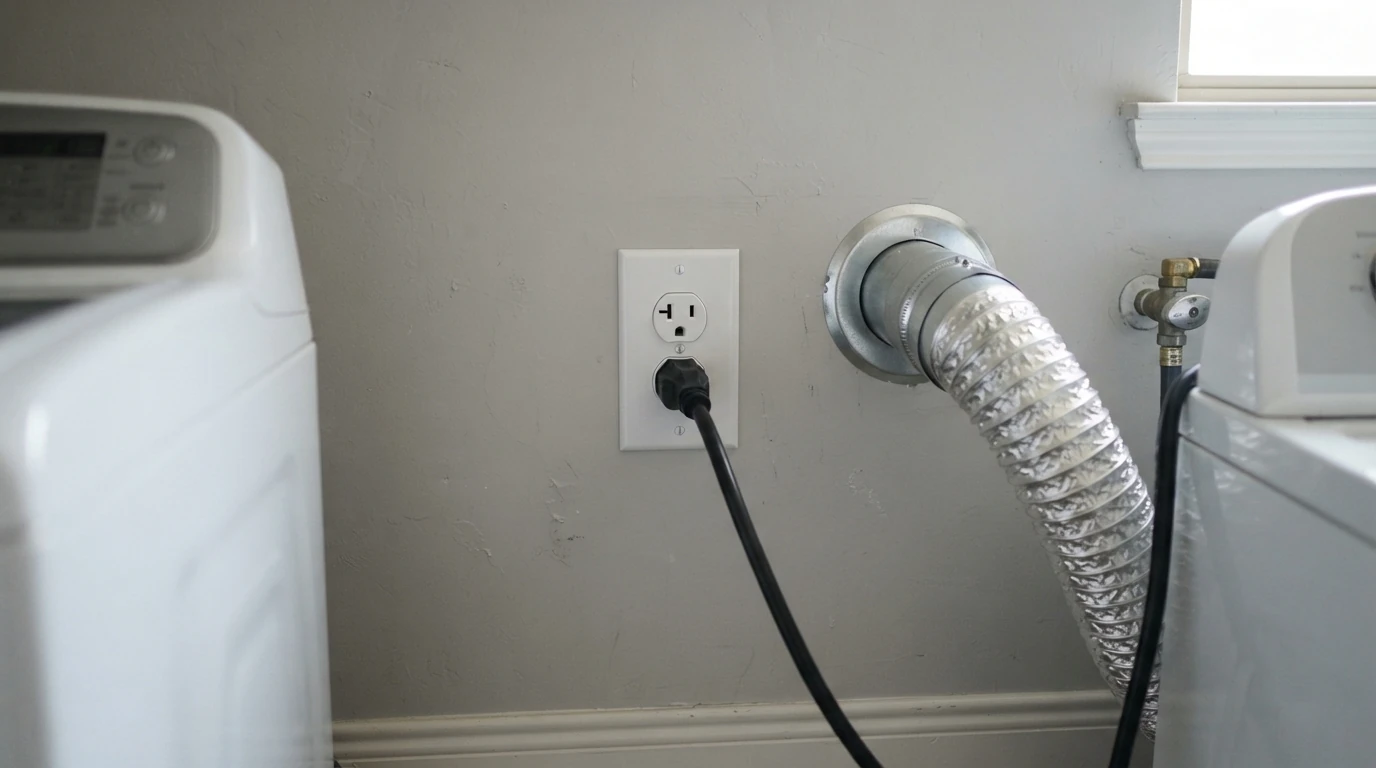
Electric ranges usually need a 40 or 50 amp, 240-volt circuit and dryers a 30 amp one. Older homes often have three-prong receptacles for both, which current code has moved away from in favor of four-wire circuits with a separate ground. When you replace the appliance we check the existing wire gauge, the breaker size and the receptacle type, then either swap the receptacle and cord to match or run a new four-wire circuit. Induction ranges and double ovens get sized off their nameplate, not the old stove.
Microwave and dishwasher circuits
Over-the-range microwaves, dishwashers and disposals each pull enough current to justify their own 20-amp circuit, and current code expects it. The telltale sign of a shared circuit is a breaker that trips when the microwave and the coffee maker run together, or a dishwasher that stops mid-cycle. We route the new circuit through the cabinets or the attic, land it on its own breaker, and add GFCI or AFCI protection where the location calls for it, which in a kitchen is most places.
Window unit and space heater circuits
A window air conditioner or a space heater draws a large, steady load for hours, which is exactly what a shared bedroom circuit cannot handle. The results are nuisance trips, warm receptacles and melted plugs. A dedicated 20-amp, 120-volt circuit, or a 240-volt one for bigger window units and garage heaters, gives the appliance its own path back to the panel. We also check the existing receptacle for heat damage while we are there, because that is often what prompted the call.
Workshop tool circuits
Table saws, compressors, welders and dust collectors all start hard and run hot. A garage wired with a single 15-amp circuit will trip the moment two of them run. We add 20-amp, 120-volt circuits along the bench and 240-volt receptacles matched to each big tool plug, and label every one. If the garage needs more than two or three new circuits, a small subpanel is usually cleaner and cheaper than several long runs back to the house panel, and it leaves room for the next tool.
Oklahoma City conditions
Older panels and newer appliances
Much of the Oklahoma City housing stock was built between the 1960s and the 1990s, and local operators consistently name panel capacity in 1970s subdivisions as one of the most common limits they hit. Those panels were sized for a range, a dryer and central air, with few open slots left. Adding a dedicated circuit in those homes often starts with finding room: tandem breakers where the panel allows them, consolidating old runs, or a subpanel when there is simply nothing left.
How long it takes
How long the power is off
A single dedicated circuit is usually a two to four hour visit. The power to the whole house is off only for the few minutes it takes to land the new breaker, and the rest of the time you keep lights and refrigeration. Kitchen circuits routed through finished cabinets can take longer, and several circuits in one visit usually fit into a day.
DIY or call
Which parts of this are safe to do yourself
| Task | Homeowner-safe? | What goes wrong |
|---|---|---|
| Plug the new appliance in | Yes | Nothing, if the receptacle matches the plug |
| Swap a dryer cord from three to four prong | Sometimes | The bonding strap left in place energizes the frame |
| Replace a worn receptacle on an existing circuit | With the breaker off | Wrong receptacle rating for the breaker |
| Run a new circuit from the panel | No | Undersized wire, no permit, work inside a live panel |
| Add a breaker to a full panel | No | Non-listed breakers and overloaded bus |
Step by step
From the panel check to the labeled breaker
- Read the appliance nameplate
Voltage and current decide wire, breaker and receptacle.
- Check the panel
Open slots, service size and existing load.
- Plan the route
Attic, crawlspace or walls, whichever leaves the least patching.
- Run, land and protect
New wire, dedicated breaker, GFCI or AFCI where required.
- Test and label
Voltage verified at the receptacle, breaker labeled at the panel.
Questions we get about this job
Dedicated circuit questions
Ranges, dryers, water heaters, dishwashers, disposals, microwaves, refrigerators in many cases, window AC units, space heaters and large shop tools.
No. Cords for high-current appliances overheat, and they hide the real problem, which is a circuit carrying more than it was built for.
Yes. New circuits are permitted work and are inspected. We file it as part of the job.
Sometimes, with tandem breakers if the panel is listed for them. Otherwise a subpanel or a panel upgrade makes the room.
Current code separates the neutral and the ground. If your receptacle is three-prong, we either change the cord or run a four-wire circuit.
Most single circuits take two to four hours. The power to that part of the house is off only while we connect at the panel.
Yes, although chargers have their own sizing rules. See our EV charger installation page for the details.
Same category
More panel and power work
Federal Pacific & Fuse Box Replacement
Federal Pacific Stab-Lok and more.
About Federal PacificWhole-Home Surge Protection
Type 2 panel-mounted SPD and more.
Whole-Home Surge Protection detailsElectric Heater Installation
Baseboard and wall heaters and more.
See Electric Heater InstallationSubpanel Installation
Garage or shop subpanel and more.
How we handle Subpanel InstallationTired of the breaker tripping every time the microwave runs?
Call and tell us the appliance. We will check the panel, size the circuit and give it its own breaker, anywhere in the Oklahoma City metro.