Updated October 2026
Quick answer
Generator maintenance in Oklahoma City is an annual visit for most air-cooled home units: oil and filter change, spark plugs on schedule, a battery load test, a check of the fuel line and the enclosure, and a real transfer test with the house on generator power. Repairs start from the fault code in the controller history, which usually points straight at the battery, the starter or a sensor.
What is included
What an annual generator service includes
- Controller fault and exercise history read
- Oil and oil filter changed
- Air filter and spark plugs checked or replaced on schedule
- Battery load tested, terminals cleaned
- Fuel line, sediment trap and connections checked
- Enclosure cleared of nests and debris
- Transfer test with the house on generator power
Why a weekly exercise is not the same as a service
What keeps a standby generator ready in an Oklahoma City yard
Most home standby units run a short self-test every week, and owners take the hum on Tuesday morning as proof the machine is ready. It proves the engine turns over. It does not prove the battery can crank it in January cold or that the transfer switch will carry the house when the utility drops.
Our visit covers what the weekly test does not reach. We pull the controller history first, because a string of low-battery warnings or an overcrank fault tells us more than any inspection. Then the maintenance, and a transfer test with the house on generator power.
Sub-jobs this page covers
Service, repair and the parts that fail most
Annual service
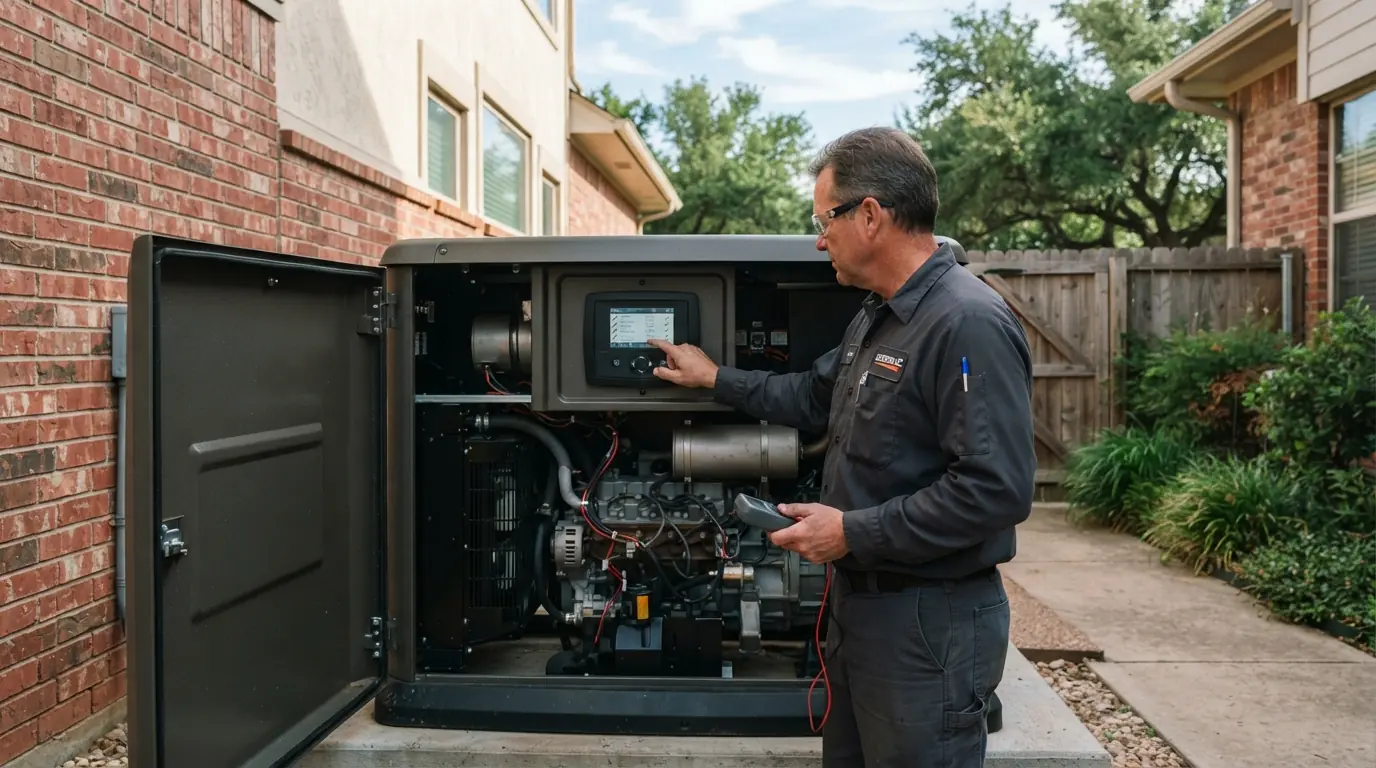
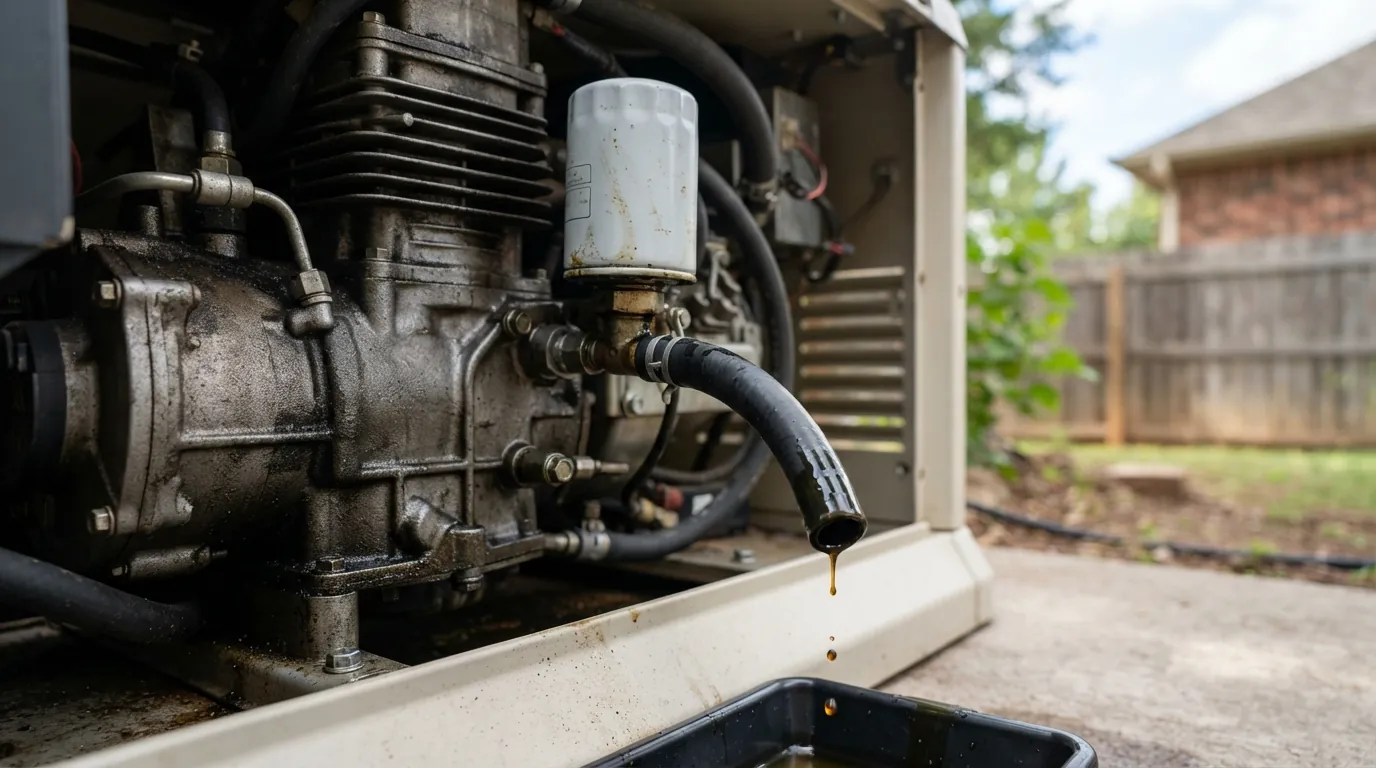
An air-cooled home generator runs on a small engine that needs the same attention as any other: oil and oil filter, air filter, and spark plugs at the interval the manufacturer sets. We also clear the intake and exhaust paths, look for nests and rodent damage, tighten the battery terminals and check the fuel line and sediment trap. The visit ends with the unit exercised and the transfer switch tested. Most owners book it once a year before spring storms or before the first cold snap.
No-start and fault codes
When a generator refuses to start, the controller almost always knows why. Overcrank faults usually trace to a weak battery, a failing starter or a fuel supply problem; low oil pressure shutdowns can be low oil or a failed sensor; an RPM sense loss often points at wiring. We read the history, test the suspect part directly, and replace what failed rather than a list of parts. If the unit needs a repair that takes parts on order, we tell you how long you will be without backup and what to do in the meantime.
Transfer switch testing
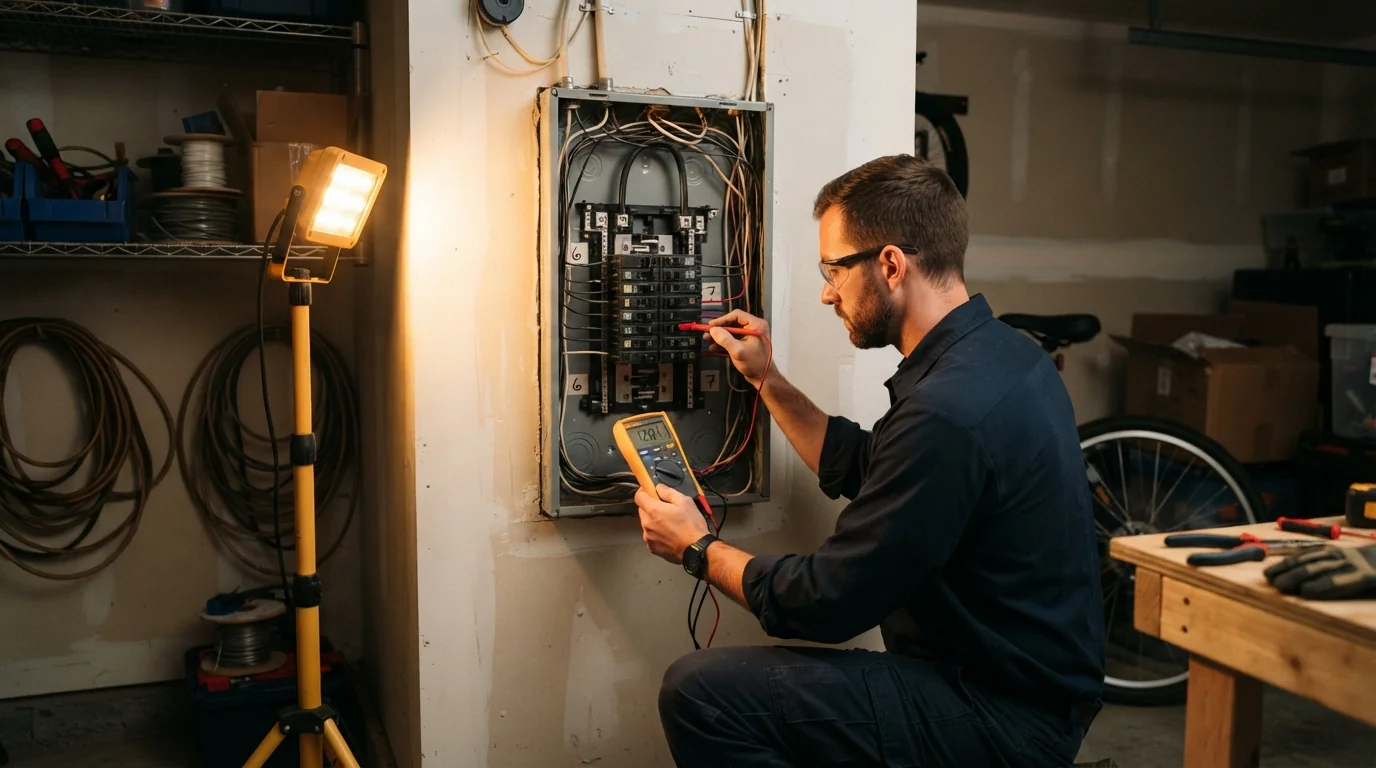
The generator can run perfectly and the house can still stay dark if the automatic transfer switch does not move. We simulate a utility outage at the switch, time how long the generator takes to start and pick up the load, confirm the house runs on generator power, then restore utility and confirm the switch returns and the engine cools down and stops. Contacts, the controller board and the utility sense wiring get a look while the cover is off. This is the test a weekly exercise never performs.
Battery replacement
The starting battery is the single most common reason a standby generator fails when it is needed. A battery can pass a voltage check and still collapse under the load of cranking a cold engine, so we load test it every visit. Replacement batteries are sized to the engine and the enclosure, terminals get cleaned and protected, and we confirm the charger inside the controller is keeping it topped up. Most batteries last a few years; we note the install date so you know when the next one is due.
Oklahoma City conditions
Why the service date matters before storm season
Backup power matters in Oklahoma City because the outages here come in two seasons. The October 2020 ice storm brought freezing rain to central Oklahoma and knocked out power for hundreds of thousands of customers, some for days, and the spring severe season returns every year from mid-April into June. We book most maintenance visits in late winter and early fall so the unit is serviced before each of those windows rather than during one.
Warning signs
Signs your generator needs a call now
- Red or amber light on the controllerA fault is logged and the unit may not start next time.
- Missed weekly exerciseIf it has stopped running its self-test, something has already failed.
- Slow, labored crankUsually the battery giving out before the starter does.
- Oil on the pad or enclosure floorA leak that gets worse with every run.
- Black smoke or rough runningFuel or ignition trouble that needs attention before an outage.
- House stays dark after the engine startsThe transfer switch is not moving the load.
- Nests or chewed wiring insideRodents and wasps love an idle enclosure.
Step by step
How a service visit runs
- Read the controller history
Fault codes and exercise records before any wrench comes out.
- Service the engine
Oil, filters and plugs on the maker interval, enclosure cleaned.
- Test the battery under load
Not just voltage; a real cranking load test.
- Run a transfer test
Utility off at the switch, house on generator, then back again.
- Write up what we found
What was done, what is aging, and when the next visit is due.
What moves the price
What changes the cost of generator service
- Unit size Larger air-cooled units take more oil and bigger filters.
- Service interval A unit years past its last service needs more than a routine visit.
- Battery A failed load test adds a replacement battery.
- Fault diagnosis A no-start adds diagnostic time before any part is quoted.
- Parts on order Starters, boards and regulators vary widely by model.
- Transfer switch repair Contacts or a controller board inside the switch are separate parts.
- Access Units boxed in by fences or landscaping take longer to open up.
Published June 2026 figures put a generator maintenance visit at about $172 to $395. That is a national planning range, not our price; the model and its condition set the quote.
Questions we get about this job
Generator service questions
Once a year for most air-cooled home units, or at the runtime hours in the manual after a long outage. Heavy use in a storm week can bring the next service forward.
It proves the engine turns over. It does not test the battery under a cold crank or the transfer switch under load, which are the two things that fail most.
Yes, both, along with most other air-cooled home standby brands found in the metro.
The engine cranked but did not start within the allowed attempts. Weak batteries, starters and fuel supply are the usual causes; we test each before replacing anything.
Yes. We check the install while we are there, including clearances, grounding and the transfer switch wiring, and tell you if anything needs correcting.
Most routine visits take one to two hours, including the transfer test. Repairs that need parts on order take longer.
Call us. Switch the generator controller to off before anyone opens the enclosure, and do not backfeed the house with a portable generator through an outlet.
Same category
More backup power and EV work
Commercial Generator Installation
Standby units for businesses and more.
About Commercial Generator InstallationHome Battery Backup Installation
Tesla Powerwall and more.
Home Battery Backup Installation detailsGenerator Transfer Switch Installation
Manual transfer switch and more.
See Generator Transfer Switch InstallationStandby Generator Installation
Generac and Kohler air-cooled units and more.
How we handle Standby Generator InstallationBook the service before the next storm
One visit covers the engine, the battery and a real transfer test. Call to schedule generator service anywhere in the Oklahoma City metro.