Updated October 2026
Quick answer
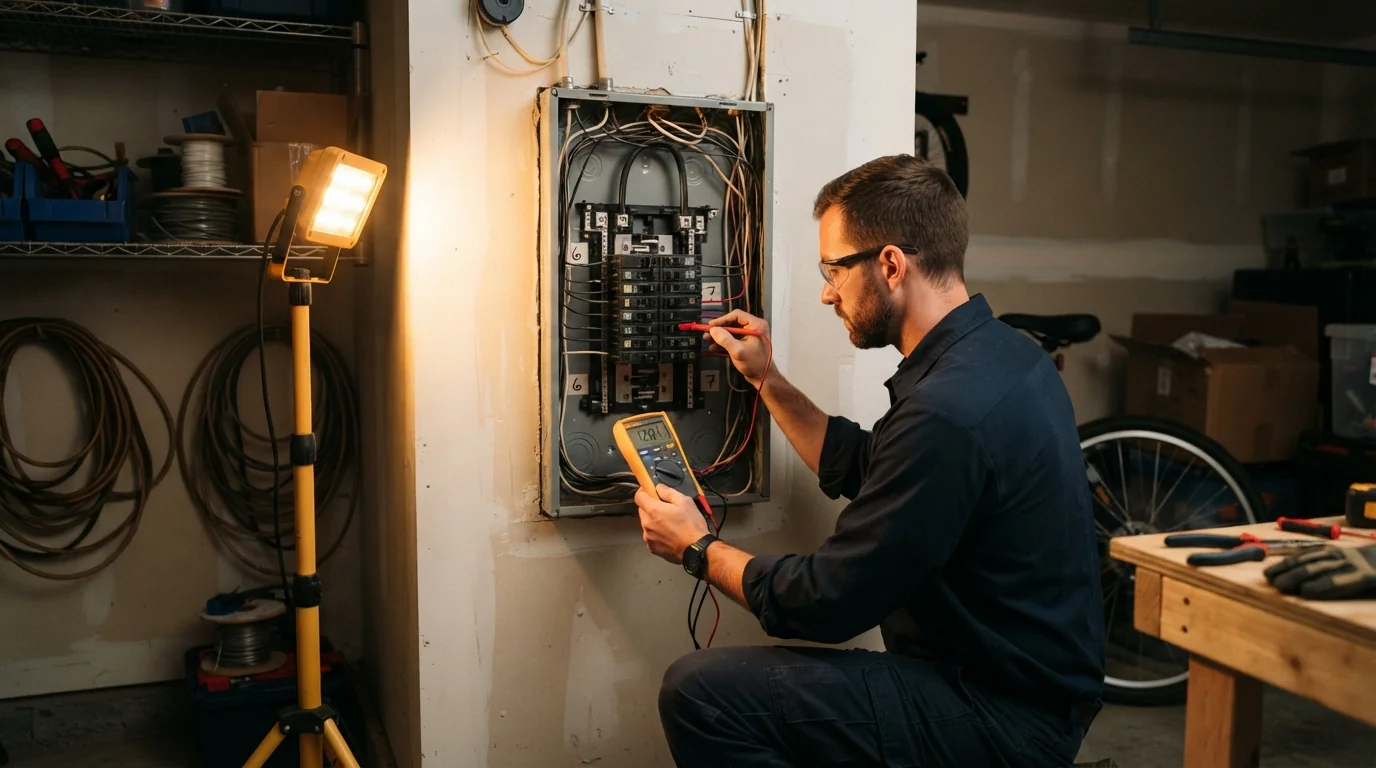
RV outlet installation in Oklahoma City means a dedicated circuit to a weatherproof RV receptacle or pedestal: a TT-30 outlet on a 30-amp, 120-volt circuit for most travel trailers, or a 14-50 outlet on a 50-amp, 120/240-volt circuit for larger motorhomes and fifth wheels. We check the panel, size the wire for the distance to the parking spot, and install the outlet at a height and location the RV cord can reach.
Why the RV needs its own outlet
What an RV outlet install involves
Most RV owners start with a dogbone adapter into an outdoor 15 or 20 amp outlet. It works for a battery charger and a few lights, but the moment the rooftop air conditioner starts, the circuit trips or the wires heat up. The RV is designed for a 30 amp or 50 amp supply, and giving it one makes it usable at home for loading, cooling before a trip, or guests.
The key detail is matching the outlet to the RV plug. A TT-30 is a 30-amp, 120-volt receptacle for most travel trailers; a 14-50 is a 50-amp receptacle for larger rigs. They look similar to other outlets but are wired differently, and miswiring an RV outlet can damage the RV electrical system. We confirm the plug on your rig, then install the matching outlet on a dedicated circuit.
What moves the price
What sets the price of an RV outlet
- 30 or 50 amp A 50-amp circuit uses heavier wire and a larger breaker.
- Distance to the parking spot Longer runs need bigger wire and more trench.
- Wall outlet or pedestal A pedestal costs more than a wall-mounted outlet.
- Panel capacity A full panel may need space made first.
- Trenching Lawn, gravel or a driveway bore.
- GFCI protection Required in many outdoor locations.
- Permit New circuits are permitted and inspected.
2026 estimates put a dedicated circuit at roughly $200 to $900 depending on run length; pedestals and long trenches add to it. National planning figures, not our price.
What is included
What an RV outlet install includes
- RV plug type confirmed before anything is ordered
- Panel space and capacity checked
- Wire sized for the distance
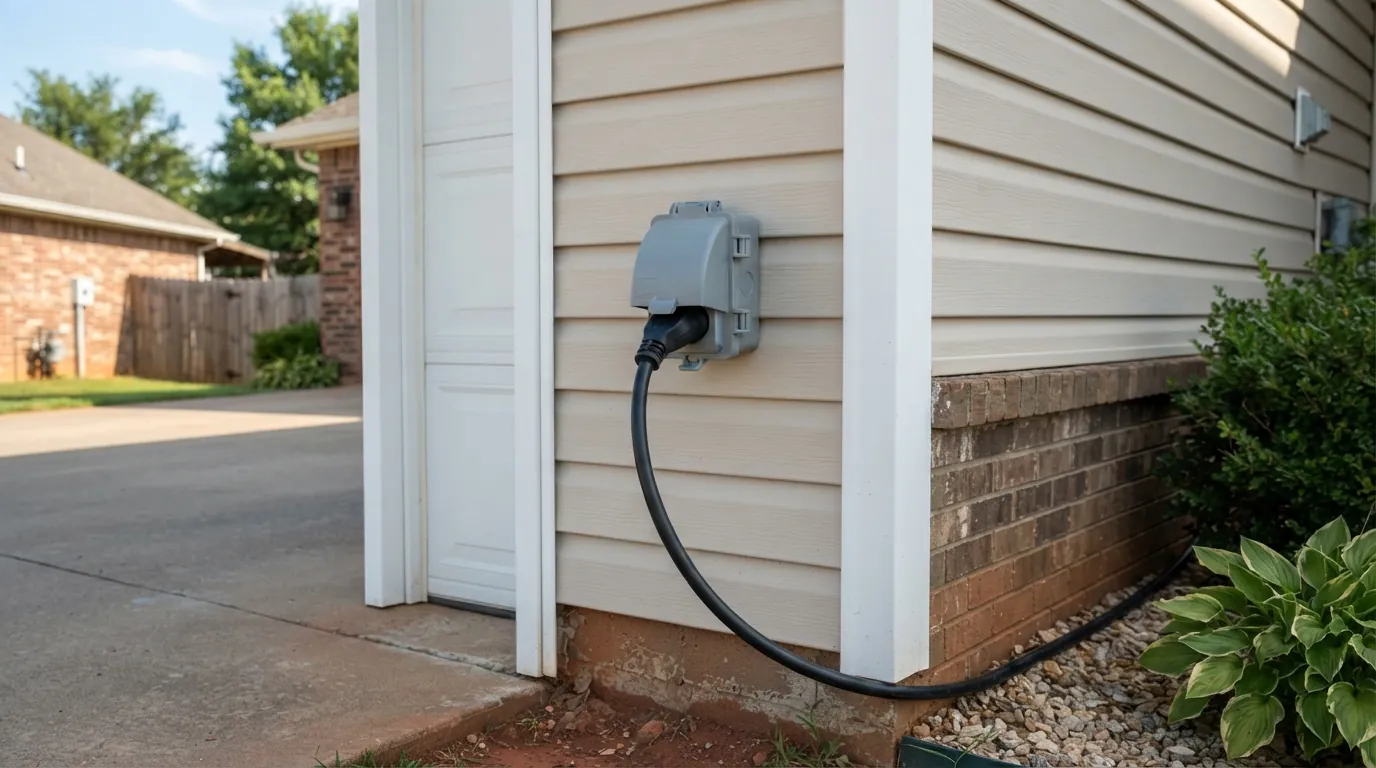
- Weatherproof outlet or pedestal at cord reach
- GFCI protection where required
- Permit filed for the new circuit
- Voltage and wiring tested before the RV plugs in
Sub-jobs this page covers
30 amp, 50 amp and pedestals
30 amp RV outlets
A 30-amp TT-30 outlet on a dedicated 120-volt circuit powers most travel trailers and smaller motorhomes, including one rooftop air conditioner. It is the most common RV install. We place it where the RV cord reaches without an extension, in a weatherproof box, and size the wire for the distance from the panel so voltage stays up when the air conditioner starts. It is a common mix-up to wire a TT-30 like a 240-volt dryer outlet, which damages the RV, so we test it before you plug in.
50 amp RV outlets
Larger motorhomes and fifth wheels with two air conditioners use a 50-amp 14-50 outlet on a 120/240-volt circuit. That is a larger load, so we check panel capacity first. On a full or small panel, a lower-rated outlet with an adapter or a load management approach may be the practical answer. The outlet goes in a weatherproof enclosure near the parking spot with GFCI protection where required. We also confirm the RV cord and plug are in good shape, since a damaged 50-amp cord end is a common cause of heat at the outlet, and we test both legs and the neutral before the rig is connected.
RV pedestals and driveway hookups
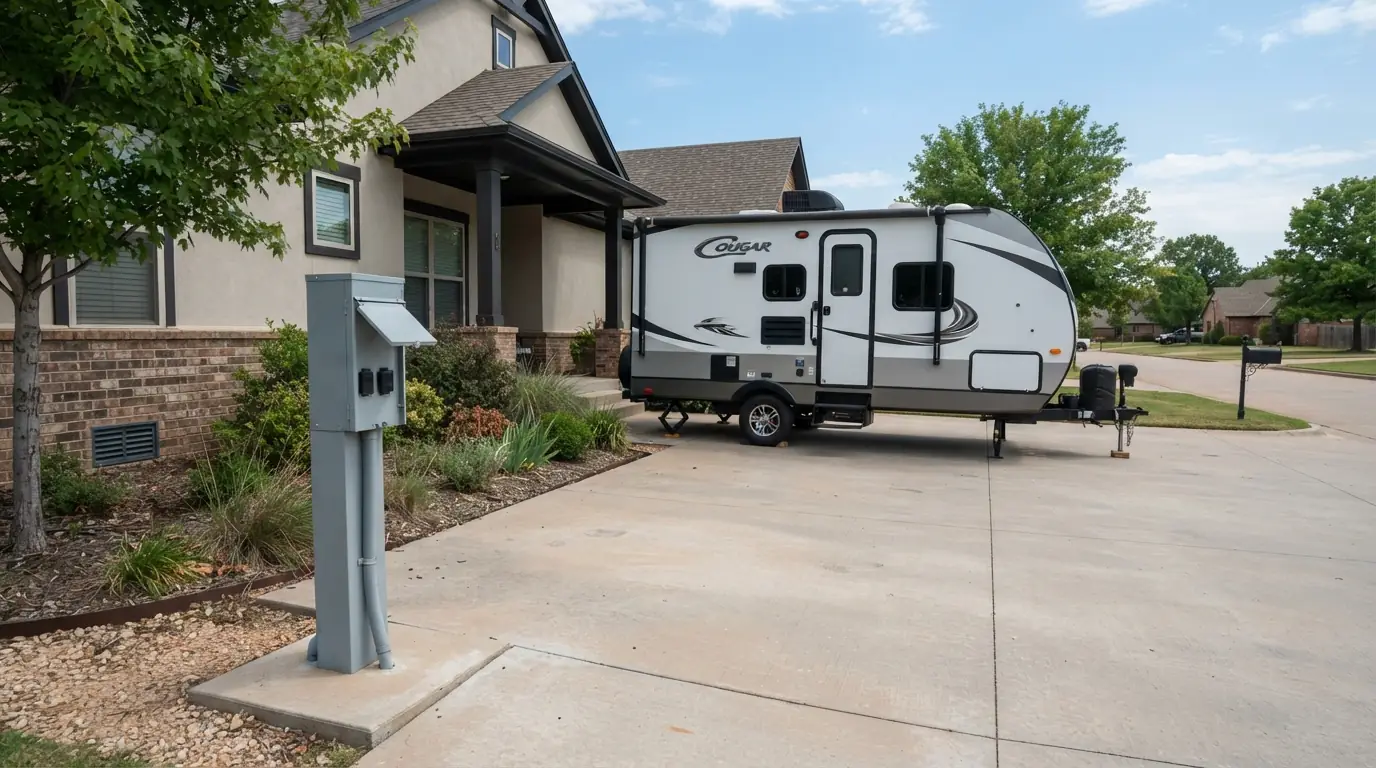
When the RV parks away from the house, a pedestal at the parking spot is cleaner than a long cord across the lawn. The pedestal can carry 30-amp, 50-amp and a standard 20-amp outlet together, with its own breakers. We trench the feed at code depth, set the pedestal on a solid base, and add a light if you want one. It is the same setup you plug into at a campground, at home. A lockable cover keeps neighbors and weather out of it when the RV is away.
Oklahoma City conditions
RVs and long driveways around Oklahoma City
Plenty of homes around the Oklahoma City metro have long driveways, side yards or pads behind the house where an RV or a camper spends the months between trips. The parking spot is often well away from the panel, so the distance, not the outlet, decides most of the job. We measure the run, size the wire so the air conditioner starts cleanly at the far end, and trench or route it the shortest practical way.
DIY or call
Adapters and shortcuts to avoid
| Shortcut | Safe? | What goes wrong |
|---|---|---|
| Dogbone adapter to an outdoor outlet | For charging only | Trips or overheats with the AC on |
| Extension cord to the RV | No | Voltage drop and heat |
| Wiring a TT-30 at 240 volts | Never | Damages the RV electrical system |
| Using the dryer outlet | No | Wrong voltage and no weather protection |
| Permitted RV outlet on its own circuit | Yes | The right way |
Step by step
From the plug check to a powered rig
- Check the RV plug
30 amp or 50 amp, and where the cord reaches.
- Check the panel
Space and capacity for the circuit.
- Route the run
Wall, conduit or trench to the spot.
- Install and protect
Outlet or pedestal, breaker, GFCI where required.
- Test before plugging in
Voltage and wiring verified for the RV.
Questions we get about this job
RV outlet questions
Check the RV plug: a three-prong TT-30 is 30 amp, a four-prong 14-50 is 50 amp.
For charging and lights, briefly. The air conditioner needs a proper RV outlet.
No. A TT-30 is 120 volts; wiring it at 240 can damage the RV.
Many can; some cannot. We check before quoting.
Yes, on the garage wall or on a pedestal at the parking spot.
Yes, as a new circuit.
Yes, pedestals commonly include a 20-amp outlet too.
Same category
More outdoor and commercial work
Lightning Protection Systems
Air terminals and roof conductors and more.
See Lightning Protection SystemsAC Disconnect & HVAC Wiring
Condenser disconnect replacement and more.
How we handle AC DisconnectHot Tub & Pool Wiring
Spa GFCI disconnect and more.
Hot TubStorm Shelter Electrical
Shelter lighting and outlet and more.
About Storm Shelter ElectricalRV in the driveway with nowhere to plug in?
Call and tell us the plug on your rig. We install the matching outlet or pedestal and test it before you connect.