Updated October 2026
Quick answer
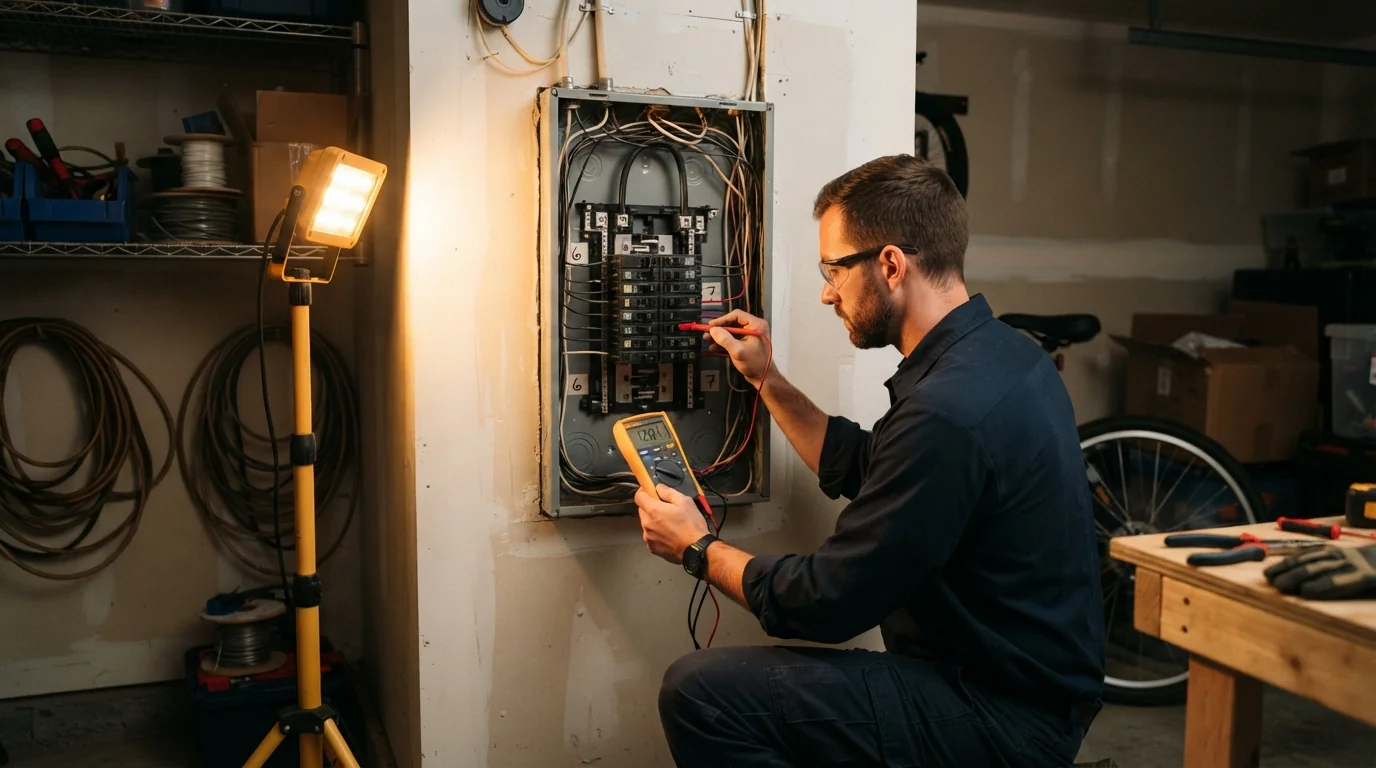
Underground electrical in Oklahoma City means a trench dug to the depth the code requires for the wiring method, either PVC conduit with individual conductors or UF direct-burial cable, warning tape above it, and proper terminations at the house panel and at the outbuilding, gate or pump. We call for the utility locate, dig, run, inspect and backfill in one job, with the permit filed when the run adds a circuit or a feeder.
Why the trench is part of the electrical job
What an underground run involves on an Oklahoma City lot
Most homeowners who call about a shop, a gate opener or a well pump have already had one electrician quote the wiring and tell them to find someone else to dig. That split is where jobs go wrong: the trench ends up the wrong depth, the cable gets nicked by the backhoe, or the conduit sweeps come up in the wrong spot. We do the earthwork ourselves so the run is right from end to end.
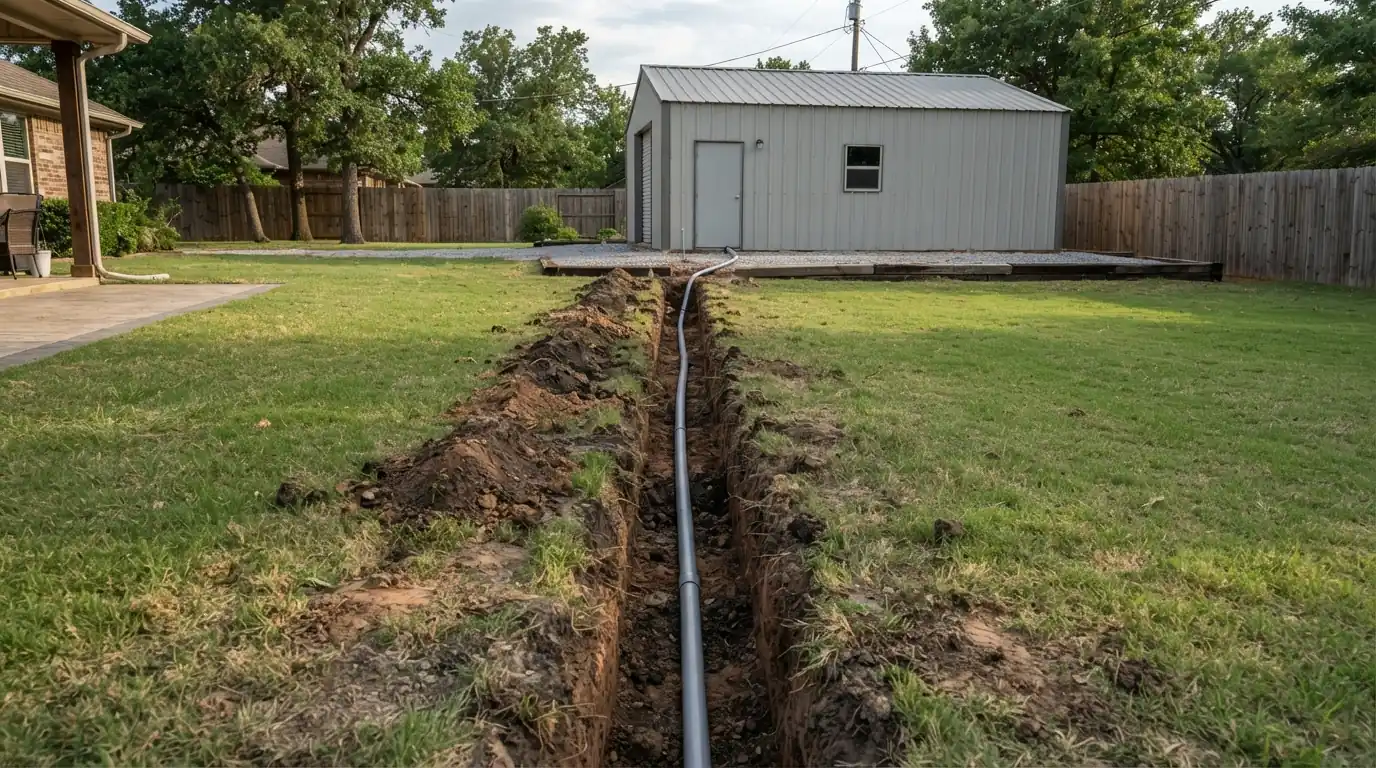
The method depends on the load and the ground. A feeder to a detached shop with a subpanel goes in PVC conduit, sized with room for a future pull. A single circuit to a gate or a shed can go as UF cable buried directly. Either way the trench goes to code depth for that method, gets warning tape, and is inspected before it is closed.
Choosing between the options
Conduit or direct-burial cable
| Method | Best for | Upside | Downside |
|---|---|---|---|
| PVC conduit with pulled conductors | Feeders, long runs, driveway crossings | Repullable, protected, shallower allowed depth | More material and labor |
| UF direct-burial cable | One small circuit to a gate, shed or light | Cheapest, fastest | Deeper trench; damage means full replacement |
| Bore or sleeve under pavement | Driveways and sidewalks in the path | No cutting or patching | Adds cost per crossing |
What moves the price
What decides the cost of an underground run
- Length of the run Trench footage and conductor length scale together; long runs also need larger wire for voltage drop.
- Conduit or cable Conduit costs more in material and labor but can be repulled later.
- What the trench crosses Driveways, sidewalks and tree roots slow the dig or need a bore.
- Load at the far end A shop subpanel needs a feeder; a gate needs one small circuit.
- Ground conditions Rock and hardpan clay take longer than loam.
- Panel capacity A new feeder may need breaker space or a subpanel at the house.
- Restoration Sod, gravel or concrete patching depends on the surface.
Published 2026 estimates put dedicated circuits at roughly $200 to $900 each and a subpanel at $2,800 to $5,100; a long underground run usually sits above the circuit range because of the trenching. Those are planning figures from national guides, not our price.
What is included
What an underground electrical job includes
- Utility locate requested before the first shovel
- Route walked with you; sprinklers and private lines flagged
- Conductor sized for voltage drop over the real distance
- Conduit or UF cable at code depth for the method
- Warning tape above the run
- Inspection before backfill
- Backfill in lifts, sod or gravel restored
Sub-jobs this page covers
The three kinds of underground jobs we run
Conduit and direct-burial cable
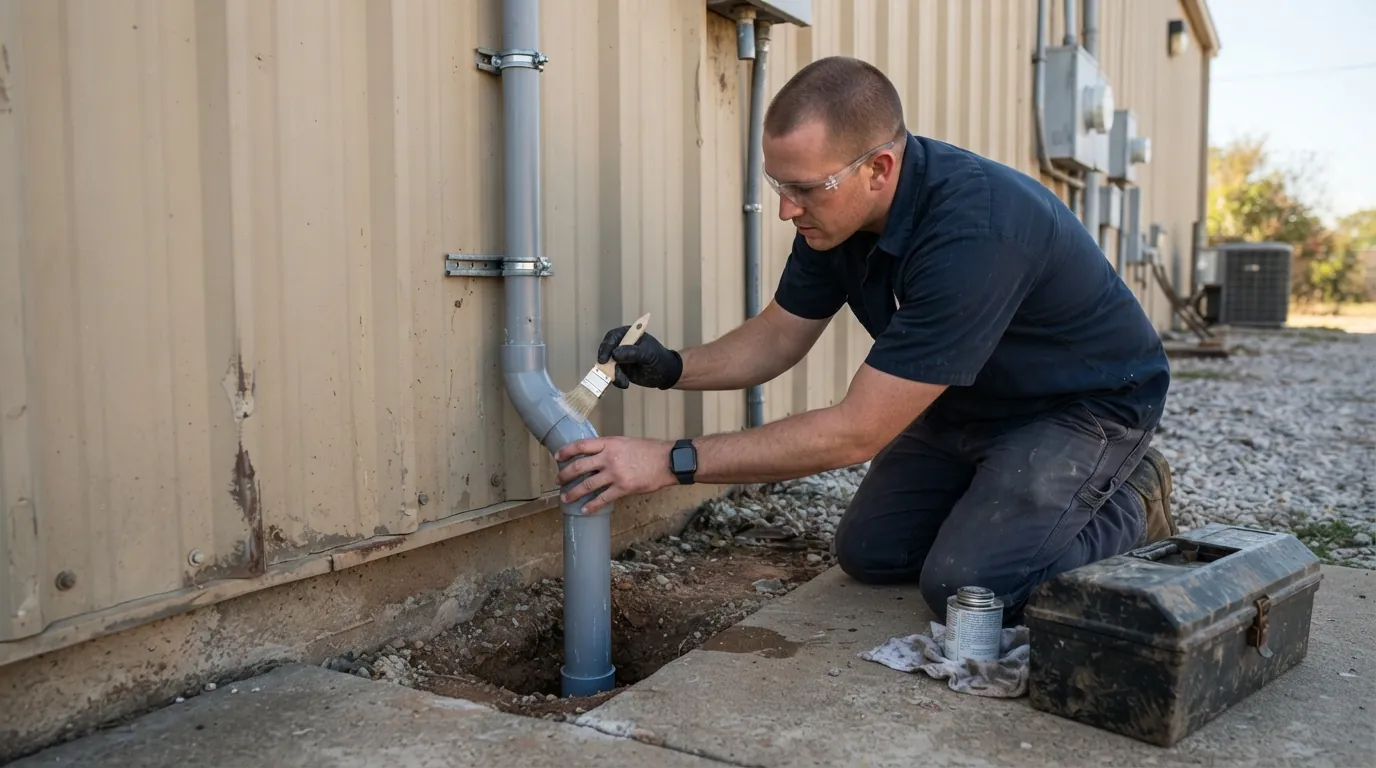
Conduit is the method for anything that matters: a feeder to a shop, a run you might upgrade later, or a route that crosses a driveway. Schedule 40 PVC below grade, Schedule 80 where it comes up the wall, conductors pulled after the conduit is glued and inspected. UF direct-burial cable is the lighter option for a single circuit to a shed light or a gate operator; it is cheaper and buried deeper, but if it is ever damaged the whole run is replaced rather than repulled. We recommend by load, distance and what the trench crosses.
Power to a gate, well or shed
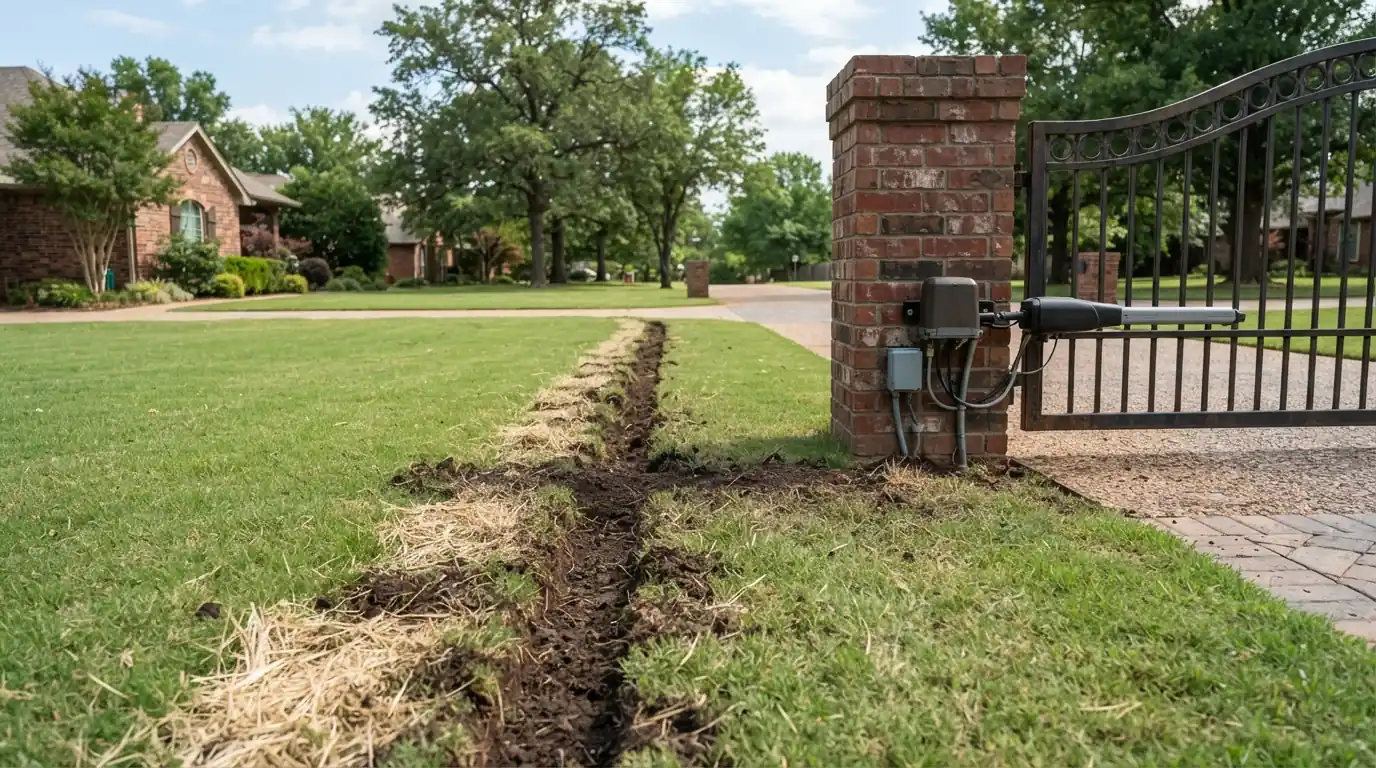
These are the single-circuit runs: a 120-volt line for a gate operator and keypad, a 240-volt circuit for a well pump, or a light and an outlet in a shed. The electrical end is simple; the length is the job. A gate at the end of a 300-foot drive needs the conductor upsized for voltage drop or the operator will stall, and a pump circuit gets its own disconnect at the wellhead. We size for the distance, not just the load, and land a GFCI or a weatherproof box at the far end.
Trench, backfill and restore
The part most electricians skip is the part you look at every day afterward. We call the utility locate before any digging, cut sod in strips where the trench crosses lawn, and bore or sleeve under sidewalks and driveways rather than breaking concrete where we can. After inspection the trench gets warning tape, is backfilled in lifts and compacted, and the sod goes back down. If a sprinkler line is in the path we cap and repair it the same day.
Oklahoma City conditions
Red clay, rock and long OKC lots
Trenching in Oklahoma City depends on what is under the grass. The median home here dates to 1982, and the larger lots on the edges of the city are where detached shops, second garages and long driveway gates are common, which means feeder runs of 100 to 300 feet are normal. Those runs cross older sprinkler systems and unmarked private lines that the utility locate does not cover, so we walk the route with you before the trencher starts and probe by hand near anything suspicious.
Step by step
From the locate call to the last shovel of dirt
- Locate and walk the route
Utility locate requested, private lines and sprinklers flagged with you.
- Size the wire for the distance
Load plus voltage drop over the actual footage.
- Trench to depth
Cut sod, dig, bore under hard surfaces.
- Lay, terminate, inspect
Conduit or cable placed, both ends landed, inspection before backfill.
- Backfill and restore
Warning tape, compacted lifts, sod or gravel back in place.
Questions we get about this job
Trenching and underground wiring questions
It depends on the wiring method: conduit is allowed shallower than direct-burial cable, and driveways change the number. We dig to the depth the code sets for the method we use.
Yes, before any digging. Private lines such as sprinklers, septic and old wiring are not covered by the locate, so we walk those with you.
Usually. We bore a sleeve under concrete or asphalt for most residential widths and only cut when the ground will not allow it.
Conduit for feeders, long runs and anything you might upgrade; UF cable for a single small circuit where cost matters more than future flexibility.
A trench line is visible for a few weeks while the sod knits back. We strip sod in sections and replace it rather than tilling the lawn.
Adding a circuit or a feeder does, and the trench is inspected before it is closed. We file it and schedule the inspection.
A short run to a gate or shed is usually a day. A shop feeder with a subpanel is two days, with inspection between them.
Same category
More wiring and safety work
Outlet & Switch Installation
GFCI outlets in kitchens and baths and more.
How we handle OutletKnob & Tube Replacement
Attic and wall removal and more.
KnobDoorbell & Low-Voltage Wiring
Video doorbell transformer and more.
About DoorbellKitchen & Bath Remodel Wiring
Kitchen circuit layout and more.
Kitchen detailsNeed power on the other side of the yard?
Call and describe what is out there. We will tell you whether it is a conduit feeder or a single buried circuit, and what the trench will cross on the way.