Updated October 2026
Quick answer
A standby generator install in Oklahoma City is an air-cooled Generac or Kohler unit of 14 to 26 kW on a pad beside the house, an automatic transfer switch between the meter and the panel, and a natural gas or propane supply sized for the engine. We handle the electrical side end to end and coordinate the gas piping, and the whole system is permitted and inspected before it goes live.
What a whole-home generator system is made of
How a standby generator keeps an Oklahoma City house running
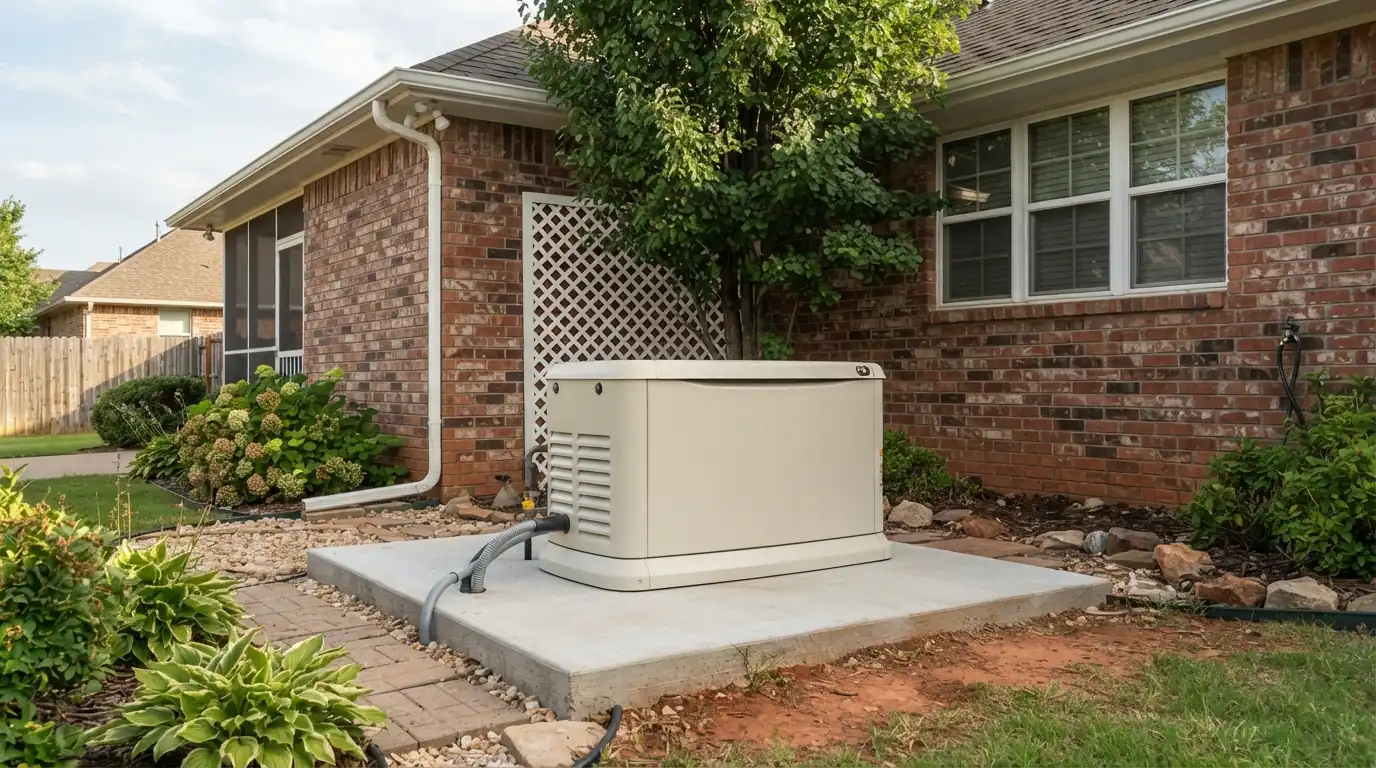
A standby generator is three pieces working together: a Generac or Kohler air-cooled unit of 14 to 26 kilowatts on a pad outside, an automatic transfer switch that drops the house off the grid and onto the generator within seconds of an outage, and a fuel line, natural gas where the meter allows and propane where it does not.
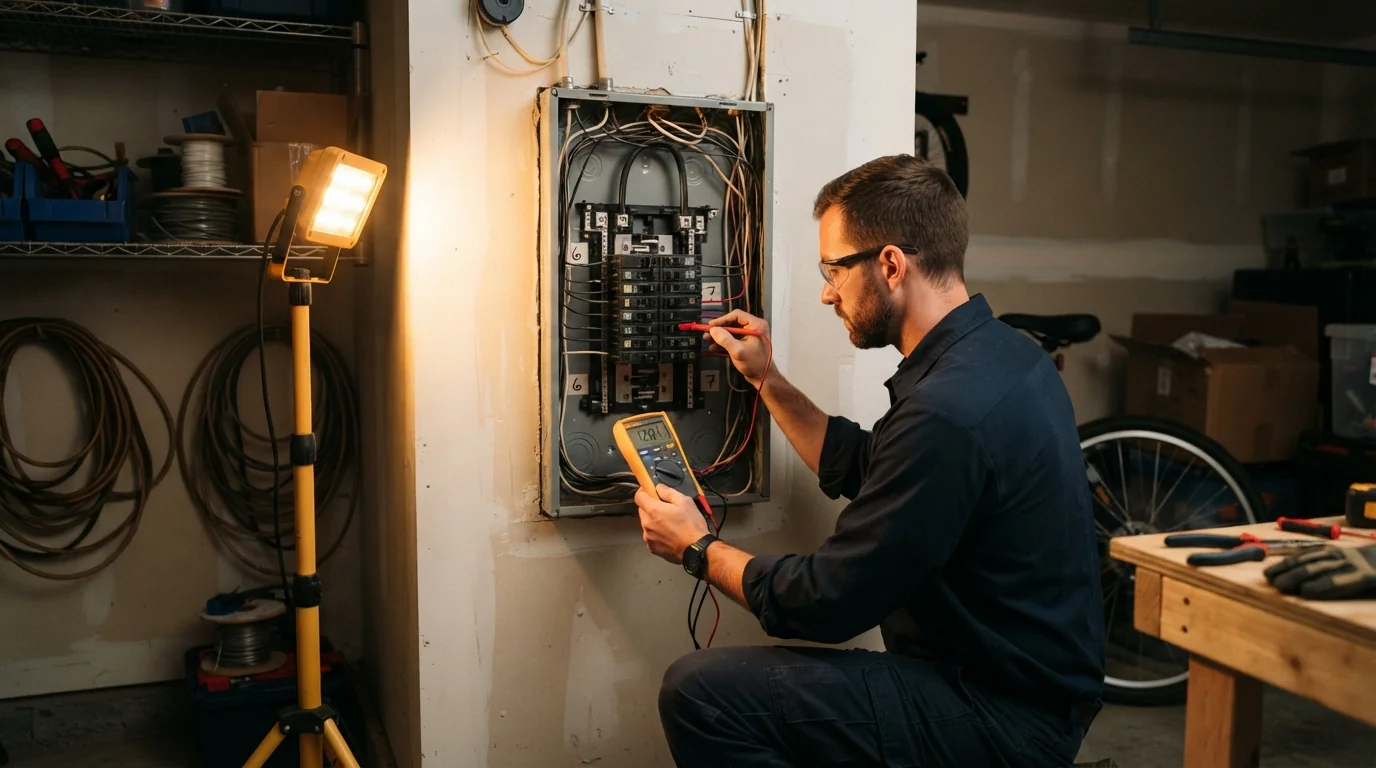
Our job is the electrical half and the coordination of the rest: sizing the unit against the loads you want carried, setting the pad with clearances from windows and the gas meter, wiring a Square D or manufacturer transfer switch and the control run, and arranging the gas fitter. Then we simulate an outage with you watching.
Choosing between the options
Which size and fuel fit your house
| Choice | Pick this when | Trade-off |
|---|---|---|
| 14 to 18 kW essentials unit | Furnace, fridge, lights, a well pump; AC not required | Cheapest; AC only with load management |
| 20 to 26 kW whole-house unit | Central air and everything else at once | Higher unit cost and larger gas demand |
| Natural gas | Meter already at the house | Meter and piping must deliver the volume |
| Propane | No gas service on the lot | Tank purchase and refills |
What moves the price
What decides the price of a standby generator
- Generator size A 14 kW essentials unit and a 26 kW whole-house unit sit far apart in price.
- Transfer switch type Whole-house, service-rated and load-managed switches differ in cost.
- Fuel Natural gas needs a meter and piping check; propane needs a tank.
- Distance to the panel Longer conduit and control runs add labor.
- Pad and clearances A pad and a clear spot away from windows.
- Gas piping Length, size and whether the meter needs upgrading.
- Permit and inspection Electrical and gas permits, both inspected.
National 2026 guides put a whole-home standby generator at about $7,000 to $15,000 installed, with the unit $4,000 to $8,000 and the transfer switch plus electrical $1,500 to $3,500. Planning ranges, not our quote.
What is included
What is included in a generator install
- Load calculation done with you, not off a brochure
- Pad set with code clearances from windows, doors and the gas meter
- Automatic transfer switch sized to the service
- Conduit and control wiring from the switch to the unit
- Gas line coordinated and pressure verified
- Weekly exercise cycle programmed
- Simulated outage test with you watching
Sub-jobs this page covers
The four decisions inside a generator install
Generac and Kohler air-cooled units
Both brands make the air-cooled home units that cover almost every house we work on, and both are serviceable in the metro. Generac has the largest parts footprint and widest size range; Kohler engines are known for holding voltage when a big motor such as a well pump or AC compressor starts. We install either; the choice comes down to the size you need, what is in stock and preference. Liquid-cooled units are for very large homes and commercial buildings and are a different install.
Natural gas vs propane
Natural gas is the simpler fuel where a gas meter already serves the house: no tank, no refills, and the generator runs until the outage ends. The meter and house piping must deliver enough volume for the engine, which we check with the gas fitter before quoting. Propane is the answer where there is no gas service, common on larger lots at the edges of the metro; it needs a tank sized for the runtime you want. Either fuel runs the same generator with a simple conversion.
Automatic transfer switch
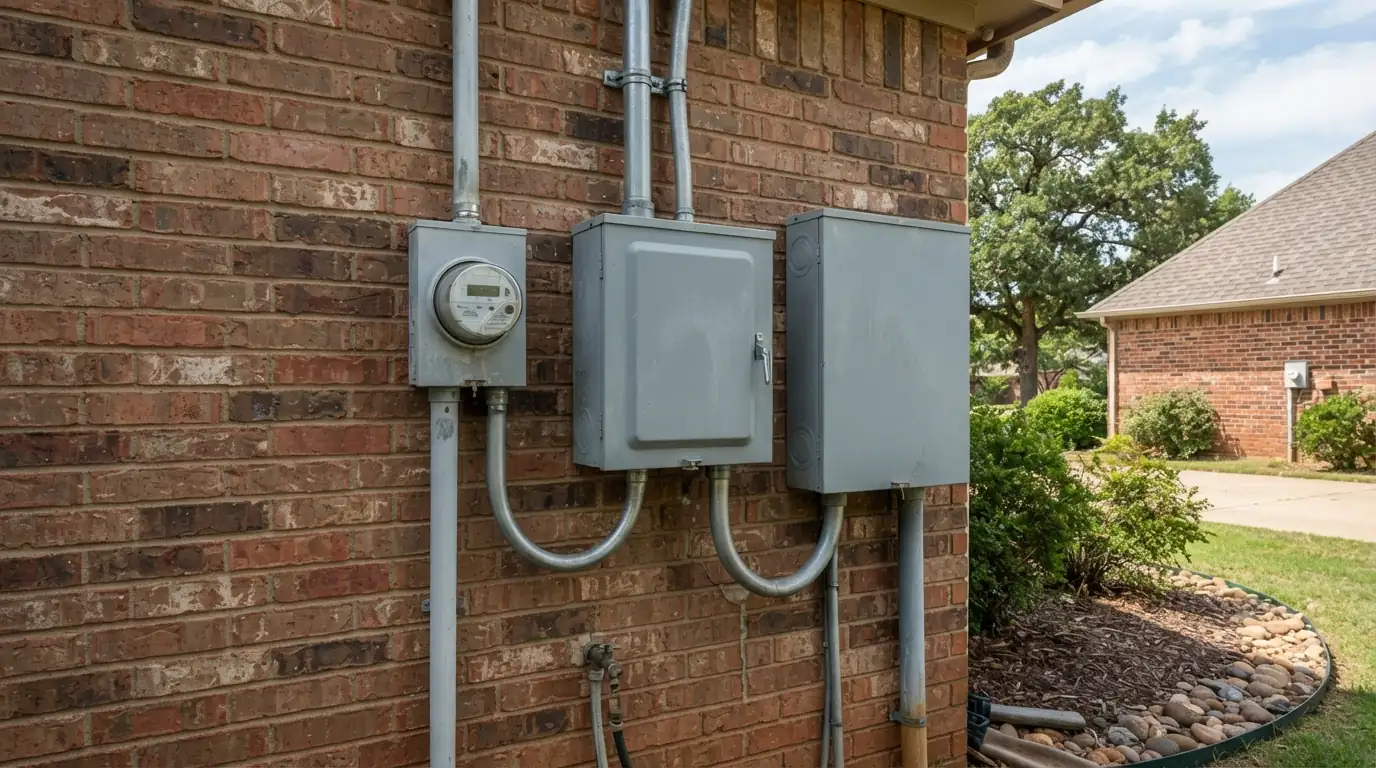
The transfer switch is the piece that makes a generator standby instead of portable. Mounted between the meter and the main panel, it senses the outage, starts the generator, waits for it to reach speed, then transfers the house; when utility power has been stable for a few minutes it transfers back and shuts the unit down. A whole-house switch carries every circuit; a service-rated switch also replaces the main disconnect. We size it to the service, usually 200 amps.
Load-managed essential circuits
Not every house needs a generator big enough to run two air conditioners at once. Load management lets a smaller, cheaper unit carry the whole panel by shedding the largest loads for a few minutes when the generator is near its limit, then bringing them back. We set the priorities with you: furnace, fridge and well pump first, AC next, dryer and range last. On many homes it is the difference between a 22 kW and a 26 kW unit, and it is standard on current Generac and Kohler controllers.
Oklahoma City conditions
Eleven days without power is why people call
The October 26 to 28, 2020 ice storm put an inch and a half of ice on central Oklahoma, was the first October ice storm warning NWS Norman had ever issued, and brought down lines under fully leafed trees across Oklahoma City, Warr Acres and Piedmont. Eleven days later the state was still counting 42,433 outages in Oklahoma City, 829 in Bethany and 250 in Warr Acres. That is the week most of our generator customers describe on the first call, and it is why we size for days of runtime rather than hours.
The next ice storm is not a question of if.
Call and we will size a Generac or Kohler unit for the circuits you care about, then handle the switch, the wiring and the permits.
Step by step
From sizing to the first automatic start
- Size the load with you
Furnace, AC, well pump, fridge, medical equipment; we add it up and pick the unit.
- Set the location
Pad site, clearances from openings and the gas meter, and the shortest route to the panel.
- Install the transfer switch and wiring
Switch between meter and panel, conduit and control wiring to the pad.
- Fuel hookup
Gas fitter runs the line; we verify pressure and volume at the generator.
- Commission and test
Weekly exercise cycle set, simulated outage run with you present, inspection signed off.
Questions we get about this job
Generator questions from Oklahoma City homeowners
Most homes land between 18 and 26 kW to run central air; a smaller unit with load management can carry the panel by shedding the AC briefly.
On natural gas, as long as the outage. On propane, as long as the tank allows; a 500-gallon tank gives most homes several days.
Yes. The transfer switch senses the outage, starts the generator within seconds, and switches back to utility when the grid has been stable.
Usually; the switch sits ahead of it. Federal Pacific and fuse panels get replaced first.
Yes, electrical and gas. We file both and meet the inspectors.
An annual service with oil, filters and a battery check, plus the weekly self-test it runs itself.
Both are good. Generac has the bigger metro parts network; Kohler holds voltage well under motor starts. We install and service either.
Same category
More backup power and EV work
Commercial Generator Installation
Standby units for businesses and more.
Commercial Generator InstallationGenerator Transfer Switch Installation
Manual transfer switch and more.
About Generator Transfer Switch InstallationEV Charger Installation
Level 2 hardwired charger and more.
EV Charger Installation detailsGenerator Maintenance & Repair
Annual service and more.
See Generator MaintenanceReady to stop watching the outage map?
Call to size a standby generator for your house. We will tell you what it takes to carry the AC, and what a smaller unit with load management can do instead.