Updated October 2026
Quick answer
Electrical code corrections in Oklahoma City usually come from a home inspection report during a sale: double-tapped breakers, open junction boxes, missing GFCI protection, reversed polarity, open grounds, missing cover plates or an old panel brand. We read the report, confirm each item on site, repair it to the code Oklahoma City enforces, and give you photos and a written list for the buyer, the seller and the lender.
What the report is really asking for
What electrical code corrections involve in Oklahoma City
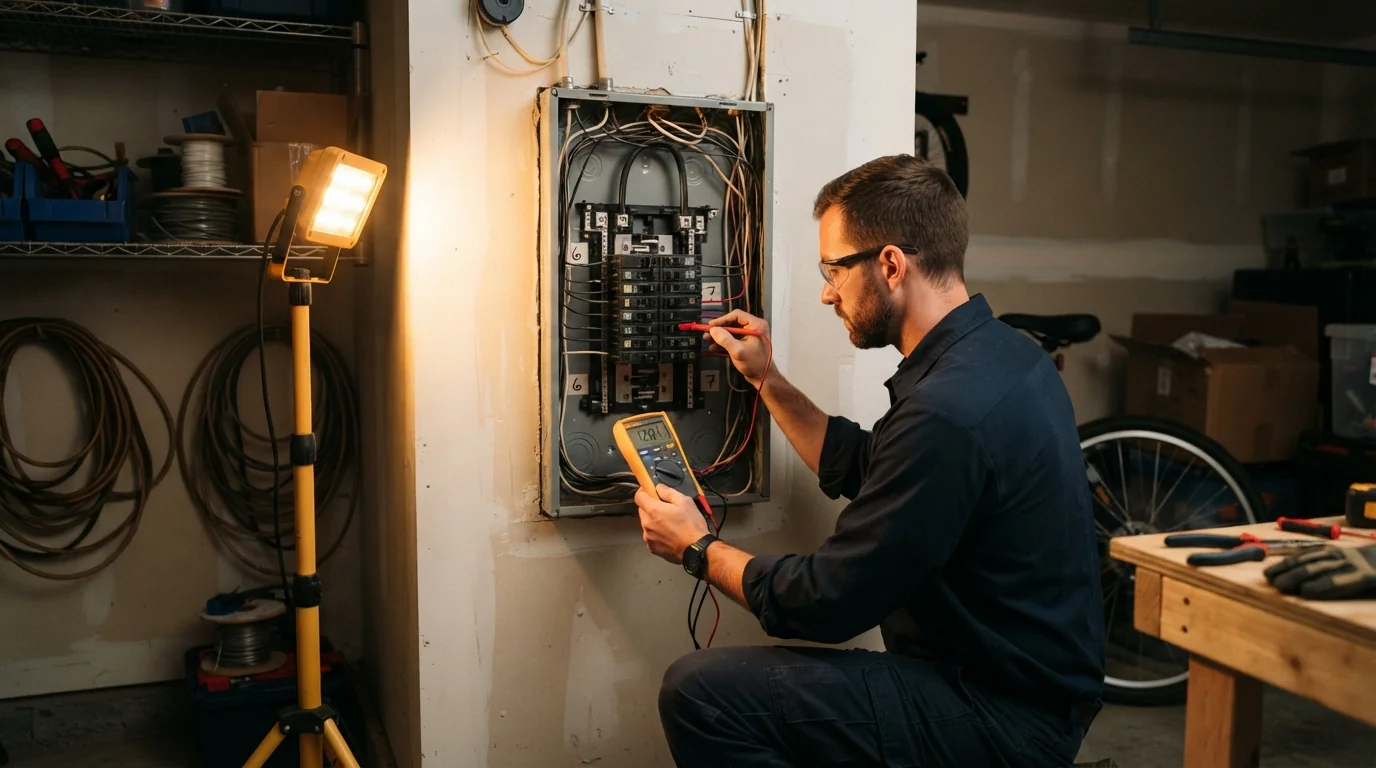
Home inspectors write down what they see, not how to fix it, and a report that says "further evaluation by an electrician recommended" next to eight items can read like a much bigger problem than it is. Most items are small: a double-tapped breaker, a missing knockout cover, a bathroom outlet without GFCI protection, a junction box with no lid in the attic.
We start by confirming each item, because some turn out to be fine and a few turn out to be worse than written. Then we repair them in one visit where we can, photograph each fix, and write a plain list that matches the report line by line. If an item needs a permit, such as a panel replacement, we say so and file it, rather than treating it as a quick fix.
What moves the price
What decides the cost of report repairs
- Number of items A report with three items and one with fifteen are different visits.
- What each item really is Some flagged items turn out fine; some turn out bigger.
- Panel findings Double taps are small; a full or problem-brand panel may need replacing.
- Access Attic and crawlspace items take longer than panel items.
- Permits Panel or service work needs a permit and an inspection.
- Documentation Photos and a line-by-line list are included.
- Closing deadline Rush scheduling around a closing date may cost more.
Report repairs are quoted per report because the item list decides the time. National 2026 figures put residential service calls at about $79 to $179 and labor at $75 to $150 per hour.
Sub-jobs this page covers
The corrections that show up on most reports
Open junction boxes
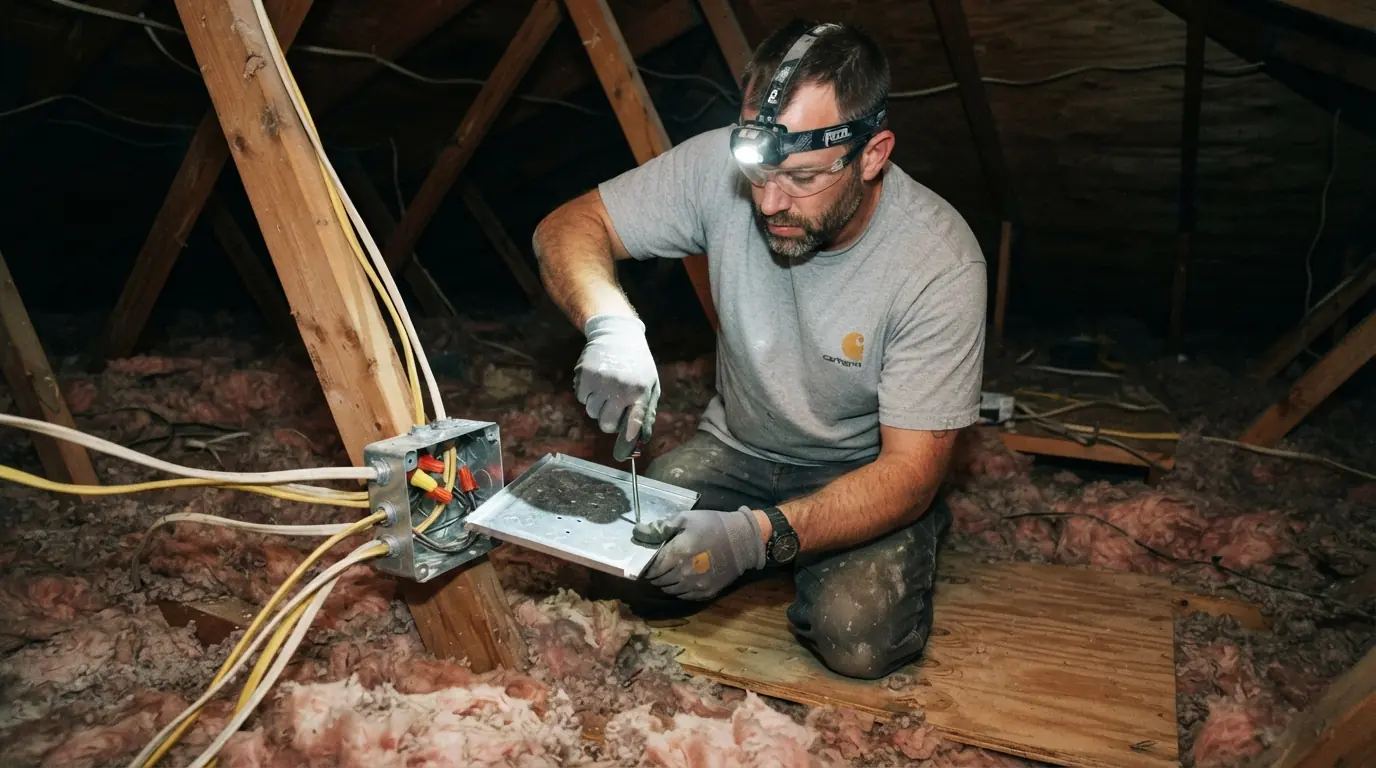
A splice in an attic or crawlspace with no cover, or wires joined outside a box altogether, is one of the most common report items. The fix is a proper box, secured, with the splices inside it and a blank cover on top, accessible for the next person. Where wires were spliced loose with tape, we rebuild the connection in a box. It is quick work once we find every one, which is why we walk the attic rather than only fixing the spots the inspector could see from the hatch.
Double-tapped breakers
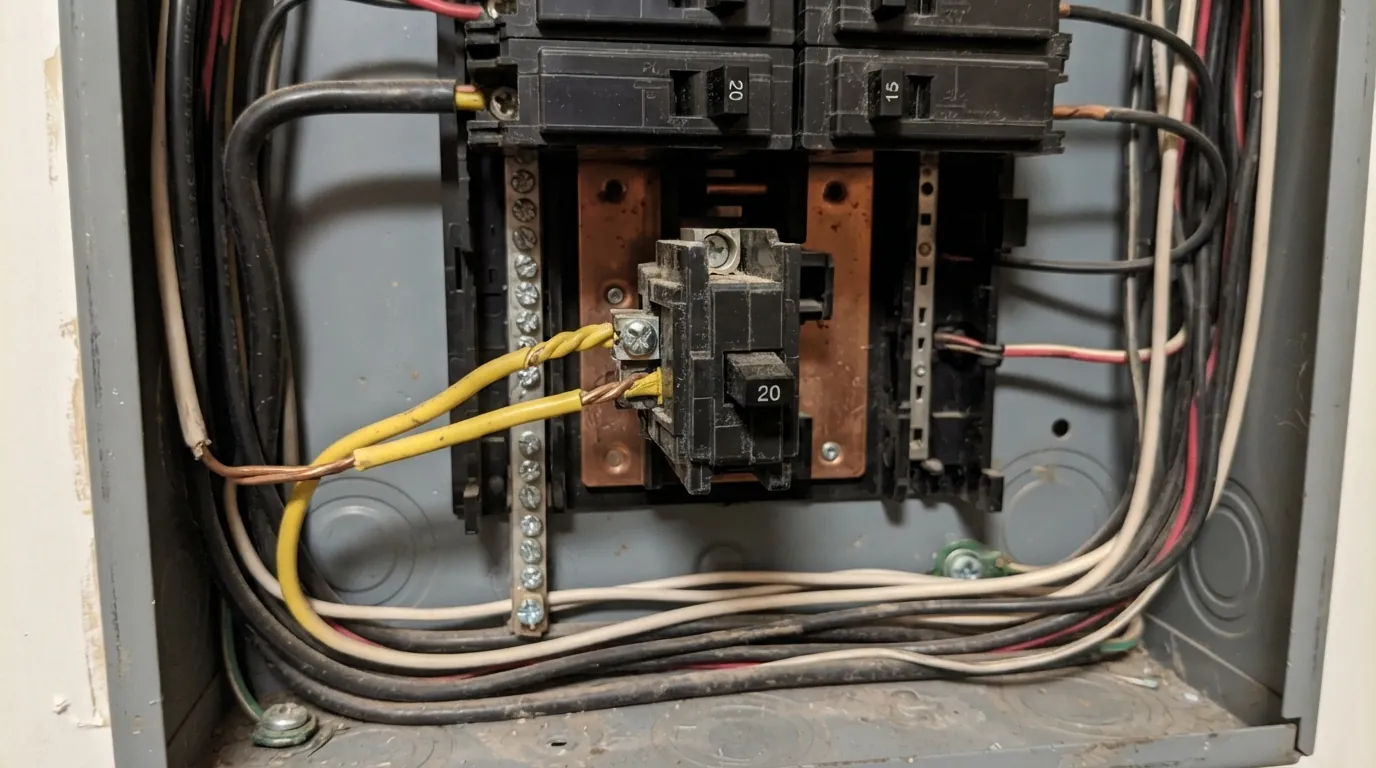
Two wires under a breaker terminal made for one is a classic panel finding. The connection can loosen and overheat, and it usually means someone added a circuit without room for a new breaker. We fix it with a pigtail to a single conductor, a breaker listed for two wires, or a new breaker where there is space. If the panel is full throughout, or is a Federal Pacific or Zinsco unit the inspector also flagged, the honest answer may be a panel replacement, and we will say so.
Missing GFCI protection
Kitchens, bathrooms, garages, laundry areas, exterior outlets and unfinished basements need GFCI protection in current code, and older homes often have none. We add GFCI receptacles at the first outlet on each run or GFCI breakers at the panel, whichever protects the circuit cleanly, and test every downstream outlet so the buyer inspector sees them all trip. Missing outlet covers inside and weatherproof covers outside get fixed in the same pass, and any GFCI that fails its own test button is replaced rather than reset.
Reversed polarity and open grounds
A plug-in tester shows reversed polarity when the hot and neutral are swapped at an outlet, and an open ground when a three-prong outlet has no ground connected. Polarity is a straightforward correction at the device. Open grounds are more involved: where a ground can be run we run one, and where it cannot, code allows a GFCI to protect the ungrounded outlet as long as it is labeled accordingly. We explain which option applies to each outlet on the report.
Oklahoma City conditions
Why older houses fill the report
The age of the housing stock is what fills these reports. Close to a third of Oklahoma homes were built between 1960 and 1979 and another tenth in the two decades before, according to Census figures, and many electrical systems from those decades have been added to by several owners since. Houses in that bracket that were built or expanded between 1965 and 1973 may also have aluminum branch wiring, which the CPSC treats as a fire risk at the connections and which inspectors flag on sight.
DIY or call
Which report items a seller can handle
| Report item | Seller-safe? | Better left to us |
|---|---|---|
| Missing outlet or switch cover plate | Yes | If the box behind it is damaged |
| Reset a tripped GFCI | Yes | If it will not reset |
| Replace a broken receptacle on a live circuit | No | Always |
| Double-tapped breaker | No | Always, it is inside the panel |
| Open junction box in the attic | No | Splices must be rebuilt in a box |
Warning signs
Report items you can spot before the inspector does
- Two wires under one breaker screwA double tap, visible with the panel cover off.
- Junction boxes with no coverLook in the attic and crawlspace.
- Bathroom or kitchen outlets with no test buttonLikely no GFCI protection on that run.
- Three-prong outlets in a 1960s houseOften ungrounded unless the house was rewired.
- Missing cover platesExposed terminals behind the plate.
- Warm outlet or switch platesA loose or failing connection, possibly aluminum wiring.
- Federal Pacific or Zinsco label on the panelInspectors flag these by brand.
Step by step
From the report to the photos
- Read the report
Every electrical line item, before the visit.
- Confirm on site
Each item checked; some are fine, some are worse.
- Repair in one visit where possible
Boxes, breakers, GFCIs, polarity, covers.
- Permit anything that needs it
Panel or service work filed and inspected.
- Photos and a matching list
Line by line against the report, for buyer, seller and lender.
Questions we get about this job
Inspection report questions
Every electrical item, yes. Some are same-day repairs; panel replacements need a permit and a scheduled date.
Yes. Photos of each repair and a written list that matches the report item by item.
It can overheat over time. It is a common, quick fix unless the panel itself is the problem.
Many buyers and insurers require it. We explain the concern and the replacement options.
Device-level fixes usually do not; panel, service and new circuit work does.
Yes. Tell us the date when you call and we schedule around it.
Different inspectors see different things. We confirm new items the same way and fix what is real.
Same category
More emergency and troubleshooting work
Circuit Breaker Replacement
Breaker that will not reset and more.
How we handle Circuit Breaker ReplacementService Mast & Meter Base Repair
Bent or pulled mast and more.
Service MastEmergency Electrician
Sparking or hot outlet and more.
About Emergency ElectricianElectrical Safety Inspection
Pre-purchase inspection and more.
Electrical Safety Inspection detailsInspection report in hand and a closing date coming?
Call or send the report. We confirm each item, fix it and document every repair for both sides of the sale.