Updated October 2026
Quick answer
A lightning protection system in Oklahoma City is a network of air terminals on the roof, conductors running down the building and ground electrodes that give a strike a low-resistance path into the earth, bonded to the building's other grounded systems and paired with surge protection at the electrical service. Systems are designed to the NFPA 780 standard and inspected after any strike and on a regular schedule.
What is included
What a lightning protection system includes
- Survey of the roof, structure and soil
- Air terminals at standard spacing and projections
- Conductors routed with gentle bends
- Down conductors to tested ground electrodes
- Bonding to electrical, plumbing and gas grounding
- Surge protection at the service
- Written record of the system and test results
A strike path, not a strike magnet
How a lightning protection system works
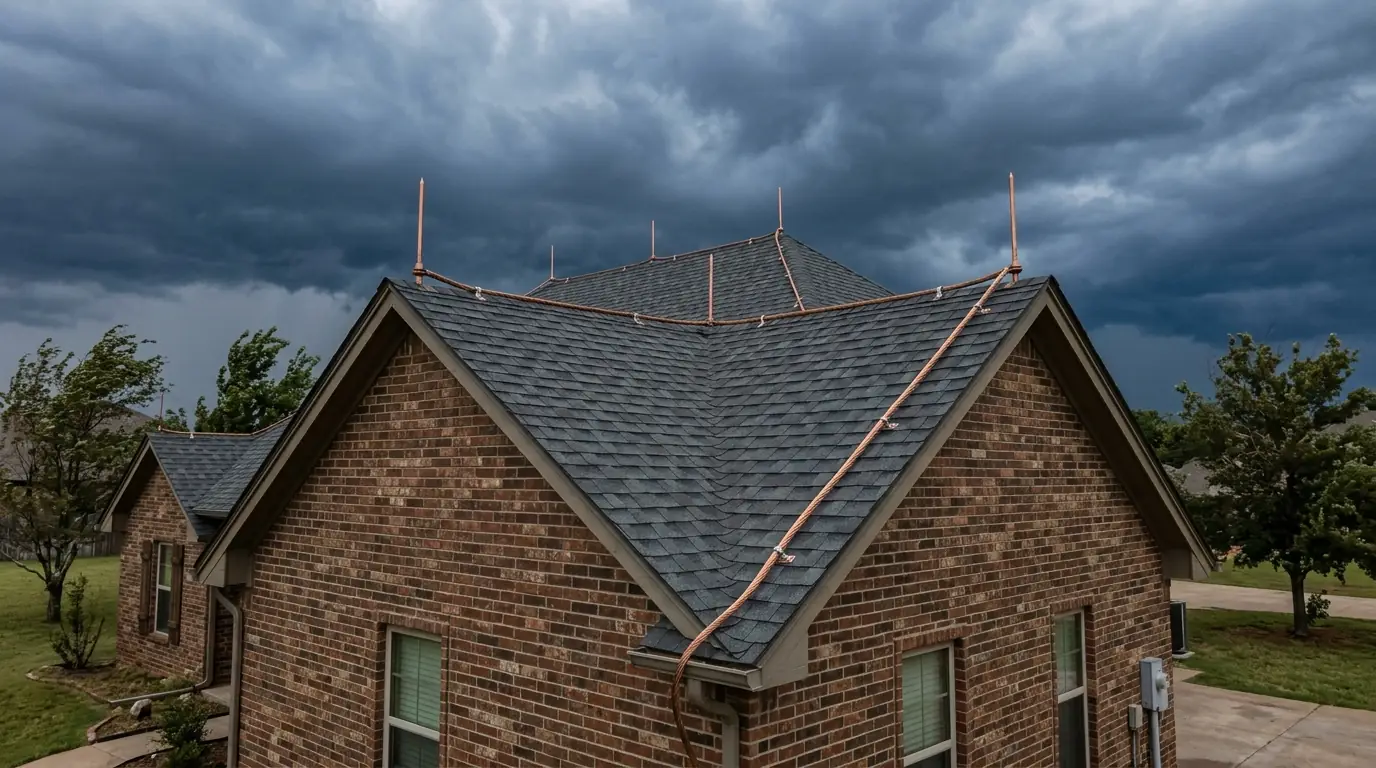
A lightning protection system does not attract lightning or prevent strikes. It decides where the current goes when a strike happens. Air terminals, the short rods along ridges and roof edges, intercept the strike; heavy conductors carry it over the roof and down the walls; and ground electrodes spread it into the soil. Without that path, the current finds its own through framing, plumbing and wiring, which is how strikes start attic fires and destroy electronics.
The design follows NFPA 780, the standard for installing lightning protection systems: terminal spacing along the roof, conductor routing with gentle bends, down conductors at the corners, and a grounding system bonded to the electrical, plumbing and gas grounding so everything rises together instead of arcing between systems. Surge protection at the electrical service completes it, because a nearby strike can send damaging surges through the utility lines even when the building itself is not hit.
Sub-jobs this page covers
Terminals, grounding, surge protection and inspection
Air terminals and roof conductors
Air terminals are mounted along ridges, at roof corners and on chimneys and other projections at the spacing the standard requires, then tied together with copper or aluminum conductors chosen to suit the roof and avoid corrosion. On shingle roofs the conductors run along the ridge and down the slopes with fasteners sealed against leaks; on metal and commercial roofs the system is adapted to the roof material and the rooftop equipment. Chimneys, vents, satellite dishes and HVAC units near the conductors are bonded so a strike does not jump to them.
Lightning protection grounding
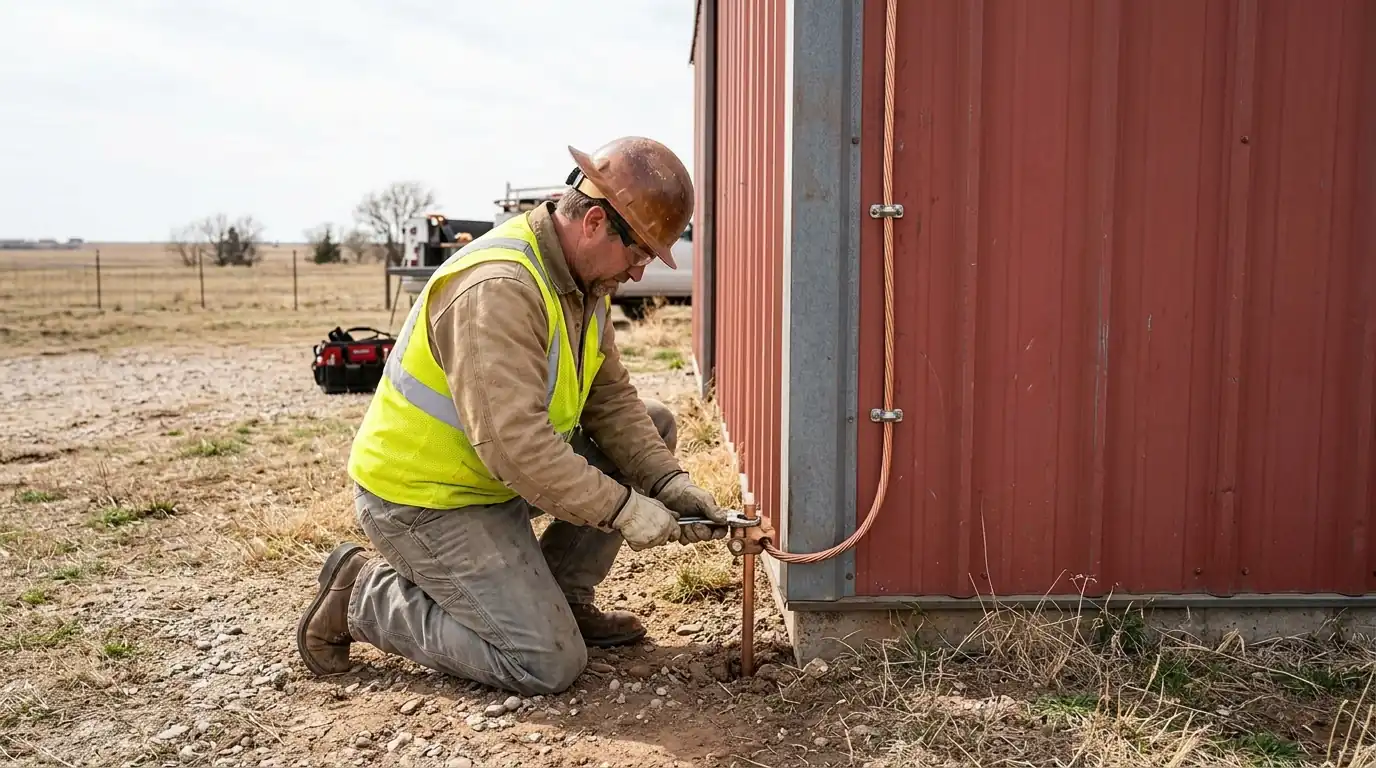
The grounding system is where a lightning protection system succeeds or fails. Each down conductor ends at a ground electrode, usually driven rods or a ground ring around the building, and the electrodes are bonded together and to the building's electrical grounding electrode system. We test the ground resistance after installation, because dry or rocky soil can call for longer rods or a ring. A system with good terminals and poor grounding still pushes current into the building. We record the readings at each electrode so later inspections have a baseline to compare against.
Surge protection at the service
Lightning does not have to hit the building to do damage. A strike on or near the power lines sends a surge through the service into every circuit. A Type 1 or Type 2 surge protective device at the main panel diverts that surge to ground before it reaches appliances and electronics, and point-of-use protection covers sensitive equipment. Lightning protection standards call for surge protection at the service, and it is the part of the system that guards against the more common, indirect strikes.
Inspection after a strike
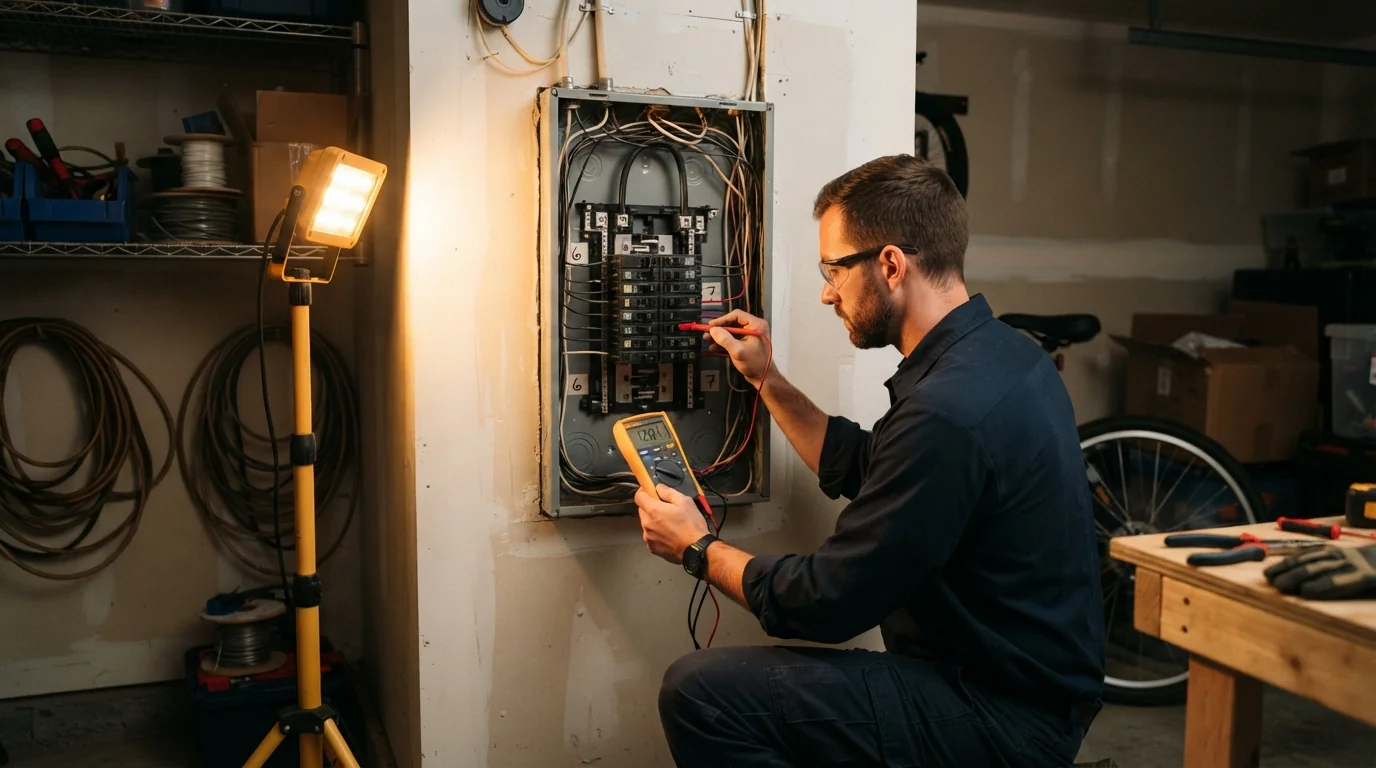
After a known or suspected strike, the system should be inspected: terminals and conductors for burn marks or damage, connections for looseness, and the grounding for continuity and resistance. Systems also need periodic inspection, because roof work, new rooftop equipment or a loose conductor can quietly break the path. We repair damaged components, bond anything added since the last inspection, and test the surge protection at the panel. If the strike damaged anything inside, such as a breaker, a receptacle or an appliance circuit, we trace and repair that too.
Oklahoma City conditions
Lightning around Oklahoma City
Oklahoma sits near the top of the national lightning rankings. In 2025 the state ranked second among all states for lightning density, with 253 lightning events per square mile, behind only Florida, and an Oklahoma town was named the national lightning capital. For homes on acreage, barns, churches with steeples and commercial buildings across the Oklahoma City metro, that frequency is what makes a protection system worth designing properly rather than leaving it to luck.
Choosing between the options
Full system or surge protection
| Approach | Protects | Trade-off |
|---|---|---|
| Full lightning protection system | The structure, roof and occupants | Largest project |
| Service surge protection only | Wiring and appliances from surges | No protection from a direct strike |
| Surge plus point-of-use protection | Electronics and appliances | Still no structural protection |
| Detached building system | Barns, shops and towers | Separate design and grounding |
Step by step
From survey to tested system
- Site survey
Roof, structure and soil reviewed.
- Design to NFPA 780
Terminals, conductors and grounds laid out.
- Install the roof system
Terminals and conductors mounted and sealed.
- Ground and bond
Electrodes driven, bonded and tested.
- Surge protection and record
Service protection installed and the system documented.
What moves the price
What decides the cost of lightning protection
- Building size and shape Roof length, corners and projections set the terminal count.
- Roof type Shingle, metal and flat roofs mount differently.
- Conductor material Copper or aluminum chosen for the roof and setting.
- Grounding conditions Dry or rocky soil can need a ground ring.
- Detached buildings Barns, shops and towers add separate systems.
- Surge protection Service and point-of-use devices.
- Access Steep or tall roofs need more equipment and time.
Lightning protection is quoted from the building's dimensions and roof. National 2026 figures put electrician labor at about $75 to $150 per hour; terminals, conductors and grounding materials vary with the building.
Questions we get about this job
Lightning protection questions
No. It gives a strike that would happen anyway a safe path to ground.
It is most worthwhile for tall or isolated buildings, homes on open acreage and buildings with sensitive equipment.
No. Fasteners are sealed and placed to suit the roofing.
It protects the wiring from surges but not the structure from a direct strike.
Yes, as its own system with its own grounding.
After any strike and after roof work, plus a periodic check.
NFPA 780, the standard for installing lightning protection systems.
Same category
More outdoor and commercial work
Hot Tub & Pool Wiring
Spa GFCI disconnect and more.
How we handle Hot TubCommercial Electrician
Retail and restaurant service calls and more.
Commercial ElectricianAC Disconnect & HVAC Wiring
Condenser disconnect replacement and more.
About AC DisconnectTenant Build-Out Wiring
Office and retail build-outs and more.
Tenant Build-Out Wiring detailsWant a strike to have somewhere safe to go?
Call to set up a survey. We design the system for your building and test the grounding before we leave.