Updated October 2026
Quick answer
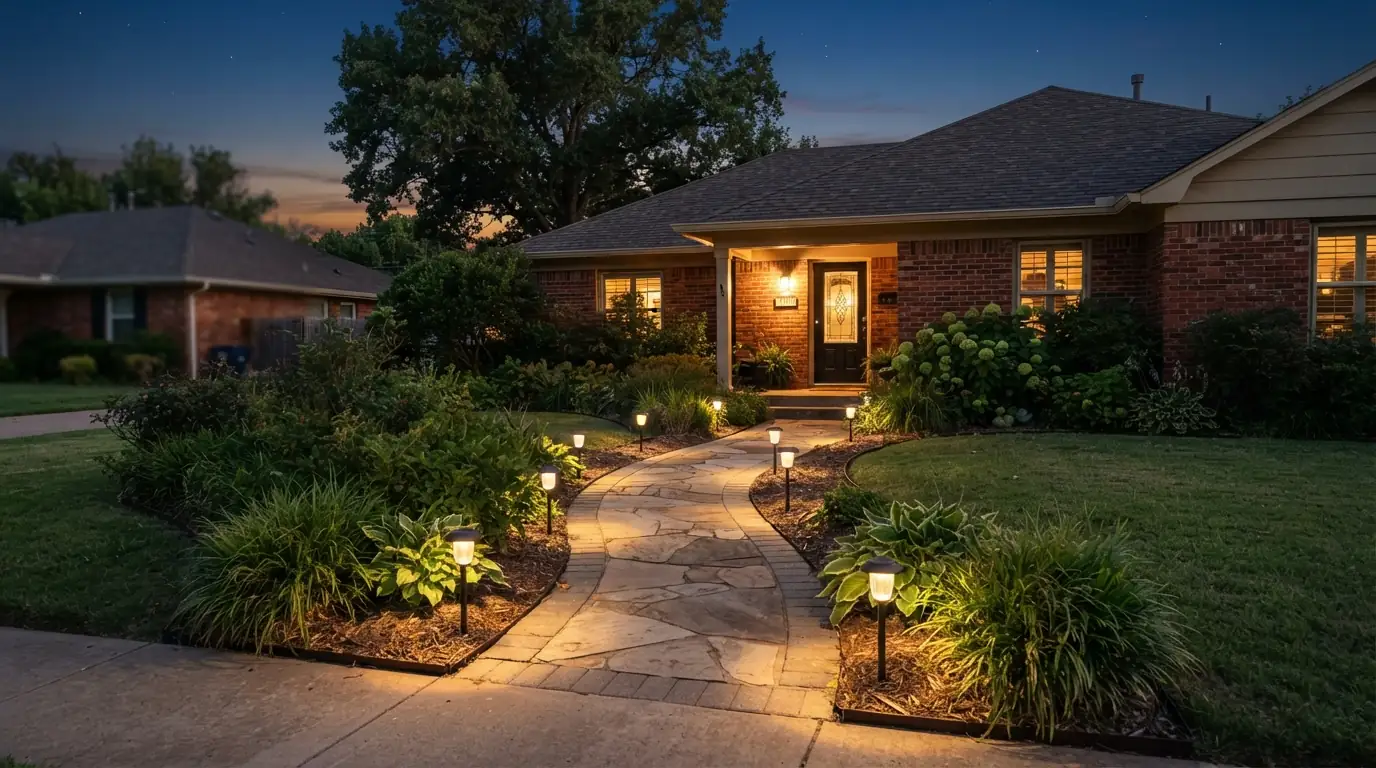
Landscape lighting in Oklahoma City is usually a 12-volt LED system: a transformer mounted on the house beside a GFCI outlet, direct-burial low-voltage cable run a few inches under the mulch, and path lights, uplights and wall washers placed to light the walk, the entry and a few trees. A timer or photocell switches it on at dusk.
Why low voltage is the standard
What a landscape lighting job includes in an Oklahoma City yard
Most yards we light have one of two problems: nothing at all, so the front walk goes black at 7 p.m. in winter, or a solar kit from the store that glows faintly for an hour and dies. A designed low-voltage system fixes both. It is bright where it needs to be, soft everywhere else, and it comes on every night without anyone touching it.
We work at 12 volts because it is safe in a flower bed, easy to move when the plantings change, and efficient with LED fixtures. The only line-voltage part of the job is the outlet the transformer plugs into, and that outlet gets GFCI protection and an in-use cover. Everything after the transformer is low-voltage cable that can be buried shallow and rerouted by hand.
What moves the price
What sets the price of landscape lighting
- Number of fixtures The single biggest driver of material cost.
- Fixture material Solid brass and copper cost more up front and last far longer.
- Transformer size Sized to total wattage plus room to grow.
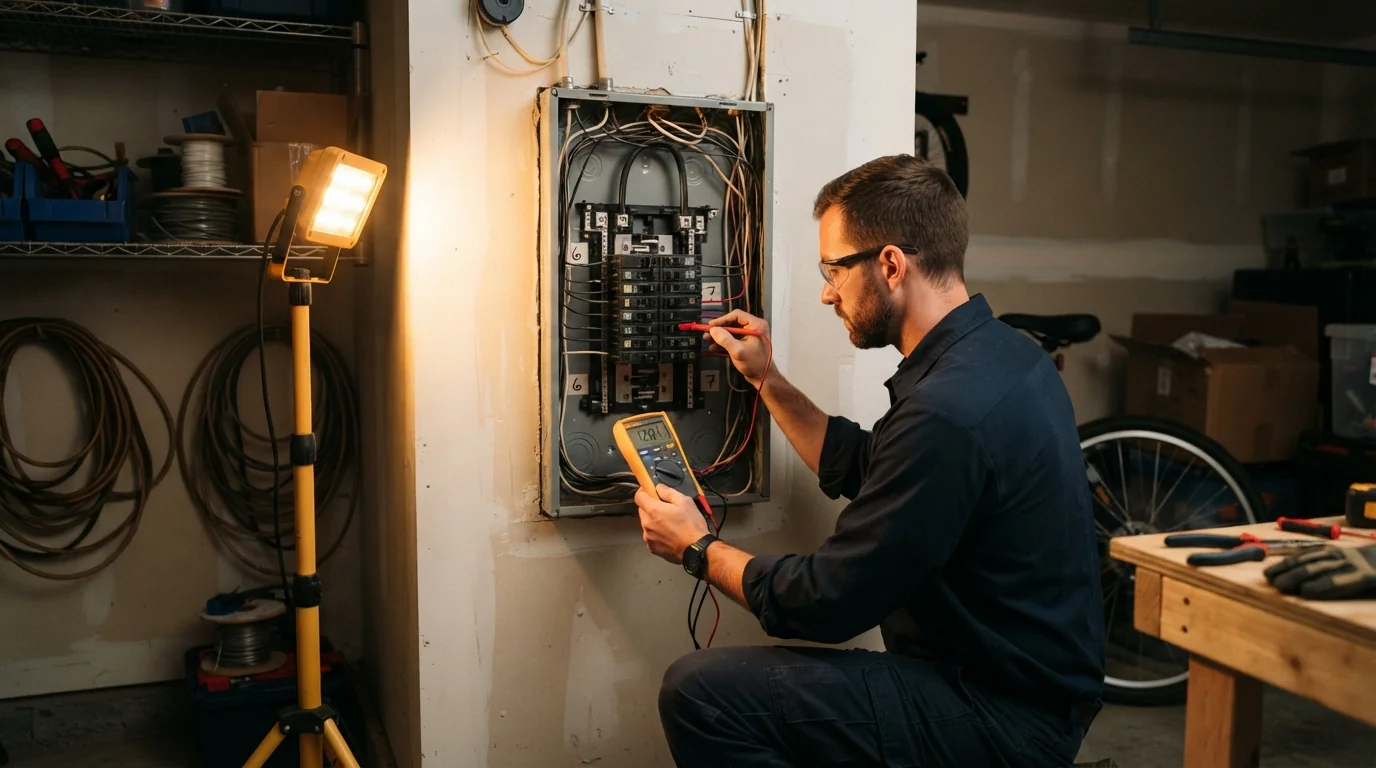
- New outlet If there is no GFCI outlet near the transformer spot, we add one.
- Yard layout Long runs, beds across hardscape and tree placements add labor.
- Controls Timer, photocell or a smart controller.
- Adding to an existing system Reusing a good transformer and cable saves material.
We do not publish a flat price for landscape lighting because fixture count and yard layout decide it. National 2026 reports put residential electrician labor at about $75 to $150 per hour; the rest is fixtures, which we quote by count.
Sub-jobs this page covers
The three pieces of every system
Low-voltage path lights
Path lights mark the walk, the driveway edge and the steps. The mistake we see most is spacing them evenly like runway lights, which looks busy and still leaves dark patches. We place them where feet actually go: the turn in the walk, the top and bottom of steps, the gate. Fixture height and beam spread are chosen so the light lands on the path, not in the eyes of whoever is walking it. Solid brass or copper fixtures hold up far longer than the painted aluminum ones in store kits.
Uplighting and accents
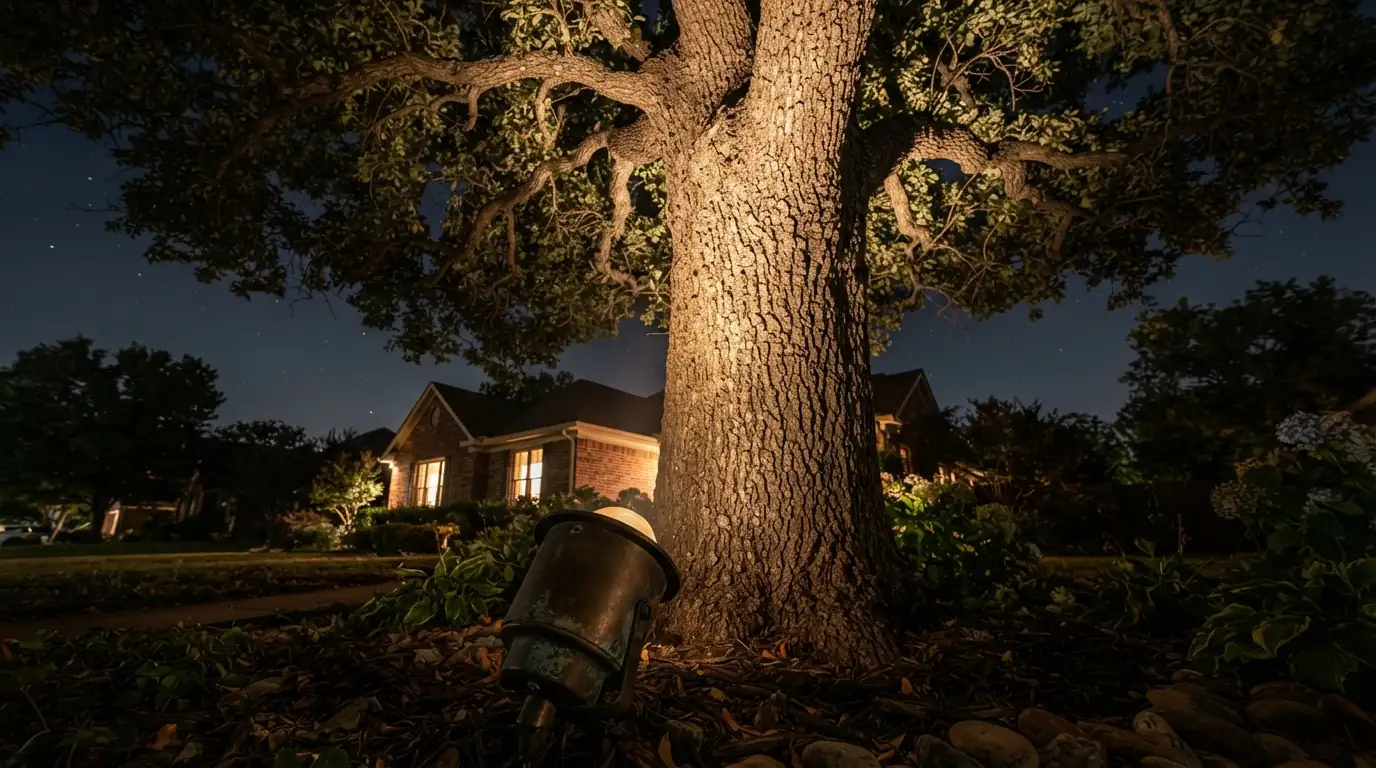
Uplights set at the base of a tree, a column or a stone wall give a yard its shape at night. A mature oak with two uplights reads from the street; a house front washed softly from below looks finished rather than floodlit. We aim for warm color temperature and modest output, then adjust the angle on the first night so the light grazes the bark or the brick instead of blasting it. Accents are where a system goes from functional to good, and where restraint matters most.
Transformer and timer setup
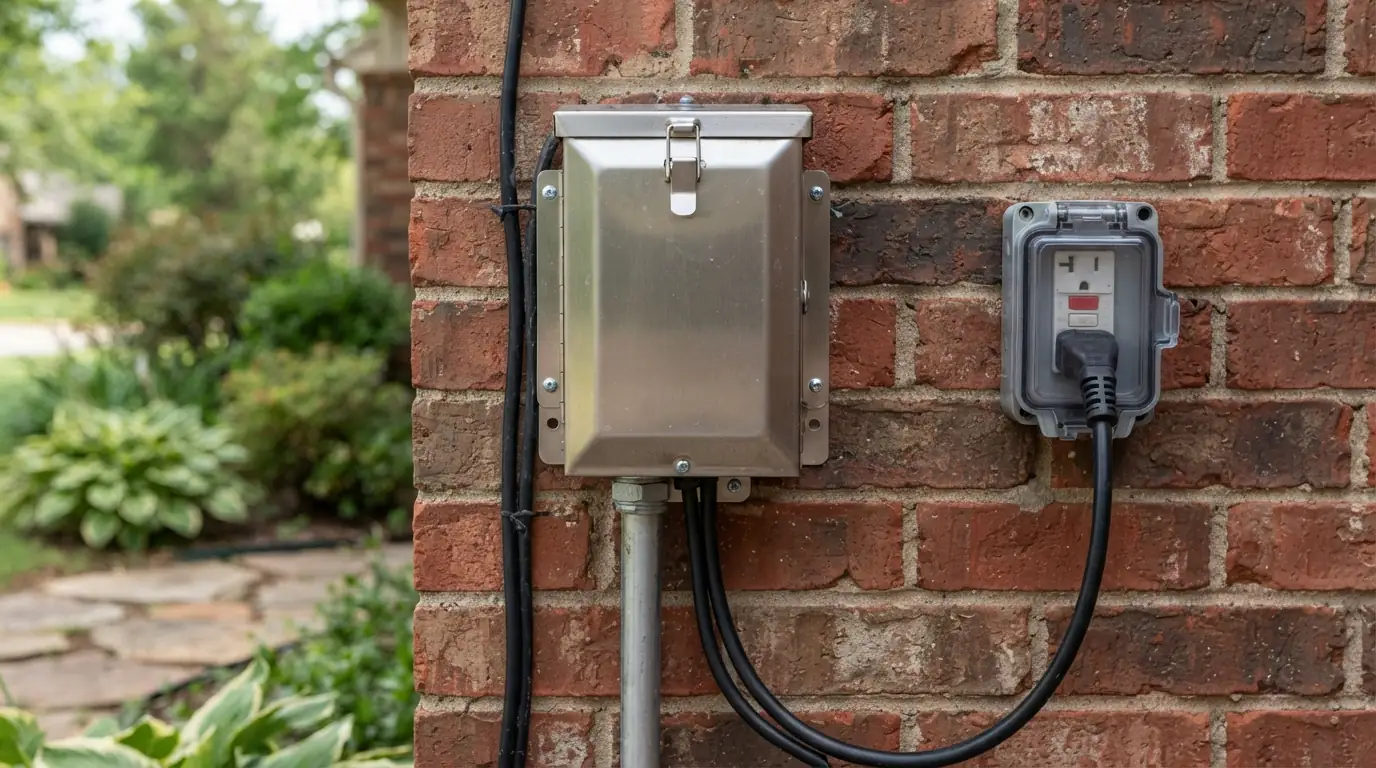
The transformer steps house voltage down to 12 volts and is sized to the total wattage of the fixtures plus room to add a few later. It mounts on the house near a GFCI outlet in an in-use cover, and it carries the controls: a timer, a photocell that switches at dusk, or both. On larger yards we split the fixtures into separate runs from the transformer so voltage stays even at the far end, which is why cheap kits often have dim lights at the end of the line.
Oklahoma City conditions
Storm season and outdoor transformers
Oklahoma City sits under one of the busiest severe-weather calendars in the country, with the peak running mid-April to early June and May the highest-risk month. For landscape lighting that means two things: the transformer outlet must be GFCI protected under a proper in-use cover, and the transformer itself benefits from surge protection, since lightning on nearby lines is a common reason these units fail. We set both up at install rather than after the first spring storm.
How long it takes
How long the install takes
Most front-yard systems are installed in one day, with a short return visit after dark to aim the fixtures. Larger properties with front and back yards and several transformer runs take two days. Beds are raked back after the cable goes in, so there is little to see the next morning except the fixtures themselves.
DIY or call
Kits from the store versus a designed system
| Option | Works for | Where it falls short |
|---|---|---|
| Solar stake lights | A garden bed accent | Dim, short run time, cloudy days |
| Store-bought low-voltage kit | A short straight walk | Undersized transformer, dim far end |
| Designed low-voltage system | Walks, trees and the house front | Higher cost up front |
| Line-voltage floodlights | Security at the driveway | Harsh light, needs buried line-voltage wiring |
Step by step
From the night walk to the first dusk switch-on
- Walk the yard after dark
Where you walk, what you want seen from the street, where the dark spots are.
- Lay out fixtures and runs
Positions marked, transformer sized, cable routes chosen.
- Set the transformer and outlet
GFCI outlet with an in-use cover, surge protection where it makes sense.
- Install fixtures and bury cable
Cable a few inches under mulch or sod, fixtures staked and leveled.
- Aim at night
We come back after dusk to adjust angles and set the timer.
Questions we get about this job
Landscape lighting questions
Yes. At 12 volts the buried cable is not a shock hazard the way a house circuit would be. The transformer outlet is GFCI protected.
Low-voltage fixtures on a plug-in transformer usually do not. A new outlet or circuit for the transformer is standard electrical work, which we handle.
The LEDs themselves last many years. Fixture material decides the rest; brass and copper outlast painted aluminum.
Usually, if the transformer has spare capacity. We check the load and the cable before adding fixtures.
Voltage drop along a long cable. Splitting the run or feeding it from the middle fixes it.
Yes. A photocell turns them on at dusk and a timer turns them off at the hour you choose.
Yes, with a smart transformer or a smart outlet controller, if your Wi-Fi reaches the spot.
Same category
More lighting and fan work
Recessed Lighting Installation
Canless LED wafers and more.
See Recessed Lighting InstallationDimmer & Smart Switch Installation
LED-compatible dimmers and more.
How we handle DimmerSecurity & Flood Lighting
Motion floodlights and more.
SecurityLighting Installation
Chandeliers and pendants and more.
About Lighting InstallationWant the yard to show up after dark?
Call to book a night walk-through. We plan the fixtures with you and install a system that switches itself on at dusk.