Updated October 2026
Quick answer
Smoke and CO detector installation in Oklahoma City means placing alarms in every bedroom, outside each sleeping area and on every level, adding carbon monoxide alarms where the home has gas appliances or an attached garage, and connecting them so they all sound together. We replace old hardwired units, add new interconnected ones, use combination smoke and CO alarms where they fit, and test every unit before we leave.
What is included
What an alarm install includes
- Room-by-room placement walk
- Dates checked on every existing unit
- Alarms in bedrooms, halls and every level
- CO alarms where gas appliances or a garage are present
- Hardwired or wireless interconnection
- Every alarm tested together
- Replacement dates noted for you
Why interconnection matters
What an alarm install covers
Most homes we visit have a mix: an old hardwired smoke alarm in the hall, a battery unit in a bedroom, nothing in the others, and no carbon monoxide alarm at all. Smoke alarms wear out, and the date on the back matters; many are past the replacement age their maker lists. Carbon monoxide alarms are often missing entirely in homes with a gas furnace, water heater or attached garage.
We walk the house with you and place alarms where they are required and where they help: every bedroom, outside each sleeping area, every level including the basement, and CO alarms near sleeping areas where fuel-burning appliances or an attached garage are present. Hardwired interconnected alarms are the standard in newer construction and the best option when wiring allows. Where it does not, wireless interconnected alarms give the same whole-house warning.
Sub-jobs this page covers
Hardwired, combination and sealed battery alarms
Hardwired interconnected alarms
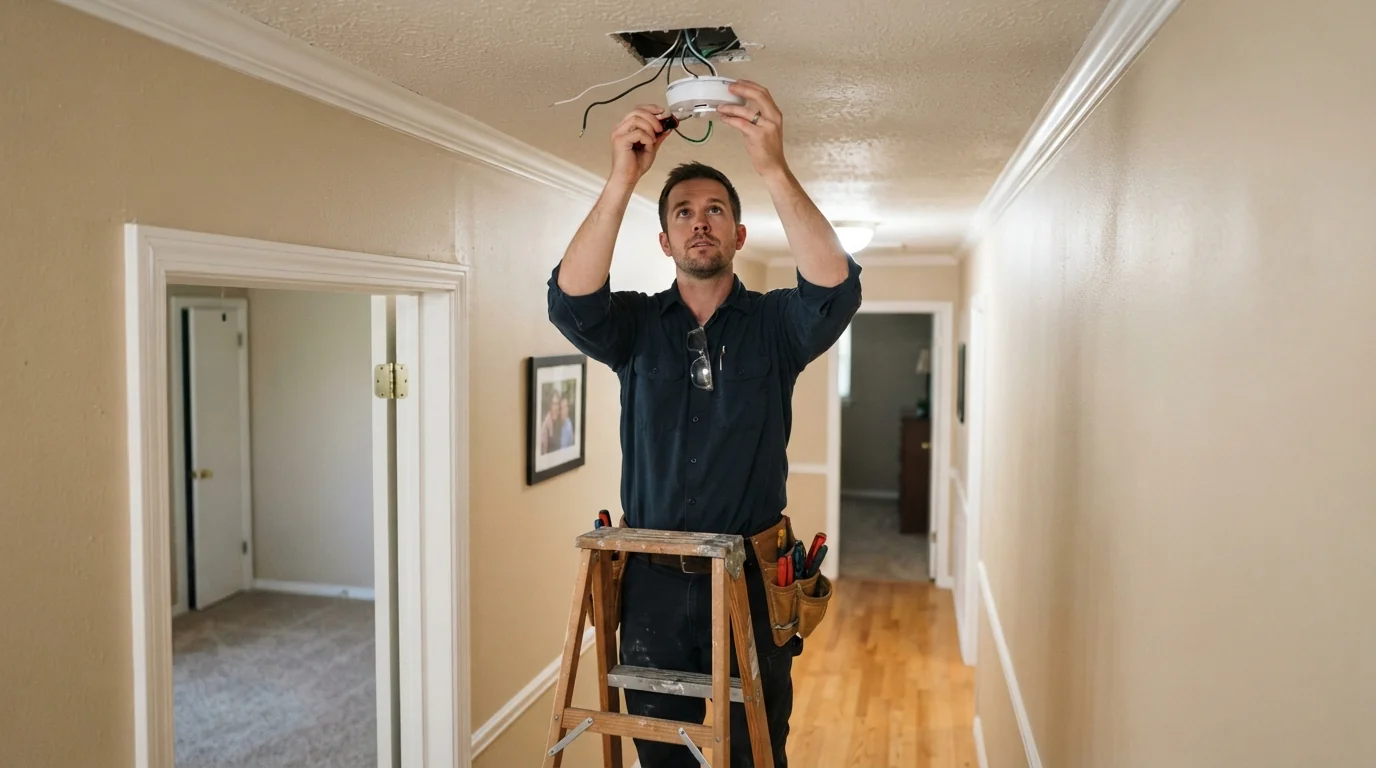
Hardwired alarms run on house power with a battery backup and are connected by an interconnect wire so that when one sounds, they all sound. We replace existing hardwired units with current models, matching the connector where possible so the swap is quick, and add new alarms by running cable through the attic to each location. The circuit is chosen so the alarms stay powered, and every unit is tested together at the end so you hear the whole house go off at once.
Combination smoke and CO units
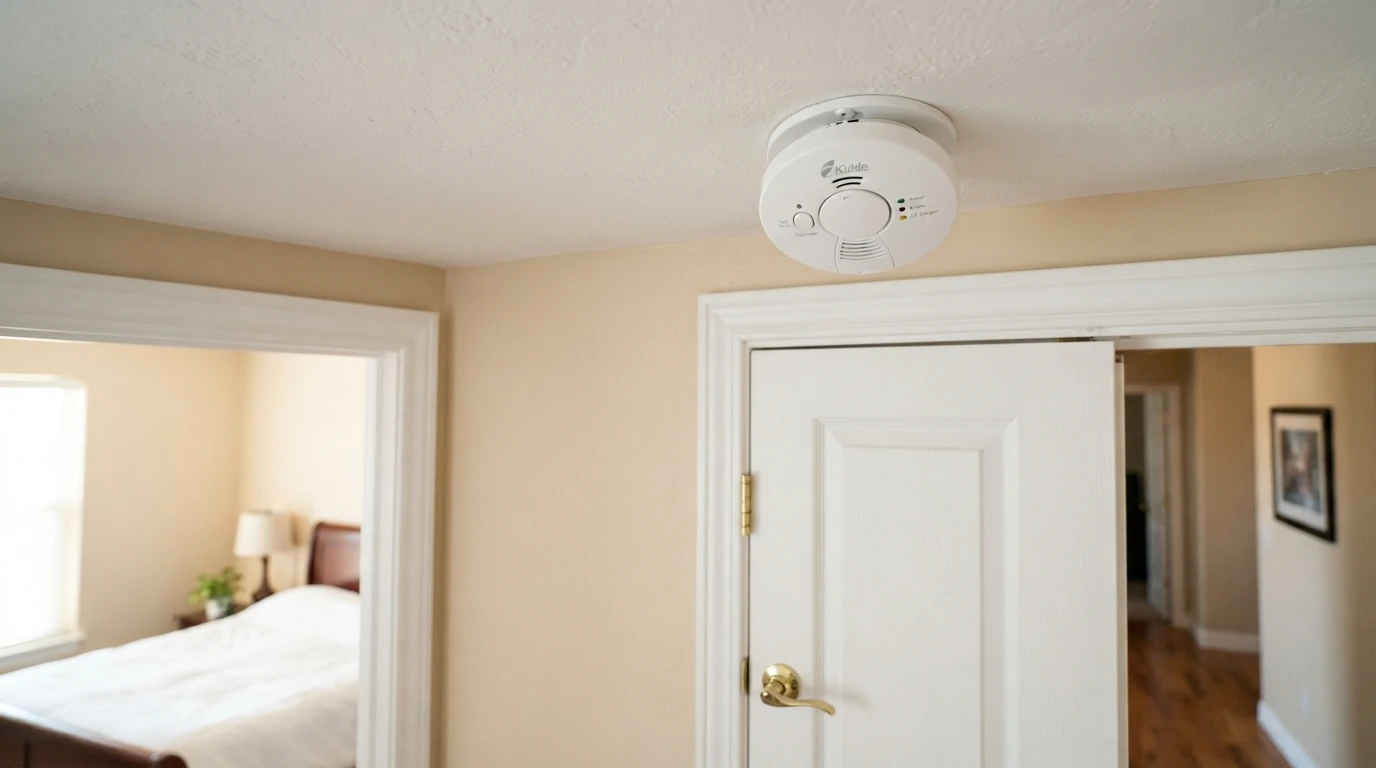
Combination alarms detect both smoke and carbon monoxide in one unit and use different alert patterns and often a voice message for each. They are a good fit outside sleeping areas in homes with a gas furnace, water heater, range or an attached garage, where both alarms are recommended in the same place. Using combination units keeps the ceiling tidy and the interconnect simpler. We still place separate smoke alarms inside bedrooms where only smoke detection is required, and check that every combination unit is within its listed coverage.
10-year sealed battery units
Where running wire is not practical, sealed 10-year battery alarms remove the chirping low-battery problem for the life of the unit. Many can interconnect wirelessly, so the whole house still sounds together. They are a good solution for rentals, older homes with plaster ceilings, and additions to an existing hardwired system. We mount them, pair them to each other or to a wireless bridge on the hardwired system, and note the replacement date for you, so the whole set can be swapped together when the time comes rather than one chirping unit at a time.
Oklahoma City conditions
Gas appliances and alarm placement in Oklahoma City homes
Many Oklahoma City houses have a gas furnace, a gas water heater or an attached garage, and any one of those means the home needs carbon monoxide alarms as well as smoke alarms. Older homes in the city also tend to have a mix of hardwired and battery units added over the years, often past their replacement date. We check the date on every unit, place CO alarms near the sleeping areas, and interconnect the whole set so one alarm wakes the house.
DIY or call
What a homeowner can handle
| Task | Homeowner-safe? | Notes |
|---|---|---|
| Test alarms monthly | Yes | Press and hold the test button |
| Replace a backup battery | Yes | Use the type listed on the unit |
| Mount a sealed battery alarm | Yes | Follow the placement guide |
| Replace a hardwired alarm | With the breaker off | Connector must match |
| Add new hardwired locations | No | New cable through the attic |
Step by step
From the room walk to the test
- Walk the house
Bedrooms, halls, levels, gas appliances and garage.
- Check existing alarms
Dates, wiring and interconnect.
- Install and interconnect
Hardwired where possible, wireless where not.
- Test together
Every unit sounds when one is tested.
- Note replacement dates
So you know when each unit is due.
What moves the price
What sets the price of alarm installation
- Number of alarms Each location adds a unit and wiring.
- Hardwired or battery New hardwired locations need cable through the attic.
- Combination units Smoke and CO in one unit costs more than smoke only.
- Interconnect method Wired or wireless interconnect.
- Ceiling type Plaster and high ceilings take longer.
- Existing units Matching connectors make replacement faster.
- Rental or whole building Multi-unit jobs are quoted per building.
2026 cost guides put a hardwired interconnected smoke detector at about $50 to $100 per detector installed. A national planning range, not our price.
Questions we get about this job
Smoke and CO alarm questions
Every bedroom, outside each sleeping area and on every level, including the basement.
Yes, if the home has gas appliances, a fireplace or an attached garage. Place them near sleeping areas.
Check the date on the back. Most makers call for replacement about ten years after manufacture.
Usually a low backup battery or an alarm at the end of its life.
Usually, especially when the new unit matches the old connector.
Many can, through a bridge or a compatible hardwired unit.
Yes, including sealed battery units and whole-unit interconnection.
Same category
More wiring and safety work
Kitchen & Bath Remodel Wiring
Kitchen circuit layout and more.
See KitchenNew Construction Wiring
Rough-in and trim-out and more.
How we handle New Construction WiringWhole-House Rewiring
Full rewire with new panel and more.
Whole-House RewiringKnob & Tube Replacement
Attic and wall removal and more.
About KnobNot sure your alarms would wake everyone?
Call to book an alarm check. We place, interconnect and test smoke and CO alarms so the whole house hears one.