Updated October 2026
Quick answer
Aluminum wiring repair in Oklahoma City means making every aluminum connection in the house safe: at outlets, switches, lights, appliances and the panel. The CPSC recognizes the COPALUM crimp as a complete repair, and AlumiConn connectors are the common alternative. We confirm the wiring is aluminum, count the connection points, test for heat damage and repair each one, or recommend a rewire where that is the better answer.
Why the connections, not the wire, are the problem
What an aluminum wiring repair involves
Between the mid-1960s and early 1970s, when copper prices spiked, many builders wired houses with single-strand aluminum branch circuits. The wire itself carries current fine. The trouble is at the terminations: aluminum expands and contracts more than copper and oxidizes, so connections at outlets and switches loosen and heat up over time, sometimes for years before anyone notices a warm cover plate.
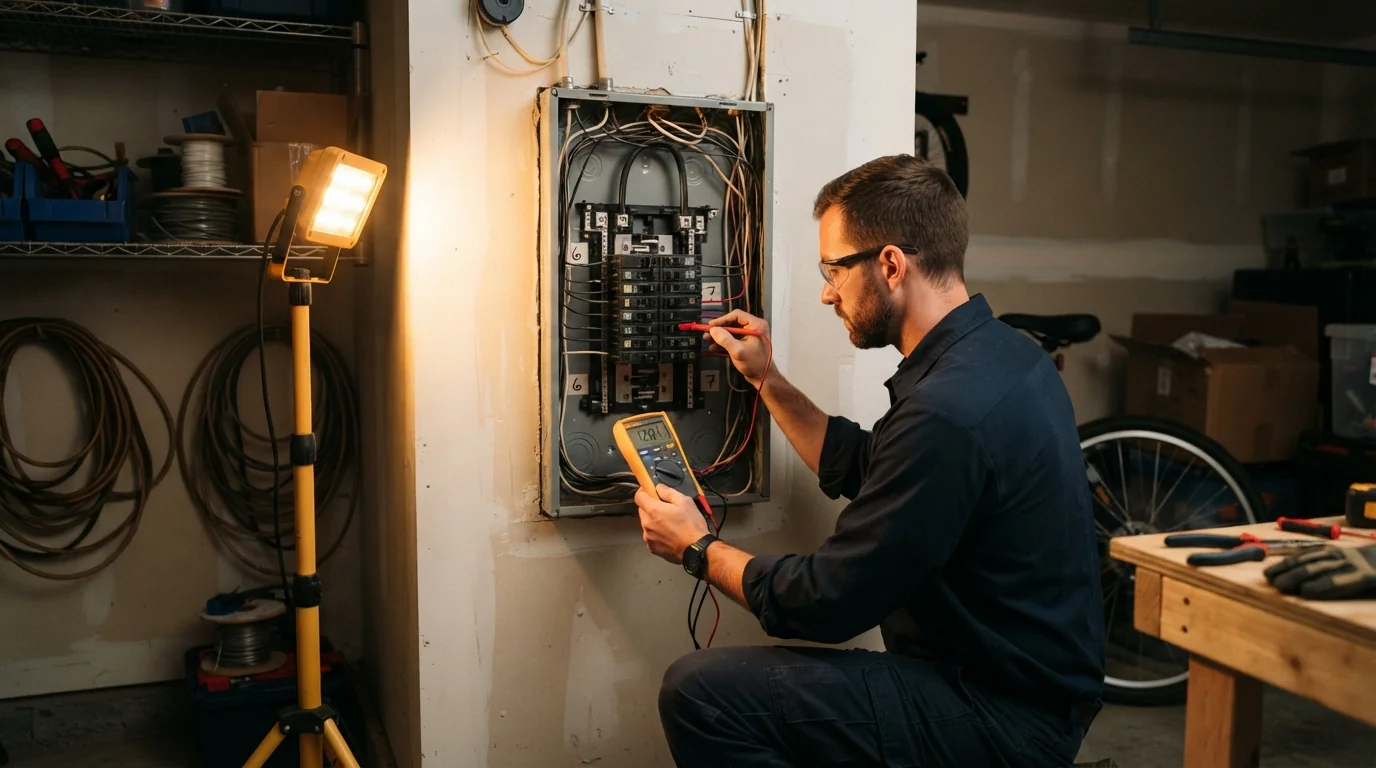
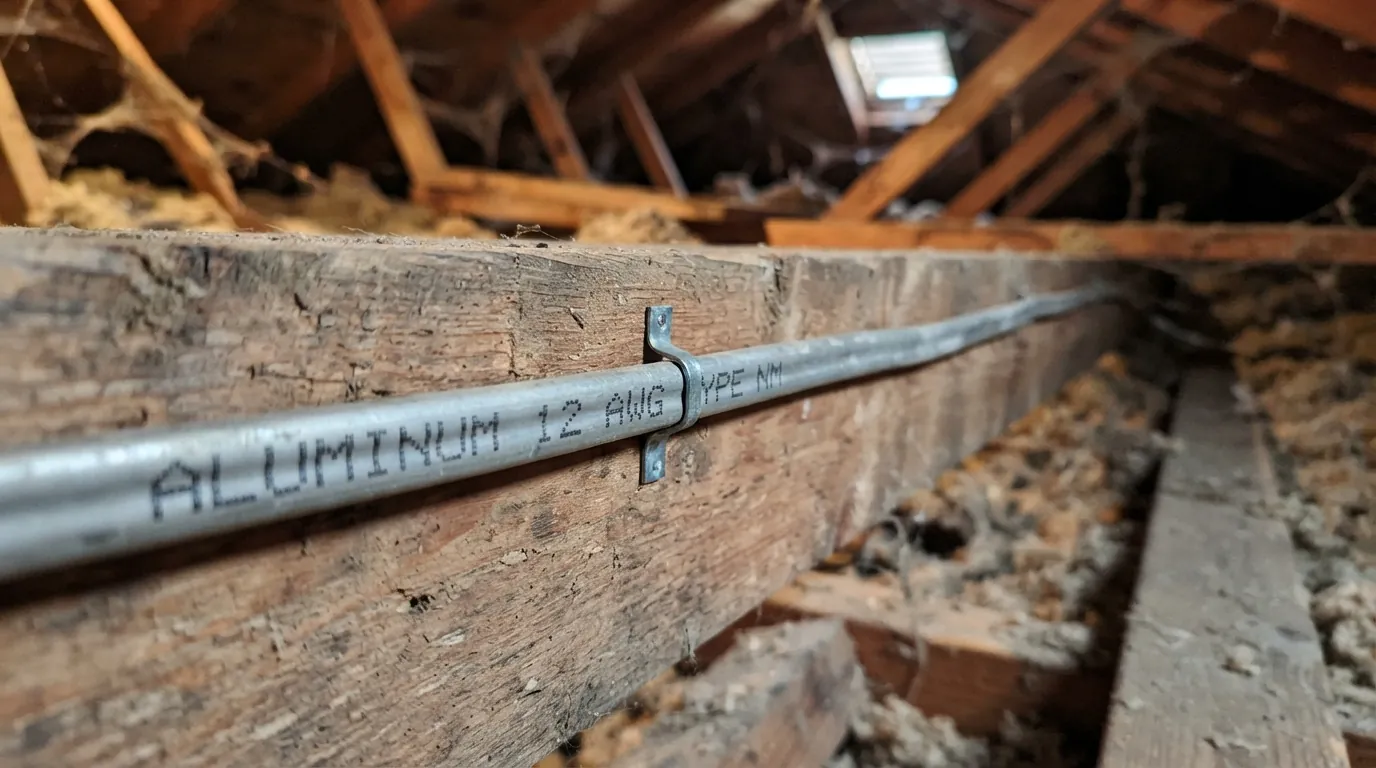
A proper repair addresses every connection, not just the ones that have already failed. We confirm the wiring type from the cable markings at the panel and in the attic, count the devices, lights and appliance connections, open each one, check for heat damage, and repair it with a method the CPSC recognizes or with listed connectors. The result is written up so your insurer or buyer can see exactly what was done.
Choosing between the options
Crimp, connector or rewire
| Method | What it fixes | Limit |
|---|---|---|
| COPALUM crimp | Every connection, permanently | Needs trained electrician and tooling |
| AlumiConn pigtails | Every connection with listed connectors | Needs correct torque at each one |
| CO/ALR devices only | Switch and outlet terminals | Leaves splices and fixtures untreated |
| Full rewire | Removes aluminum branch wiring entirely | Largest project |
What moves the price
What sets the price of aluminum remediation
- Number of connection points Every outlet, switch, light and appliance connection counts.
- Repair method COPALUM tooling and AlumiConn connectors are priced differently.
- Box fill Crowded boxes may need deeper boxes to fit pigtails.
- Heat damage found Burned device or wire ends need extra repair.
- Access Fixtures on high ceilings and attic splices take longer.
- Panel connections Aluminum at the panel may need listed breakers or lugs.
- Rewire instead Sometimes a partial or full rewire is the better value.
Aluminum remediation is quoted by connection count after a walk-through. National 2026 figures put residential labor at about $75 to $150 per hour.
Sub-jobs this page covers
The three ways we make connections safe
COPALUM crimp remediation
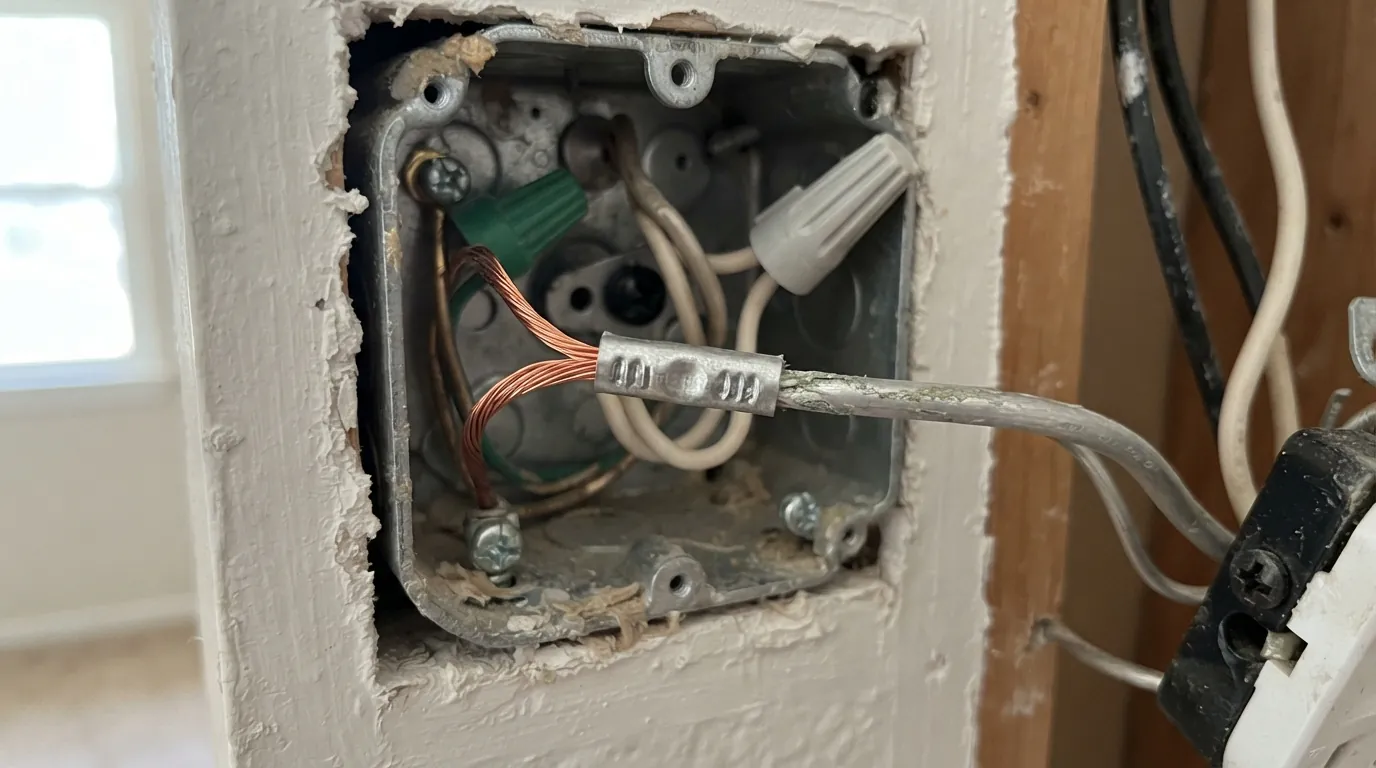
COPALUM is the method the CPSC has long recognized as a complete, permanent repair: a copper pigtail is joined to each aluminum conductor with a special sleeve crimped by a powered tool, creating a cold-weld connection that does not loosen. The crimps are then insulated and the device reconnected on copper. It is only available through electricians trained on the tooling, which is why it is less common. Where available, it is the strongest answer short of a full rewire.
AlumiConn pigtails
AlumiConn connectors are listed lug-style connectors that join aluminum and copper in separate ports with set screws, filled with a compound that resists oxidation. We pigtail each aluminum conductor to a short copper lead, torque the screws to specification, and connect the device on copper. It is widely used, needs no special crimp tool, and is a sound repair when installed with the right torque and done at every connection rather than a sample. Because each pigtail adds bulk, we also check box fill and swap shallow boxes where the new connections will not fit safely.
CO/ALR device replacement
CO/ALR switches and outlets are rated for direct connection to aluminum wire. Replacing old devices with CO/ALR ones is a partial measure: it improves the device connection but leaves splices, light fixtures and appliance connections untouched, and CO/ALR devices are not made for every type of receptacle. We use them where appropriate within a full plan, and we tell you plainly when a pigtail repair or a rewire is the better choice for the house. Devices already failing are replaced first, and we note every CO/ALR device we install on the written report.
Oklahoma City conditions
Which Oklahoma City homes have aluminum wiring
Homes built or expanded between 1965 and 1973 are the ones most likely to contain single-strand aluminum branch wiring, and CPSC-funded research found pre-1972 aluminum-wired homes far more likely than copper-wired homes to have a connection reach fire-hazard conditions. In Oklahoma City that makes the aluminum question a routine one on inspection reports and insurance renewals for houses of that age, and we check the cable marking in the attic and at the panel before quoting anything.
Warning signs
Signs an aluminum connection is failing
- Warm outlet or switch cover platesHeat at a connection behind the plate.
- Flickering lights with no bulb faultA loose aluminum connection.
- Outlets that stop workingA failed connection upstream on the circuit.
- Burning plastic smellSwitch the circuit off and call.
- Discolored outlets or switchesBrowning or scorching at the device.
- Sparks when plugging inLoose device connection.
- Cable marked ALUMINUM in the atticThe wiring type itself.
Step by step
From the first test to the last connection
- Confirm aluminum
Cable marking checked at the panel and in the attic.
- Count the connections
Every device, light, splice and appliance.
- Open and inspect
Heat damage looked for at each point.
- Repair each connection
COPALUM or AlumiConn pigtails to copper.
- Document
Photos and a written list for insurer or buyer.
Questions we get about this job
Aluminum wiring questions
Look for ALUMINUM or AL printed on cable jackets in the attic or at the panel. Homes built or added onto from 1965 to 1973 are the most likely.
The risk is at the connections, which can overheat. Repairing every connection addresses it.
No. Pigtail repairs at every connection are a recognized alternative to rewiring.
COPALUM is a crimped cold-weld repair recognized by the CPSC; AlumiConn is a listed set-screw connector. Both join copper pigtails to aluminum.
That helps at those devices but leaves splices and fixtures untreated. It is a partial fix.
Many do with documentation. We provide photos and a connection count.
Most homes take one to two days depending on the number of connections.
Same category
More wiring and safety work
New Construction Wiring
Rough-in and trim-out and more.
New Construction WiringWhole-House Rewiring
Full rewire with new panel and more.
About Whole-House RewiringUnderground Electrical & Trenching
Conduit and direct-burial cable and more.
Underground Electrical detailsDetached Garage & Shop Wiring
Feeder to the outbuilding and more.
See Detached GarageAluminum wiring flagged on an inspection or insurance renewal?
Call to book a walk-through. We confirm it, count the connections and repair every one with documentation.