Updated October 2026
Quick answer
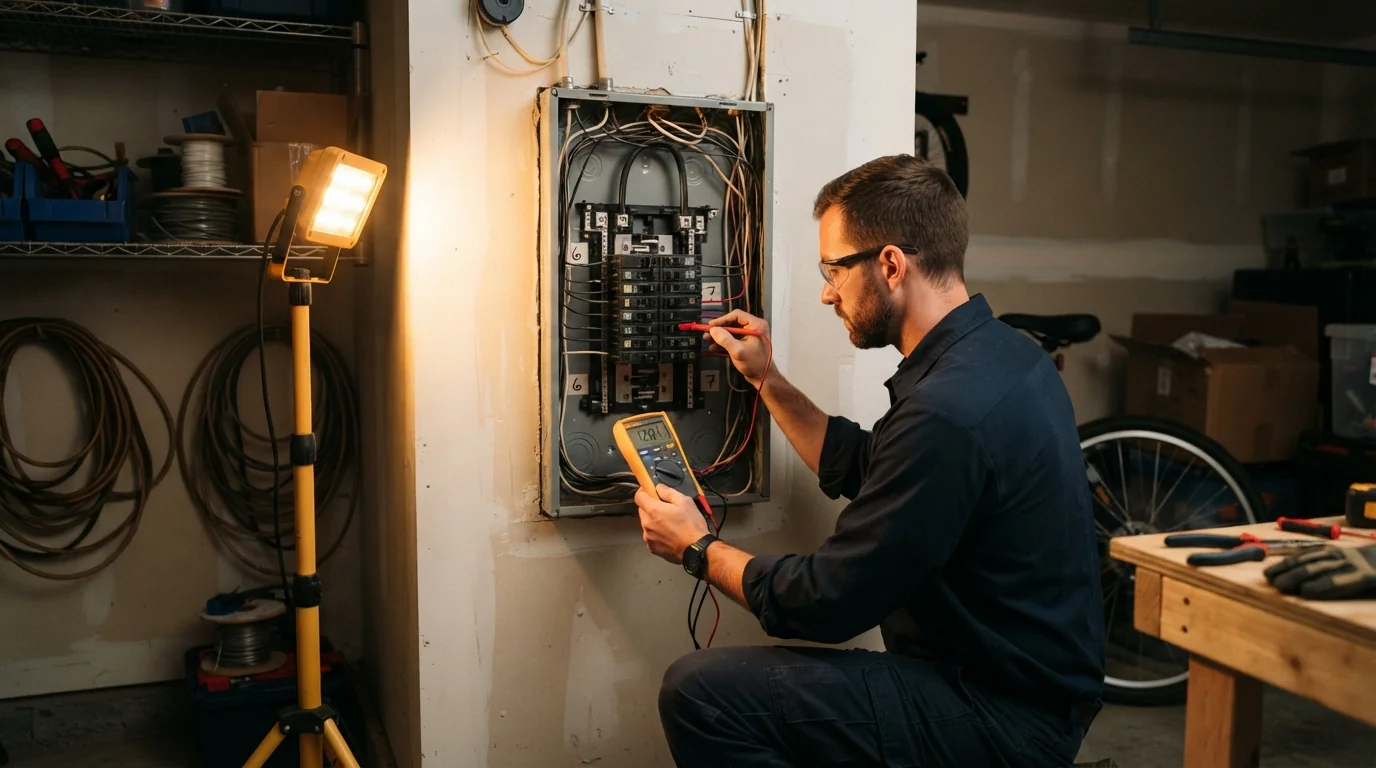
Detached garage and shop wiring in Oklahoma City starts with a feeder from the house panel to the building, buried in conduit or cable at code depth, landing in a subpanel with its own grounding electrode. From there we run 120-volt receptacle circuits, lighting and 240-volt circuits for the compressor, welder or saw. The job is permitted and inspected through OKC Development Services.
Why a shop is its own electrical system
What wiring a detached building involves
A lot of detached garages in the metro run on an extension cord or a single buried circuit that someone added years ago. It works for a light and a battery charger, then fails the first time a compressor and a space heater run together. A shop that will see real tools is a small building with its own electrical system, and it should be wired like one.
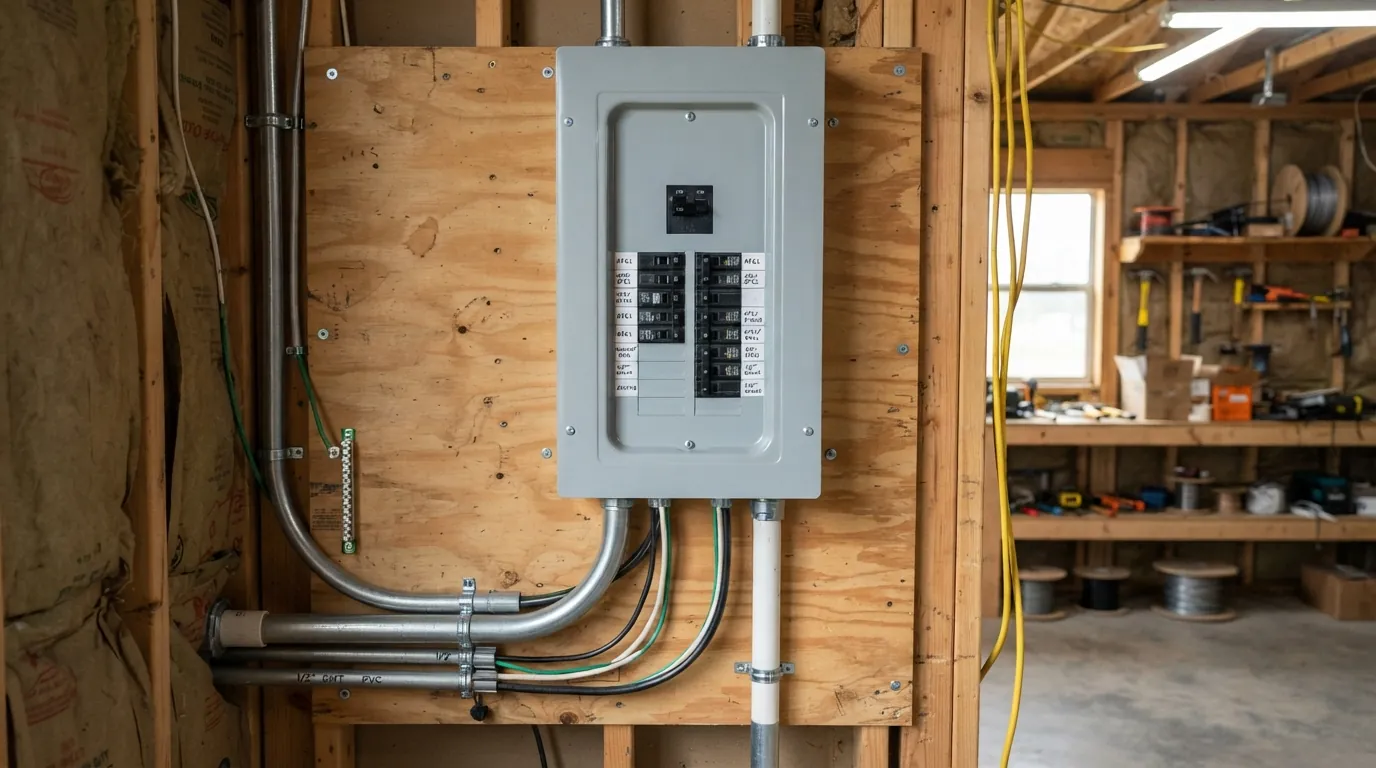
That means a feeder from the house sized for the total load, a subpanel in the building with its own breakers, a grounding electrode at the building, and circuits laid out around how you work: bench receptacles every few feet, 240-volt outlets where the big tools stand, good lighting and a circuit left free for what you buy next year.
Choosing between the options
How big a feeder the building needs
| Feeder | Good for | Limit |
|---|---|---|
| Single 20A circuit | Light, outlet and fan in a shed | No real tools at once |
| 60A feeder and subpanel | Hobby shop with a compressor and a saw | Heat plus big tools together |
| 100A feeder and subpanel | Serious shop, welder, mini-split, heater | Bigger wire, higher cost |
| Conduit sized for later | Any build that may grow | Small extra cost while the trench is open |
What moves the price
What sets the price of shop wiring
- Distance to the building Longer feeders need bigger wire for voltage drop, plus more trench.
- Feeder size A 60-amp feeder costs far less than a 100-amp one.
- Subpanel A panel with breakers and a grounding electrode adds material.
- Number of circuits Each 240V tool circuit and bench circuit adds labor.
- Trench surface Lawn is quick; driveways need a bore or a cut.
- House panel room A full house panel may need rework before the feeder breaker fits.
- Finish level Exposed conduit in an unfinished shop is quicker than wiring inside finished walls.
2026 cost guides list a subpanel at about $2,800 to $5,100 and each dedicated circuit at roughly $200 to $900. Planning ranges from national sources, not our price; distance and trenching drive the total.
Sub-jobs this page covers
Feeder, subpanel and the smaller outbuildings
Feeder to the outbuilding
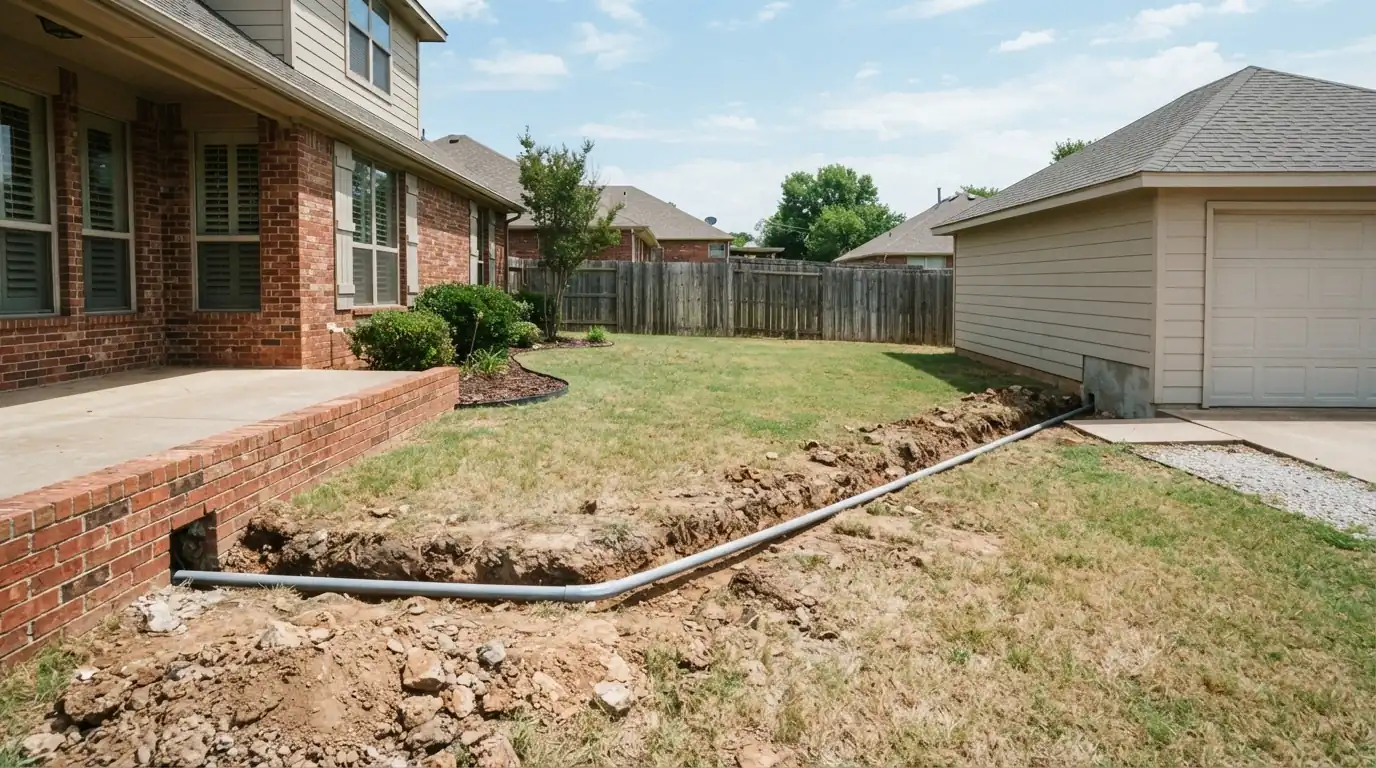
The feeder is the heavy cable or set of conductors that carries power from the house panel to the building. It is sized from the load you plan to run, adjusted for the distance so the voltage does not sag at the far end. We run it in conduit where it leaves the house and crosses anything hard, bury it at the depth the method requires, and land it on a breaker in the house panel. If the house panel has no room, that is the first problem we solve.
Shop subpanel and 240V tools
The subpanel in the building gives the shop its own breakers, so a tripped saw does not mean a walk back to the house. It gets a separate ground and neutral bar and its own grounding electrode, which is where many older installs are wrong. From it we run 20-amp bench circuits, lighting on its own circuit, and 240-volt receptacles matched to each tool plug: a compressor, a welder, a table saw, a mini-split or a heater. Everything is labeled at the panel.
Barn and shed power
Not every outbuilding needs a subpanel. A garden shed or a small barn with a light, an outlet and a fan can be served by a single buried circuit with a disconnect at the building. We size that circuit for the distance, put a GFCI on it, and use weather-rated boxes where dust and moisture live. If there is any chance the building grows into a shop, we lay conduit big enough for a future feeder now, which costs little extra while the trench is open.
Oklahoma City conditions
Code and permits for outbuildings in Oklahoma City
Oklahoma City builds to the 2017 National Electrical Code with local amendments, and it treats a new feeder, a subpanel or a new outbuilding circuit as permitted work that must be inspected. A detached building also needs its own grounding electrode, which the inspector checks before the feeder is energized. For a shop build that means the trench is inspected before it is backfilled and the subpanel before the building is energized, so we plan the schedule around both inspections from the start.
DIY or call
What a homeowner can do on a shop build
| Task | Homeowner-safe? | What goes wrong |
|---|---|---|
| Dig the trench to our marked depth | Often, if agreed in advance | Wrong depth fails the inspection |
| Mount plywood backer for the panel | Yes | Nothing, it helps |
| Run the feeder | No | Undersized for the distance, no permit |
| Wire the subpanel | No | Neutral and ground bonded, no grounding electrode |
| Add bench outlets later | No | Circuits overloaded and unprotected |
Step by step
From the load list to the final inspection
- List the tools and loads
Compressor, welder, heat, lights, and what you plan to add.
- Size the feeder and panel
Total load plus voltage drop over the real distance.
- Trench and run the feeder
Conduit or cable at depth, inspected before backfill.
- Set the subpanel and circuits
Grounding electrode, bench circuits, 240V tool outlets, lights.
- Final inspection and labels
Building energized after inspection, every breaker labeled.
Questions we get about this job
Detached garage and shop questions
Not always. One or two circuits can be fed without one; a shop with 240-volt tools almost always needs a subpanel.
Sized from the tools and heat you plan to run and the distance from the house. Many home shops land at 60 or 100 amps.
Yes. A detached building with a feeder gets its own grounding electrode, and the neutral and ground stay separated in its subpanel.
Yes. Feeders, subpanels and new circuits are permitted and inspected. We file it and schedule the inspections.
Yes. We run a dedicated 240-volt circuit and a disconnect for it from the shop subpanel.
Most shops take two to three days, with the trench and the final inspection as the timing points.
Only as a temporary measure. Buried or long-term cords overheat and are not rated for the load a shop puts on them.
Same category
More wiring and safety work
Underground Electrical & Trenching
Conduit and direct-burial cable and more.
How we handle Underground ElectricalOutlet & Switch Installation
GFCI outlets in kitchens and baths and more.
OutletKitchen & Bath Remodel Wiring
Kitchen circuit layout and more.
About KitchenSmoke & CO Detector Installation
Hardwired interconnected alarms and more.
Smoke detailsPlanning a shop or a garage build?
Call with the tool list. We size the feeder and subpanel around it and handle the permit and inspections, anywhere in the Oklahoma City metro.