Updated October 2026
Quick answer
An LED lighting retrofit in Oklahoma City replaces fluorescent tubes, metal halide lamps and old incandescent fixtures with LED equivalents: ballast-bypass tubes or new LED fixtures indoors, LED heads or retrofit kits on parking lot poles, and LED high bays in warehouses. We rewire each fixture for the new driver, label it for the next technician, and schedule business work around opening hours.
Retrofit kit, new fixture or ballast bypass
What an LED retrofit changes
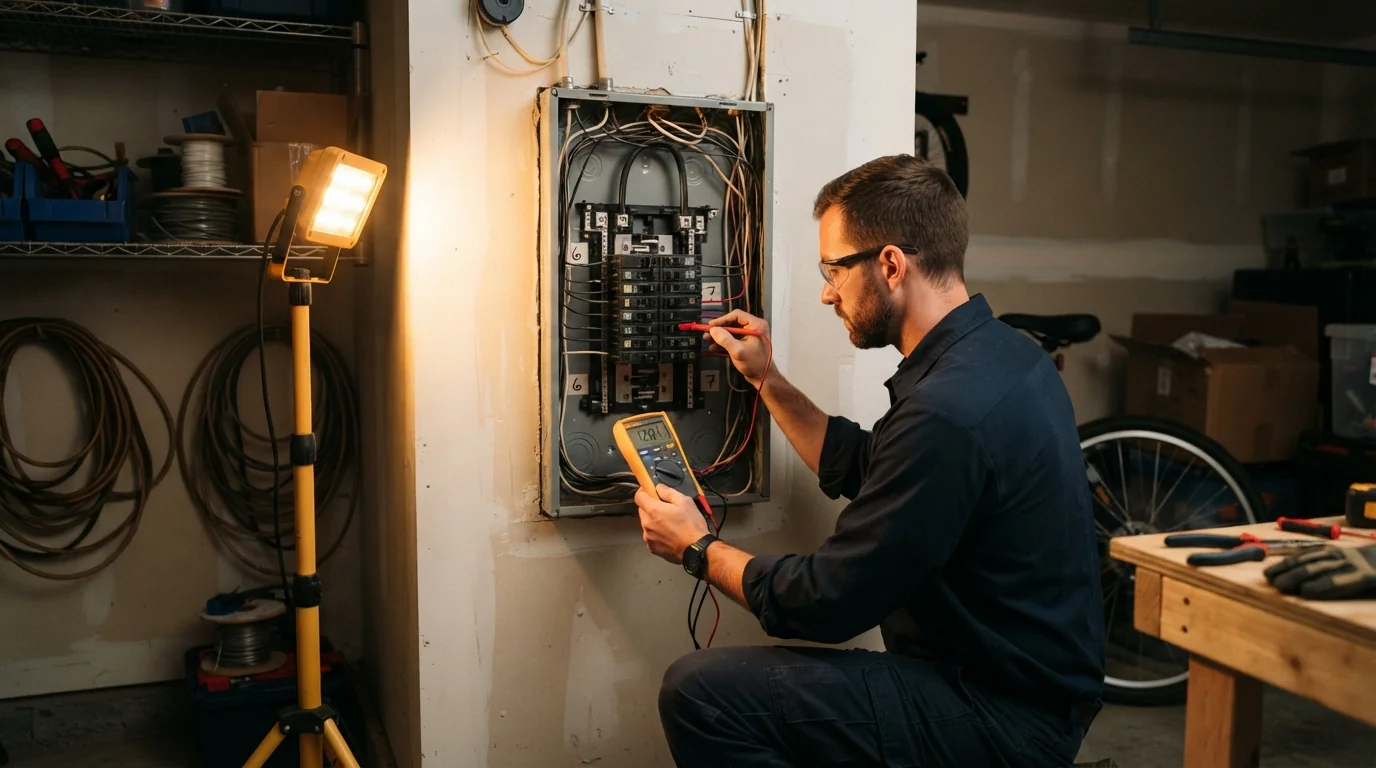
Fluorescent fixtures fail in stages: a tube flickers, the ballast hums, then the fixture goes dark and needs a ballast nobody stocks anymore. Metal halide pole lights and warehouse bays take minutes to reach full brightness and lose output steadily as they age. An LED retrofit replaces the whole weak chain with a driver and LEDs that come on instantly and last many times longer.
There are three ways to do it: tubes that run through the old ballast, ballast-bypass tubes wired straight to line voltage, or a new LED fixture or retrofit kit. We favor ballast bypass or new fixtures, because keeping an aging ballast in the circuit keeps the part most likely to fail. Every converted fixture gets a label saying it has been bypassed, so nobody puts a fluorescent tube back into it.
What moves the price
What decides the cost of a retrofit
- Fixture count The main driver, indoors and out.
- Retrofit method Ballast-bypass tubes cost less than new fixtures; kits sit between.
- Mounting height High bays and poles need a lift.
- Controls Occupancy sensors and photocells add devices.
- Fixture condition Cracked lenses and failing housings mean replacement, not retrofit.
- After-hours scheduling Nights and weekends for open businesses cost more.
- Pole wiring faults Underground repairs are priced separately if found.
Retrofits are quoted from a fixture count. National 2026 figures put electrician labor at about $75 to $150 per hour; LED tubes, kits and fixtures are priced per unit.
What is included
What a retrofit visit includes
- Fixture count by type, height and condition
- Retrofit method chosen per fixture
- Ballasts removed and sockets rewired for bypass tubes
- Bypass labels on every converted fixture
- Pole heads, photocells and timers checked
- Occupancy sensors where aisles or rooms sit empty
- Light levels walked with you at the end
Sub-jobs this page covers
Tubes, poles and high bays
Fluorescent to LED tubes
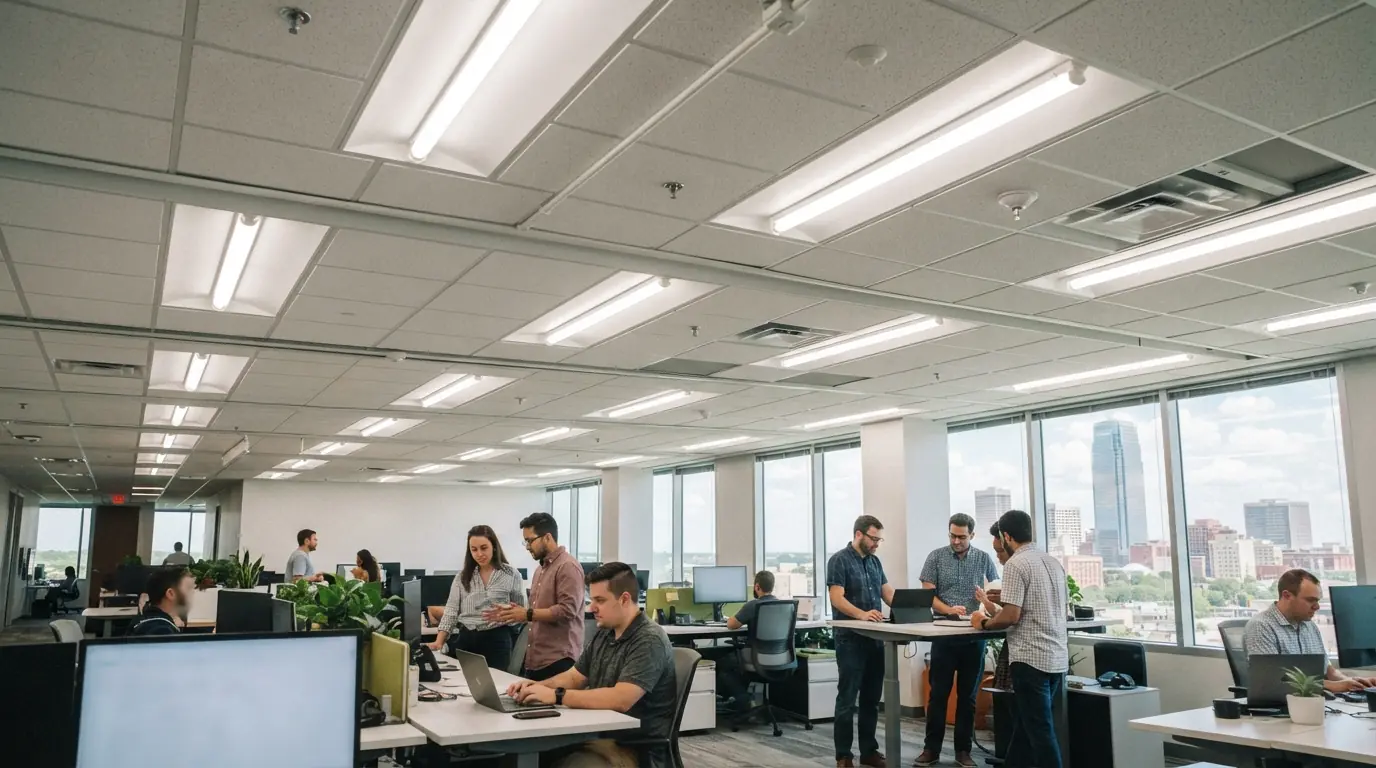
Most offices, shops and garages have 4-foot fluorescent troffers or strip lights. We rewire them for ballast-bypass LED tubes: the ballast comes out, the sockets are fed line voltage on one or both ends as the tube requires, and a label on the fixture records the change. The light is brighter, the hum is gone and the fixture uses a fraction of the power. Where the fixture itself is failing, a new LED flat panel or strip is usually cheaper than rebuilding the old housing.
Parking lot and pole lights
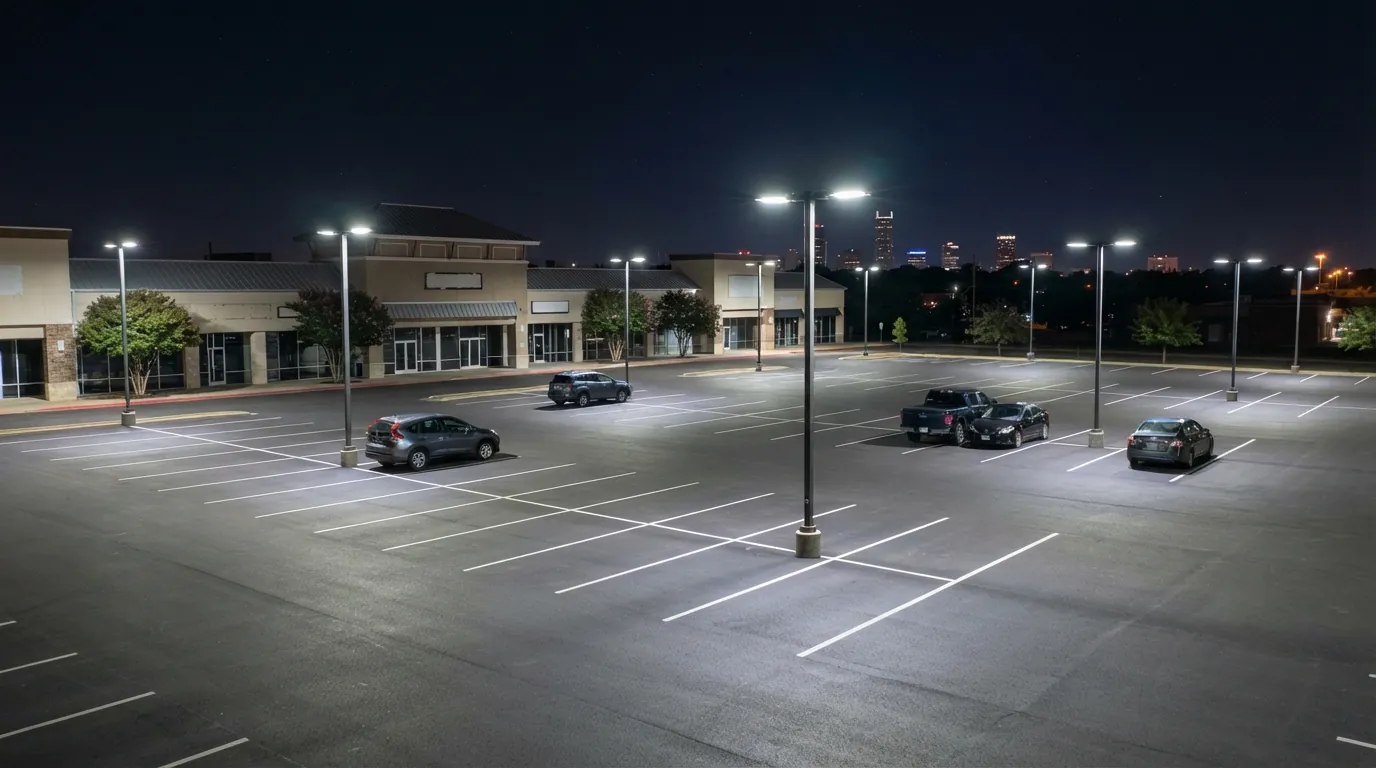
Metal halide and high pressure sodium heads on lot poles are expensive to relamp because every visit needs a lift. LED heads or retrofit kits last many years and put light where it is needed instead of spilling it into the sky. We match the output and distribution to the lot, check the pole wiring and photocell or timer while we are up there, and look at the underground feed if poles have been going dark in groups, which usually points at a buried wiring fault rather than the fixtures.
Warehouse high bays
Warehouse and shop high bays are where LED pays back fastest: metal halide bays draw hundreds of watts each, take minutes to restrike after a flicker, and dim with age. LED high bays come on instantly, can be paired with occupancy sensors in aisles that are rarely used, and cut the load on the circuits enough to free capacity for equipment. We plan the layout for light level on the floor and the racking, not just a one-for-one swap, and work around shift schedules.
Oklahoma City conditions
Codes and permits for lighting work in Oklahoma City
Oklahoma City administers its adopted codes, including the 2017 National Electrical Code, the 2018 International Building Code and the 2009 International Energy Conservation Code, through Development Services. Swapping lamps is maintenance, but rewiring fixtures, adding sensors or replacing pole heads on a commercial property is electrical work, and larger commercial lighting jobs are permitted and inspected. We tell you at the walk-through which parts of the retrofit fall on which side of that line.
How long it takes
How long the lights are down
A small office or shop converts in a day, section by section, so only one area is dark at a time. Warehouses and parking lots are planned by aisle or by pole and often done over several nights. We give you a sequence before we start so staff know which areas are affected when.
Step by step
From the fixture count to the last bay
- Count and categorize fixtures
Type, condition, height and controls, room by room or pole by pole.
- Choose the method per fixture
Bypass tube, retrofit kit or new fixture.
- Schedule around the business
Sections done after hours so work continues.
- Convert, label and test
Ballasts removed, sockets rewired, labels applied.
- Walk the space with you
Light levels checked, sensors and timers set.
Questions we get about this job
LED retrofit questions
Plug-and-play tubes run on the old ballast and fail when it does. Ballast bypass removes the weak point.
Yes, when the sockets are wired correctly for the tube type and the fixture is labeled so nobody fits a fluorescent tube later.
Yes, for businesses that cannot have the lights down during the day.
Often not. Groups going dark usually point at the underground feed or a timer, which we check.
Relamping does not; fixture rewiring and pole work on commercial sites often does. We confirm per job.
Yes. Garage and basement fluorescents and old recessed cans are common home retrofits.
LED usually uses well under half the power of fluorescent or metal halide for the same light, before counting sensor savings.
Same category
More lighting and fan work
Security & Flood Lighting
Motion floodlights and more.
See SecurityLandscape Lighting Installation
Low-voltage path lights and more.
How we handle Landscape Lighting InstallationDimmer & Smart Switch Installation
LED-compatible dimmers and more.
DimmerCeiling Fan Installation
Fan-rated box replacement and more.
About Ceiling Fan InstallationTired of buzzing tubes and dark poles?
Call for a fixture count. We plan the retrofit, schedule it around your hours and leave every converted fixture labeled.