Updated October 2026
Quick answer
Whole-home surge protection in Oklahoma City is a Type 2 surge protective device mounted at the main panel, wired to a two-pole breaker, and rated for the size of the service. It clamps voltage spikes from lightning, utility switching and large motors before they travel down the branch circuits. Installation takes about an hour, and the device pairs with plug-in strips at the TV and computers for a second layer.
What is included
What is included in a surge install
- Grounding electrode and bonding checked before anything is mounted
- Type 2 device rated for the service size and exposure
- Dedicated two-pole breaker, leads kept short
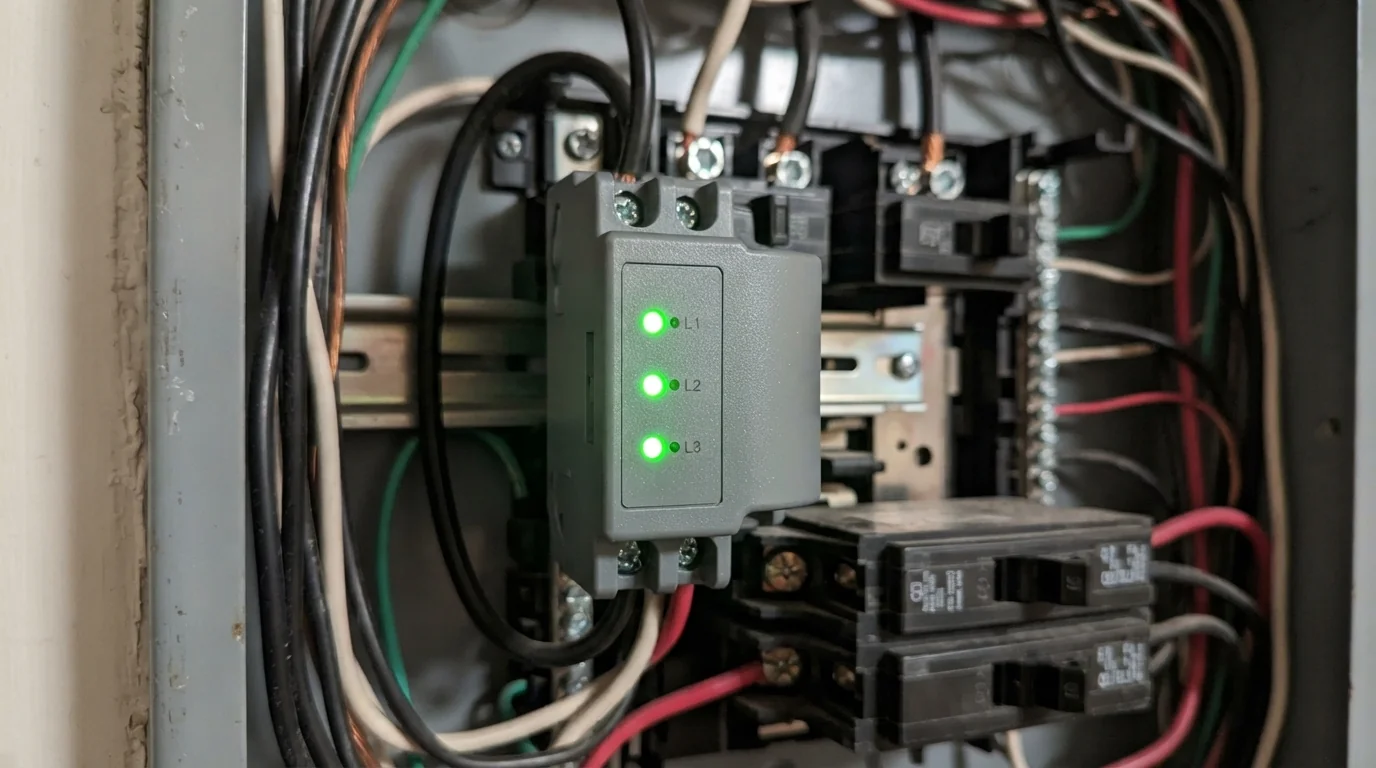
- Status indicator explained so you know when it has done its job
- Breaker labeled at the panel
- Type 1 meter-base unit added where exposure calls for it
- Plug-in layer recommended for electronics
What a panel-mounted protector actually does
How a surge protector at the panel protects an Oklahoma City home
A surge is a voltage spike lasting microseconds with enough energy to punch through the control board in a furnace, a variable-speed AC or a range with a touch panel. Most are not direct strikes. They come from lightning a few blocks away inducing current on the lines, from utility switching after an outage, and from the compressor next door starting up. A house in the metro sees dozens a year.
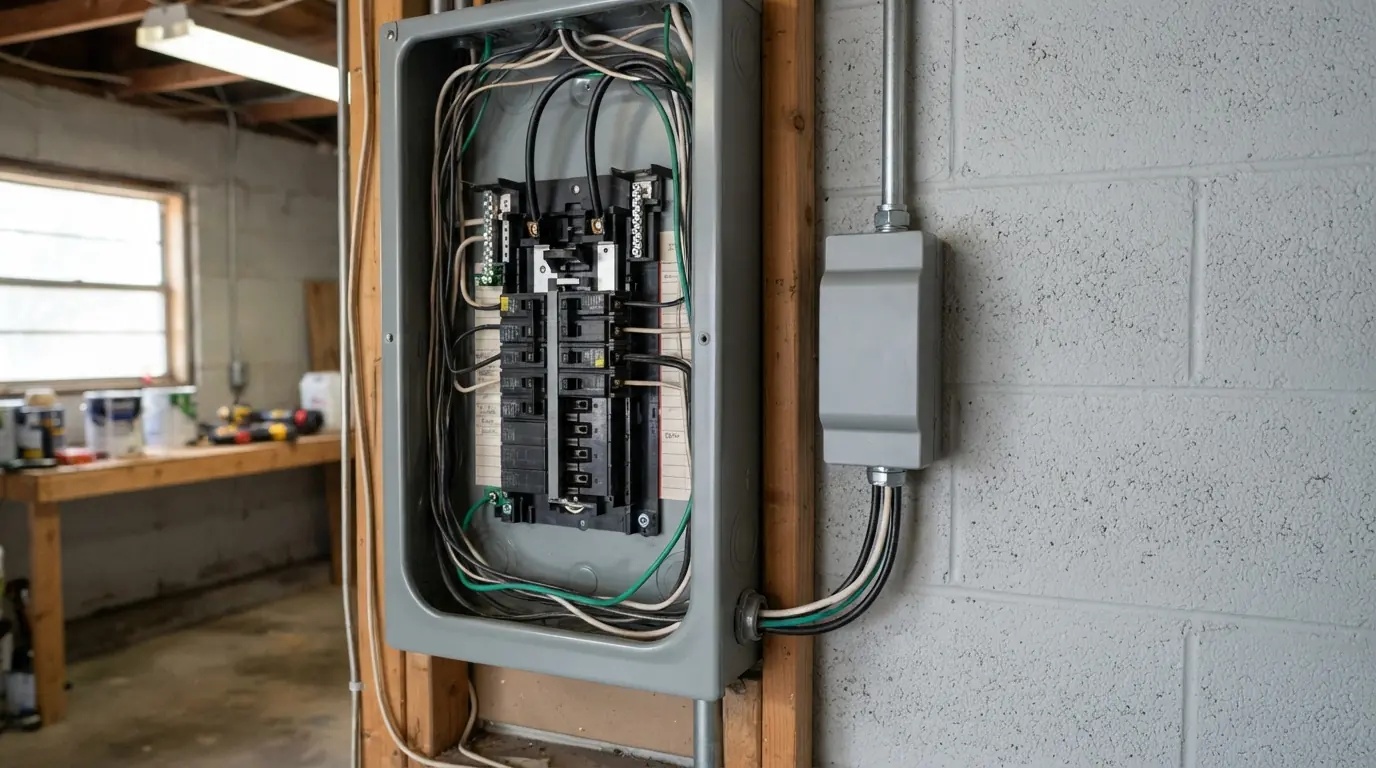
A Type 2 device at the panel sits across the two hot legs and neutral, watches the voltage, and diverts anything above its clamping level to ground in nanoseconds. Good ones are rated in kiloamps, show a status light when they have absorbed a hit, and carry a manufacturer connected-equipment warranty. We mount it as close to the main as the enclosure allows so the leads stay short, which is what makes it work.
Sub-jobs this page covers
The three layers, and which ones your house needs
Type 2 panel-mounted SPD
This is the standard whole-home install and the one most houses in Oklahoma City should have. The device mounts in or beside the panel, connects through a dedicated two-pole breaker with leads kept as short as possible, and protects every circuit downstream. We match the surge current rating to the service size and the exposure of the house; a home on an overhead service at the end of a run gets a higher-rated unit than one on underground service in a newer subdivision. The job takes about an hour.
Type 1 meter-base SPD
A Type 1 device sits on the line side of the main breaker, usually in a meter-base adapter or a dedicated enclosure, and takes the first hit before anything inside the house sees it. It is the layer for houses with a history of lightning damage, long overhead service drops, or a standby generator and transfer switch that need protecting as well. The meter comes off to install it, so we coordinate the utility pull, and most homes pair it with a Type 2 unit rather than using it alone.
Point-of-use protection
The panel device stops the big spikes; a plug-in protector at the television, the computer and the home office handles what gets through and what originates inside the house from motors cycling on and off. A plug-in strip is only a surge protector if it lists a joule rating and a clamping voltage, and it wears out. We install the panel unit, then help you pick strips for the electronics that matter and point out which of the existing ones are only power strips.
Oklahoma City conditions
Lightning, tornado season and a grid that switches hard
Central Oklahoma sits in one of the densest spring lightning zones in the country: the Oklahoma Climatological Survey maps cloud-to-ground strike density for March through May from two decades of detection-network data, and the metro is in the thick of it. Add the severe-weather season that runs mid-April to early June with May the highest-risk month, and a secondary peak in the fall, and a house here is exposed for more of the year than most. Surge protection is a spring-prep item in Oklahoma City, not an upgrade.
Storm season is a calendar, not a surprise.
A panel-mounted protector goes in during one short visit. Call and we will fit it before the next round of spring storms.
Choosing between the options
Type 1, Type 2 or plug-in: which layer does what
| Layer | Where it sits | What it handles | When it makes sense |
|---|---|---|---|
| Type 1 | Meter base, line side of the main | The first hit from the service drop | Overhead service, lightning history, generator systems |
| Type 2 | At the main panel | Surges reaching the branch circuits | Every house; the standard install |
| Plug-in strip | At the TV, office, network gear | What gets past the panel plus spikes from motors inside the home | Electronics you would be sad to replace |
Step by step
What the install visit looks like
- Check the service and the grounding
A protector diverts to ground, so the ground rod and bonds get inspected first.
- Pick the device and the slot
Rating matched to the service size and the exposure of the house.
- Mount and land the leads
As close to the main as the enclosure allows, leads short and straight.
- Power up and verify
Status lights checked, breaker labeled at the panel.
- Layer the electronics
Plug-in protection at the TV, office and network gear where it matters.
What moves the price
What sets the price of surge protection
- Device type and rating Higher surge-current ratings and better warranties cost more.
- Panel space A free two-pole slot is quick; a full panel may need a tandem breaker or a subpanel.
- Type 1 add-on A meter-base unit means a utility pull and a second enclosure.
- Service size 200-amp and 400-amp services take larger devices.
- Generator or solar Transfer switches and inverters may need their own device.
- Grounding condition A weak ground has to be fixed first or the protector cannot divert.
- Point-of-use strips Optional, priced by count.
Panel-mounted whole-home surge protectors were listed at about $300 to $600 installed in 2026 cost guides. A national planning range, not our quote.
Questions we get about this job
Surge protection questions from homeowners
It stops the induced surges that cause most damage. A direct strike can overwhelm any device; Type 1 plus Type 2 gives the best odds.
The status light goes out or changes color after the device absorbs a large surge. We show you the indicator during the install.
Yes. HVAC control boards are the most common surge casualty in the metro, and the panel device covers that circuit.
No. Many strips are just extra outlets. A real one lists a joule rating and clamping voltage, and still needs the panel unit behind it.
Usually. It needs a free two-pole slot and sound grounding. Federal Pacific and Zinsco panels should be replaced instead.
Recent NEC editions require it on new and replaced services; Oklahoma City enforces its adopted edition with local amendments, and we install to that.
About an hour for a Type 2 device, with the power off for a few minutes. A Type 1 unit adds the utility coordination.
Same category
More panel and power work
Industrial Electrician
Motor and VFD installation and more.
See Industrial ElectricianElectric Heater Installation
Baseboard and wall heaters and more.
How we handle Electric Heater InstallationElectric Water Heater Wiring & Repair
No hot water or lukewarm water and more.
Electric Water Heater WiringElectrical Panel Upgrade
100 to 200 amp upgrade and more.
About Electrical Panel UpgradeProtect the boards you cannot see
One visit, one device at the panel, and the furnace, AC and electronics stop taking the hit. Call to book a surge install anywhere in the Oklahoma City metro.