Updated October 2026
By Sheldon Talbot, Electrical Guides Editor. Updated October 2026
Quick answer
Preparing your electrical system for storm season in Oklahoma City means three things: a surge protector at the panel for lightning and grid switching, a plan for backup power that suits how long you can manage without the grid, and a check of the service entrance so ice and limbs are less likely to pull it off the house. Know how to shut off your main and how to report a downed line before you need to.
Why storm prep matters here
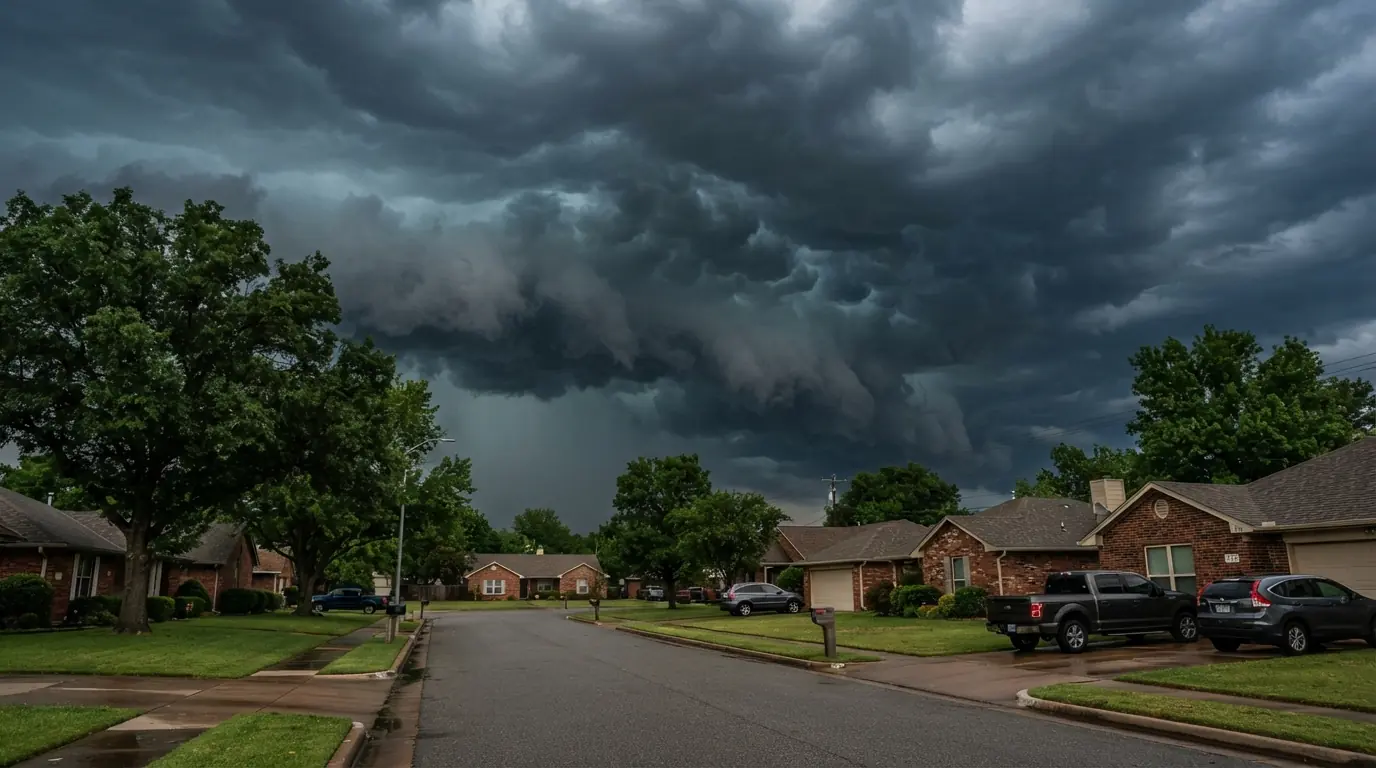
Oklahoma City sits in one of the most active severe-weather regions in the country. The spring season runs from mid-April into early June, with May the highest-risk month, and a smaller peak often returns in the fall. Ice is its own threat: the October 26 to 28, 2020 ice storm put an inch and a half of freezing rain on parts of central Oklahoma and left hundreds of thousands without power, many for days.
Most of the electrical damage we see after storms falls into three groups: surge damage from lightning and grid switching, service entrances pulled or bent by ice and limbs, and long outages that leave families without heat, refrigeration or medical equipment. Each has a preparation step that costs far less than the repair.
Protect against surges
Lightning does not have to hit the house to cause damage. A strike nearby, or the utility switching loads as power is restored, can send a spike through the wiring that kills a furnace board, a garage door opener or a television. A surge protector mounted at the panel catches most of those before they reach the circuits.
A 2026 cost guide lists panel-mounted surge protectors at about $300 to $600 installed. Pair it with quality plug-in protectors at the television, computers and network gear, and check that the house grounding is sound, because a surge protector needs a good ground to work.
Plan your backup power
The right backup depends on how long you can manage without power and what you need to run. A portable generator with an inlet and interlock or transfer switch runs the furnace, fridge and some lights through a long outage; a 2026 guide puts interlock kits at about $400 to $800. A standby generator starts on its own and runs as long as the natural gas does; national guides put a whole-home unit at about $7,000 to $15,000 installed.
Home batteries are the silent option, instant but limited by capacity, and they last longer with solar to recharge them. Whatever you choose, never connect a generator through a dryer outlet. It can energize the utility line and endanger line workers.
Check the service entrance
The mast, weatherhead and meter base on the outside of the house are what ice and falling limbs pull loose. Look for a mast leaning away from the roof, a cracked weatherhead, wires sagging low across the yard or rubbing on branches, and rust on the meter base. Trees growing into the service drop are a job for the utility and a tree crew before the next ice storm.
If the service entrance is damaged, the utility will not reconnect until an electrician repairs the homeowner side and the work is inspected. Fixing a weak mast before a storm is a scheduled job; fixing it after is an emergency with the power already off.
Want to be ready before the next round?
Call to book a surge protector, a generator hookup or a service entrance check. The line is answered 24/7, storm or not.
Know your panel before you need it
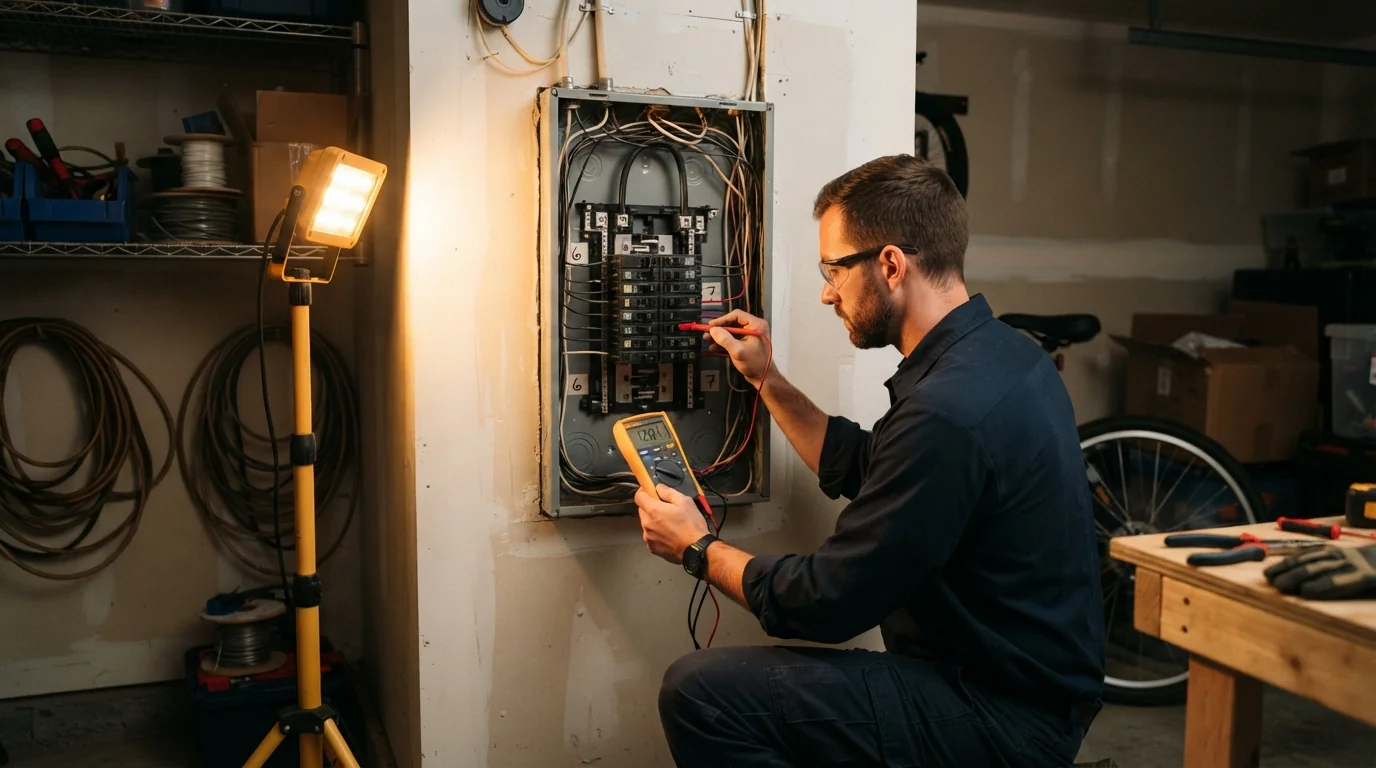
Find your main breaker now, in daylight, and make sure everyone in the house knows where it is. Label the circuits if they are not labeled. Keep a flashlight near the panel. If the power goes out and comes back unevenly, with some lights dim or half the house dark, switch off large appliances and call, because one leg of the service may be damaged.
If you have a storm shelter or safe room, check that its light works and consider a battery-backed light inside it, since the storm that sends you there often takes the power first.
Trees near the service drop
The wire from the pole to your house is the most exposed part of your electrical system. Limbs that touch or overhang it in calm weather will be on it in a storm, and ice makes them heavier still.
Never trim near a live line yourself. The utility handles lines on its poles and can advise on clearing around the service drop; a tree service with line-clearance training can work near it safely. Do it before the season, when it is a scheduled job rather than an emergency.
Storm shelter power and light
A shelter that goes dark the moment the power drops is a hard place to spend twenty minutes with children. A light on its own circuit, an outlet for a phone charger and battery-backed emergency lighting make a big difference.
Oklahoma City runs a storm shelter registration program and issues shelter permits through its permits office, so any wiring into a new shelter is planned with that permit in mind. Test the shelter light and battery backup at the start of each spring, along with the rest of your storm kit.
Plan for medical equipment and well pumps
If anyone in the house depends on powered medical equipment, it belongs at the top of the backup plan: a battery backup sized for the device, a generator circuit for it, or both. Write the device's power needs down where everyone can find them.
Homes on wells lose water when the pump loses power. A generator plan for a well has to cover the pump's starting surge, which is much larger than its running load, and the pump circuit has to be one the generator can actually reach through the transfer switch or interlock.
After the storm
Stay far away from any downed line and report it to the utility. Do not touch a wet panel or outdoor disconnect. If several things stopped working at once, suspect surge damage and have the circuits checked. Photograph any damage to the mast, meter base or wiring for your insurance claim before repairs begin, and ask the electrician for a written report to go with it.
Related services
Where this guide leads
Whole-Home Surge Protection
Type 2 panel-mounted SPD.
Whole-Home Surge Protection detailsStandby Generator Installation
Generac and Kohler air-cooled units.
Standby Generator Installation detailsStorm Damage Electrical Repair
Downed service drop.
Storm Damage Electrical Repair detailsQuestions
Quick questions on this topic
A surge protector at the panel, because lightning damage is the most common storm problem we see.
Standby for frequent or long outages and when no one is home; portable with a transfer switch for occasional use.
No. It can backfeed the utility line. Use an inlet with a transfer switch or interlock.
Stay clear, call the utility, then call an electrician to repair the homeowner side.
Many policies do. Photograph the damage and get a written report from the electrician.
Keep reading
More guides from the same desk
What size generator you need
How to size a generator for an Oklahoma City home: running and starting watts, essential circuits, central air, fuel, and when whole-home standby fits.
Read the guideWhat a panel upgrade costs
How much does a 200 amp panel upgrade cost in Oklahoma City?
Read the guideHow to choose an electrician
Hiring an electrician in Oklahoma City?
Read the guide