Updated October 2026
By Sheldon Talbot, Electrical Guides Editor. Updated October 2026
Quick answer
When a breaker keeps tripping, unplug or switch off what is on that circuit, reset the breaker once, and add loads back one at a time. If it trips with nothing connected, or trips again immediately, leave it off and call an electrician. The usual causes are an overloaded circuit, a short, a ground fault, an arc fault caught by an AFCI breaker, or a breaker that has failed.
What to do in the first five minutes
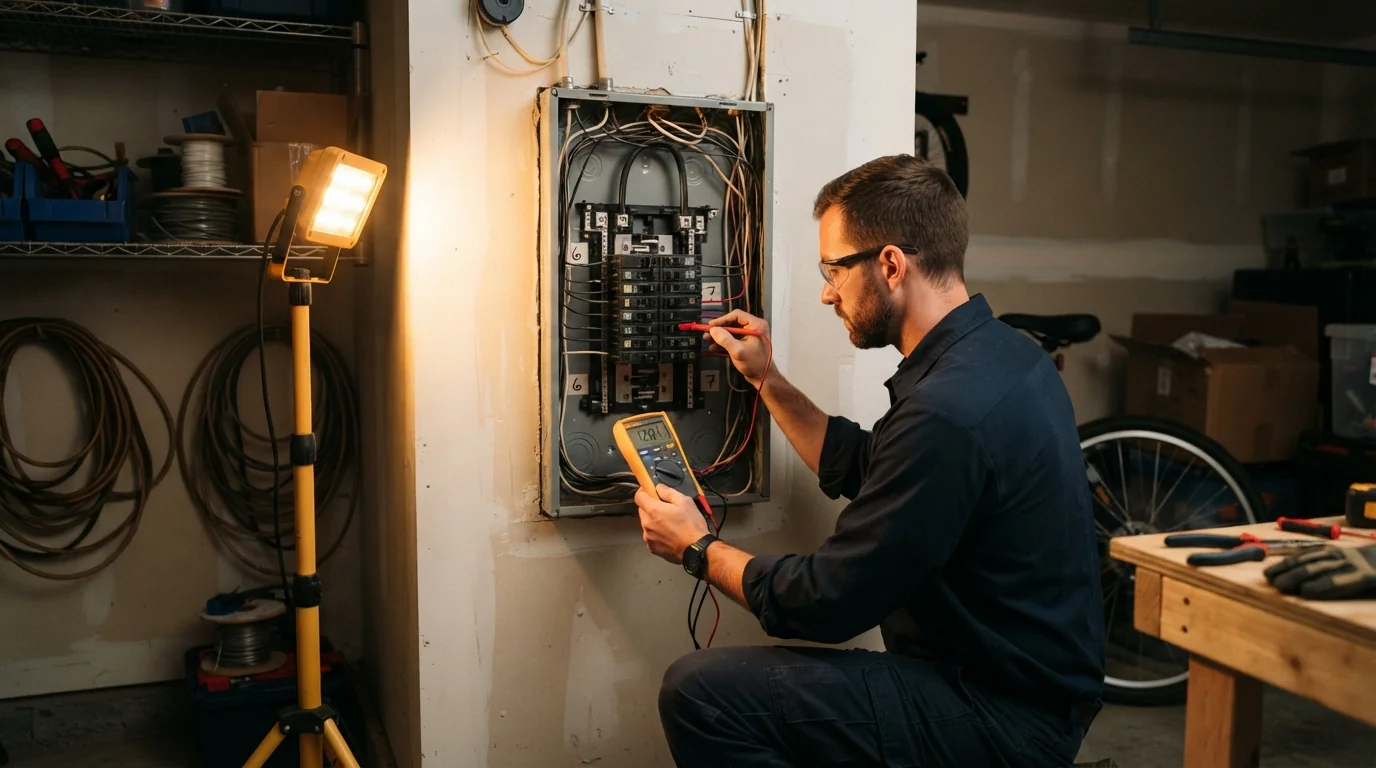
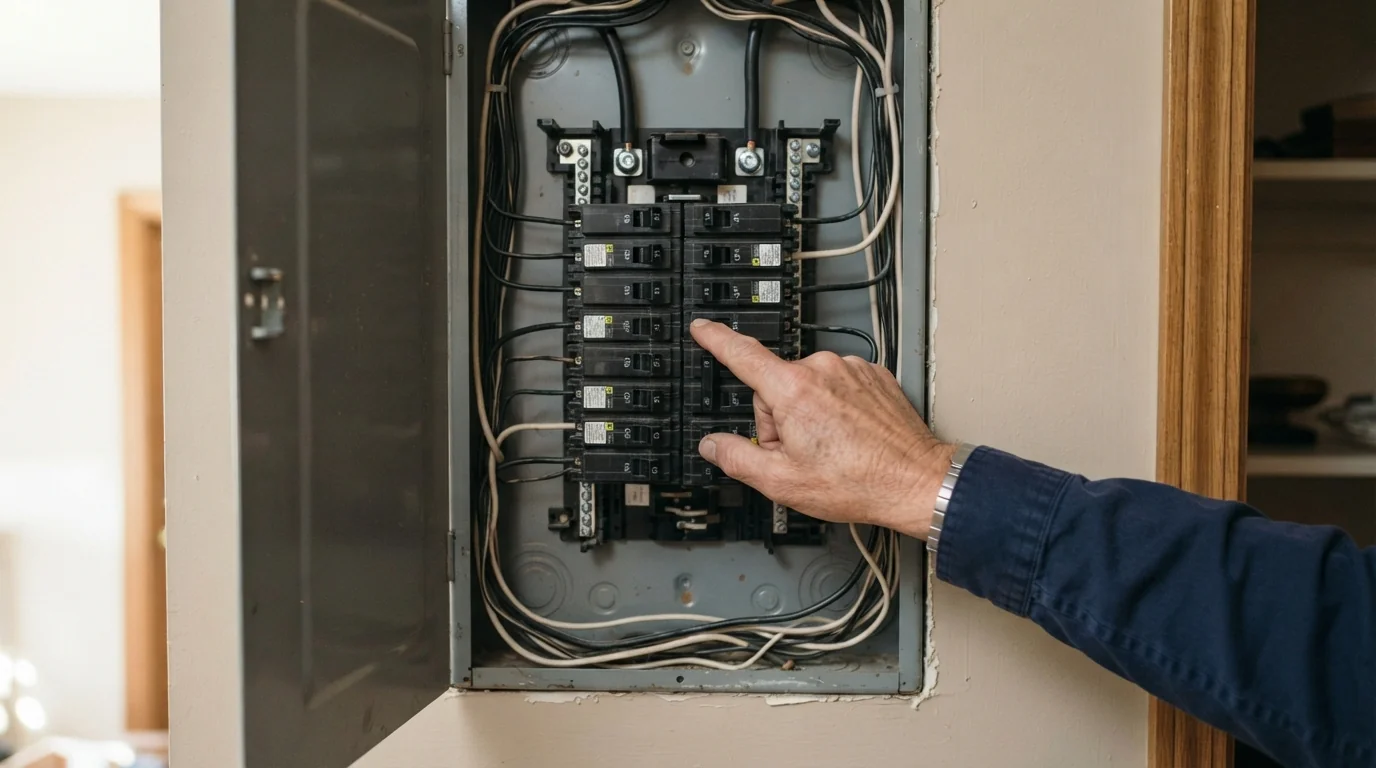
First, look for heat, smoke or a burning smell at the panel or any outlet. If you find any, leave the breaker off, switch off the main if you can reach it safely, and call. Otherwise, find the tripped breaker: its handle sits in the middle or in the off position. Push it fully off, then back on.
If it holds, think about what was running. A space heater, a hair dryer and a vacuum on one bedroom circuit is a classic overload. Move one of them to another circuit and see if the trips stop. If it trips again right away, unplug everything you can on that circuit and try once more. A breaker that trips with nothing connected is pointing at the wiring or the breaker itself.
Overload: too much on one circuit
Most household circuits are 15 or 20 amps. Heaters, window air conditioners, microwaves, kettles and hair dryers each draw a large share of that. Two of them together on one circuit will trip it, often after a few minutes as the breaker warms up. This is the breaker doing exactly what it should.
The fix is not a bigger breaker. The breaker is sized to protect the wire, and a larger one lets the wire overheat before anything trips. The real fixes are moving the load, or adding a dedicated circuit for the appliance that is causing the trouble.
Short circuit and ground fault
A short happens when a hot wire touches a neutral or another hot, and it trips the breaker instantly, sometimes with a pop or a spark. Damaged cords, a nail through a cable in the wall, a failed appliance or a loose wire in a box are the usual causes. A ground fault is similar but the current finds a path to ground, often through water in an outdoor outlet or a failing appliance.
Both need finding before the circuit is used again. Unplugging appliances one by one tells you whether the fault is in something plugged in. If the breaker still trips with everything unplugged, the fault is in the fixed wiring, and that is a job for an electrician with a meter.
AFCI and GFCI trips
Newer homes and remodels use AFCI breakers, which detect arcing, and GFCI breakers or outlets, which detect current leaking to ground. They trip for problems a standard breaker ignores: a worn lamp cord, a loose connection in a box, a damaged cable, or two circuits sharing a neutral incorrectly. Frustrating as that is, those trips are usually real.
A test button on the breaker tells you it is an AFCI or GFCI. If one trips repeatedly on a specific circuit, the answer is to find the arc or the leak, not to replace it with a standard breaker. That swap removes a protection the code requires and the fault stays in the wall.
Breaker will not stay on?
Leave it off after one retry and call. The line is answered 24/7, and we find the cause before replacing anything.
When the breaker itself is the problem
Breakers wear out, especially after many trips or years of carrying heavy loads. A worn breaker may trip below its rating, feel warm, or refuse to reset. Heat at the breaker can also come from a loose connection where it clips onto the panel bus, which is more serious because it can damage the panel.
An electrician tests the breaker with the circuit disconnected. If it still misbehaves, it is replaced with one listed for the panel. In Federal Pacific or Zinsco panels, a failing breaker is often a reason to replace the panel rather than keep swapping breakers.
Which appliances trip breakers most often
A small number of appliances cause most overload trips: space heaters, hair dryers, microwaves, toaster ovens, window air conditioners and vacuums. Each can draw well over half of a standard 15 amp circuit on its own, so two of them on the same circuit is often all it takes.
Kitchen countertop circuits and bathroom circuits are the usual places this happens. The fix is moving one appliance to another circuit, or adding a dedicated circuit for the one that is used every day, such as a microwave or a window unit.
Trips that only happen when it rains or freezes
A breaker or GFCI that trips during rain, heavy dew or a freeze is pointing at moisture. Outdoor outlets without in-use covers, landscape lighting connections, heat tape, pool and hot tub equipment and buried outdoor wiring are the common culprits.
These trips are ground faults: current leaking through water to ground. Resetting and waiting for the weather to dry is not a fix, because the same moisture is corroding the connection. Find the outdoor circuit involved, open the box, and repair or reseal it.
A breaker that trips at night with nothing running
If a breaker trips while the house is quiet, look at the loads that run on their own: a refrigerator or freezer compressor, a well pump, a garage freezer, a dehumidifier or anything on a timer. A failing motor can draw a surge on start that trips the breaker without any warning signs during the day.
Unplug the suspects one at a time and see whether the trips stop. If they continue with everything unplugged, the problem is in the wiring or the breaker itself, and the circuit should stay off until it is tested.
When to stop and call
Call if the breaker trips with nothing connected, trips immediately every time, feels warm, or if you smell burning or see scorch marks. Call if several breakers trip at once, or if lights dim and flicker when it happens. And call if you have reset the same breaker more than a couple of times in a day. Each reset on a real fault heats the wire and the breaker a little more.
Related services
Where this guide leads
Electrical Troubleshooting
Flickering or dimming lights.
Electrical Troubleshooting detailsCircuit Breaker Replacement
Breaker that will not reset.
Circuit Breaker Replacement detailsDedicated Circuit Installation
Range and dryer 240V outlets.
Dedicated Circuit Installation detailsQuestions
Quick questions on this topic
The microwave and other appliances are overloading the circuit. A dedicated circuit usually solves it.
No. The breaker protects the wire, and a larger one can let the wire overheat.
The trip itself is protection. Repeated resets on a real fault are the danger.
Often a lamp, a phone charger cord or a device cycling on. We trace the circuit to find the arc.
If there is heat, a smell or the breaker will not reset, yes. The line is answered 24/7.
Keep reading
More guides from the same desk
Federal Pacific and Zinsco panels
Federal Pacific or Zinsco panel in your Oklahoma City home?
Read the guideEV charger installation cost
How much does a Level 2 EV charger install cost in Oklahoma City?
Read the guideWhat a panel upgrade costs
How much does a 200 amp panel upgrade cost in Oklahoma City?
Read the guide