Updated October 2026
By Sheldon Talbot, Electrical Guides Editor. Updated October 2026
Quick answer
A Level 2 EV charger installation in Oklahoma City typically falls within published 2026 ranges of about $1,200 to $3,500, and the 240-volt circuit alone runs about $500 to $2,000. The biggest variables are the distance from the panel to the parking spot, whether the panel has capacity and space for a 40 to 60 amp circuit, and whether a detached garage needs trenching.
The numbers, with sources
National 2026 cost guides put a Level 2 EV charger installation at about $1,200 to $3,500, including the circuit and the labor to mount and connect the charger. The 240-volt circuit on its own, run from the panel to the charging spot, is listed at about $500 to $2,000 depending on the distance and the route. These are planning ranges, not quotes, and they usually assume you supply the charger itself.
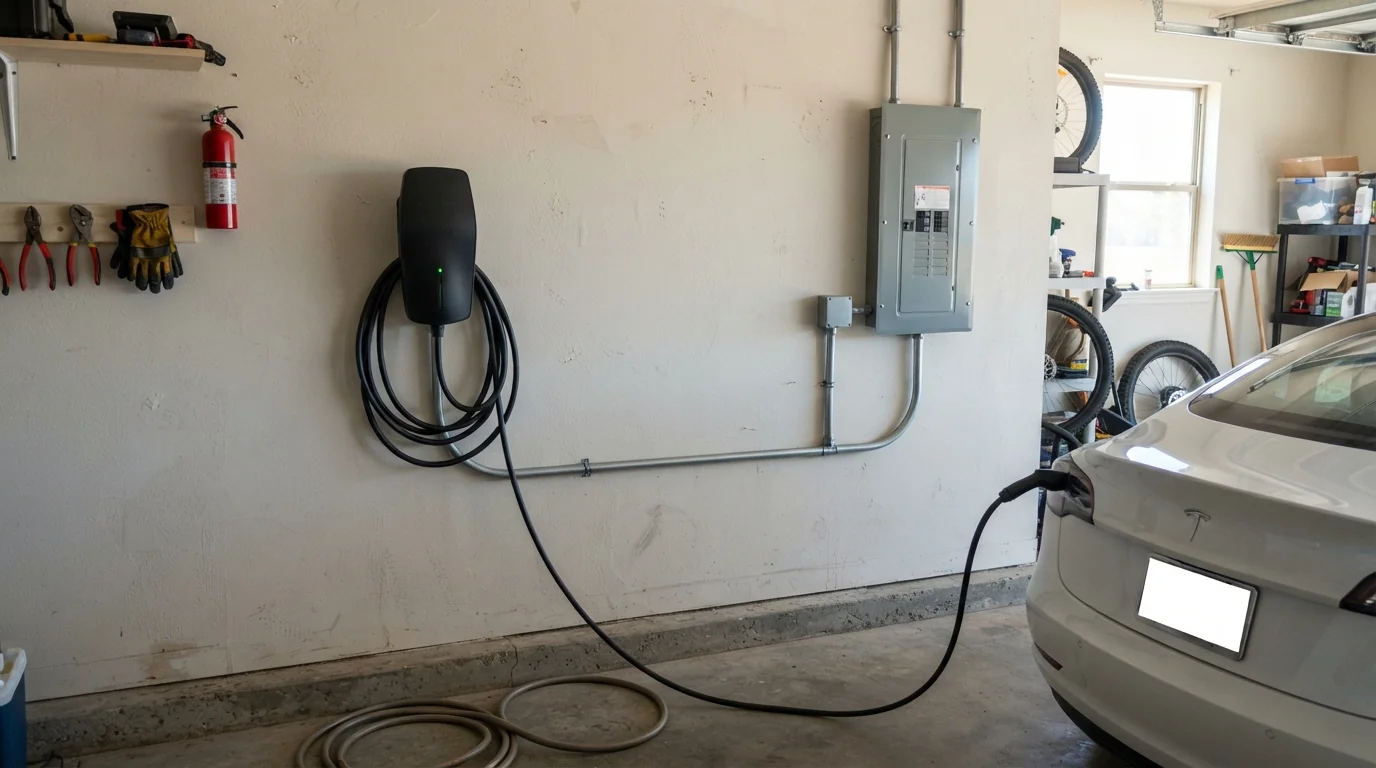
Where a house lands in the range comes down to four things: distance, route, panel and permit. A charger mounted on the garage wall beside the panel is the low end. A charger across the house, through finished walls, or in a detached garage is the high end.
Distance and route
Every foot between the panel and the charger is heavy-gauge wire, and a 48-amp charger needs wire rated for a 60-amp circuit. Runs through an open attic or along an unfinished garage wall in conduit are quick. Runs through finished walls and ceilings take longer and may need patching.
Detached garages and carports add trenching. The circuit has to go underground at code depth or under the driveway in a bore. If the building also needs lights, outlets or a shop circuit, a small subpanel there often makes more sense than a single long charger circuit.
Your panel decides the rest
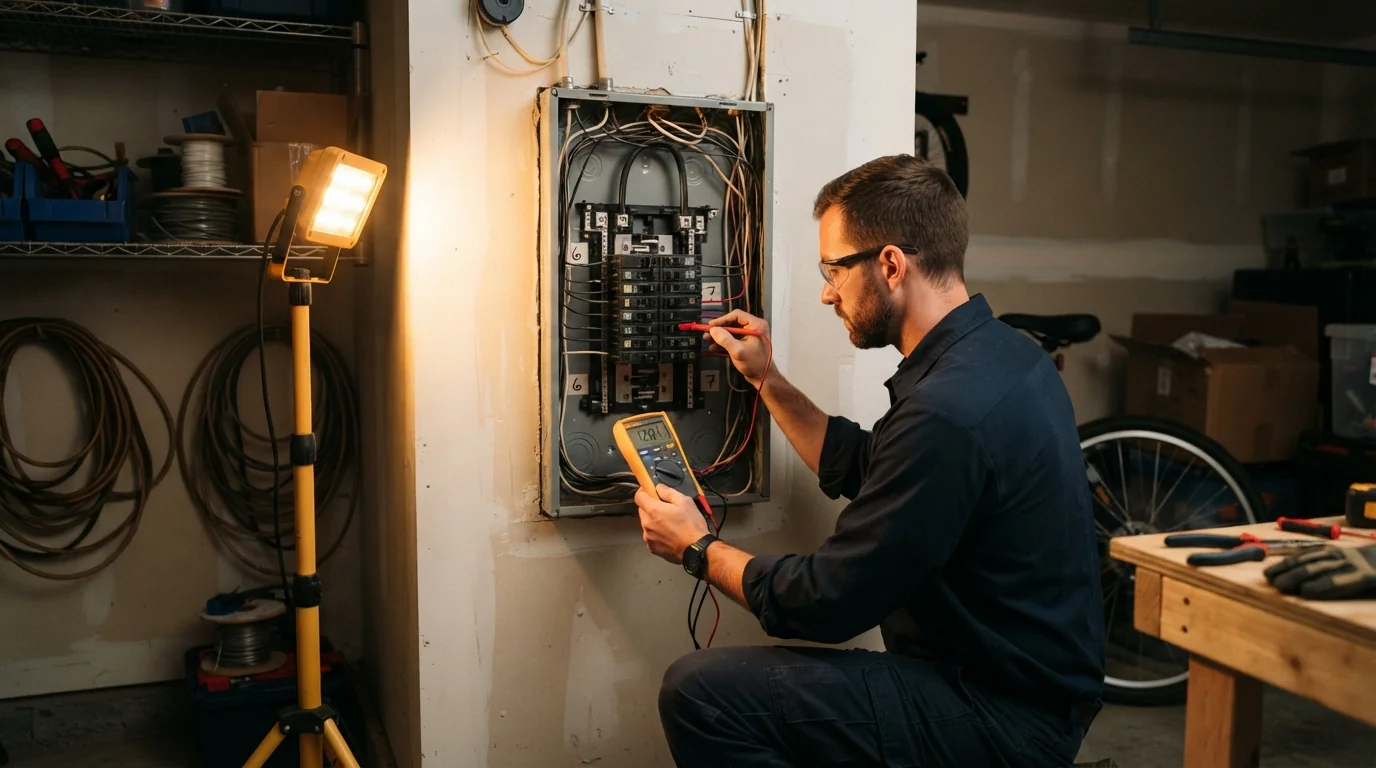
A charger is one of the largest loads in a house, running at 32 to 48 amps for hours. A 200-amp panel with open slots usually handles it without drama. A full or 100-amp panel in an older home may not, and that is where costs jump: published 2026 figures put a 100 to 200 amp upgrade at about $1,800 to $3,500.
An upgrade is not always needed. A load calculation may show the service can carry a charger at a lower current, or a load management device can pause charging when the house is busy. We run that calculation before recommending anything, because it is the single biggest cost decision in the job.
Hardwired or plug-in
Hardwired chargers connect directly to the circuit, allow the highest charging currents, and avoid receptacle wear. A NEMA 14-50 outlet lets you use a plug-in charger and take it with you if you move, but the receptacle must be industrial grade, since cheap ones overheat under hours of charging.
The cost difference between the two is small. The choice is more about how fast you need to charge and whether you expect to change chargers or houses.
Permit and inspection
In Oklahoma City a charger circuit is a new circuit, permitted through Development Services and inspected before it is signed off. A 2026 guide lists typical electrical permits at about $50 to $300. The inspection adds a short wait between install and sign-off.
Some utilities and manufacturers offer rebates that require proof of a permitted install. Keep the permit record with the receipt.
Buying an EV?
Call before you buy the charger. We check the panel and tell you what the install really involves.
Choosing the charging current
Faster is not always better. A 40 or 48 amp charger adds a full day of typical driving overnight, and many drivers are fine with 32 amps. Choosing a lower current can avoid a panel upgrade entirely. We set the charger to match the circuit and the panel, and it can be raised later if the panel is upgraded.
When the panel is tight: load management
If the load calculation shows the panel cannot add a full-size charger circuit, a panel upgrade is not the only answer. Many chargers can be set to a lower current, and energy management devices can monitor the house load and reduce charging when other big loads are running.
For most commuters, a 32 amp charger overnight replaces a full day's driving with hours to spare. Load management keeps that charging available without paying for capacity the house only needs for a few minutes a day.
Apartments, townhomes and HOAs
Charging where you do not control the parking takes more planning. The run may have to reach a shared garage or a lot, the circuit may have to come from a house panel or a common-area meter, and the HOA or landlord usually has to approve the route and the mounting.
Bring the electrician in before asking for approval: a clear drawing of the route, the panel it comes from and how the charger will be metered makes the request much easier to say yes to.
Outdoor chargers and Oklahoma weather
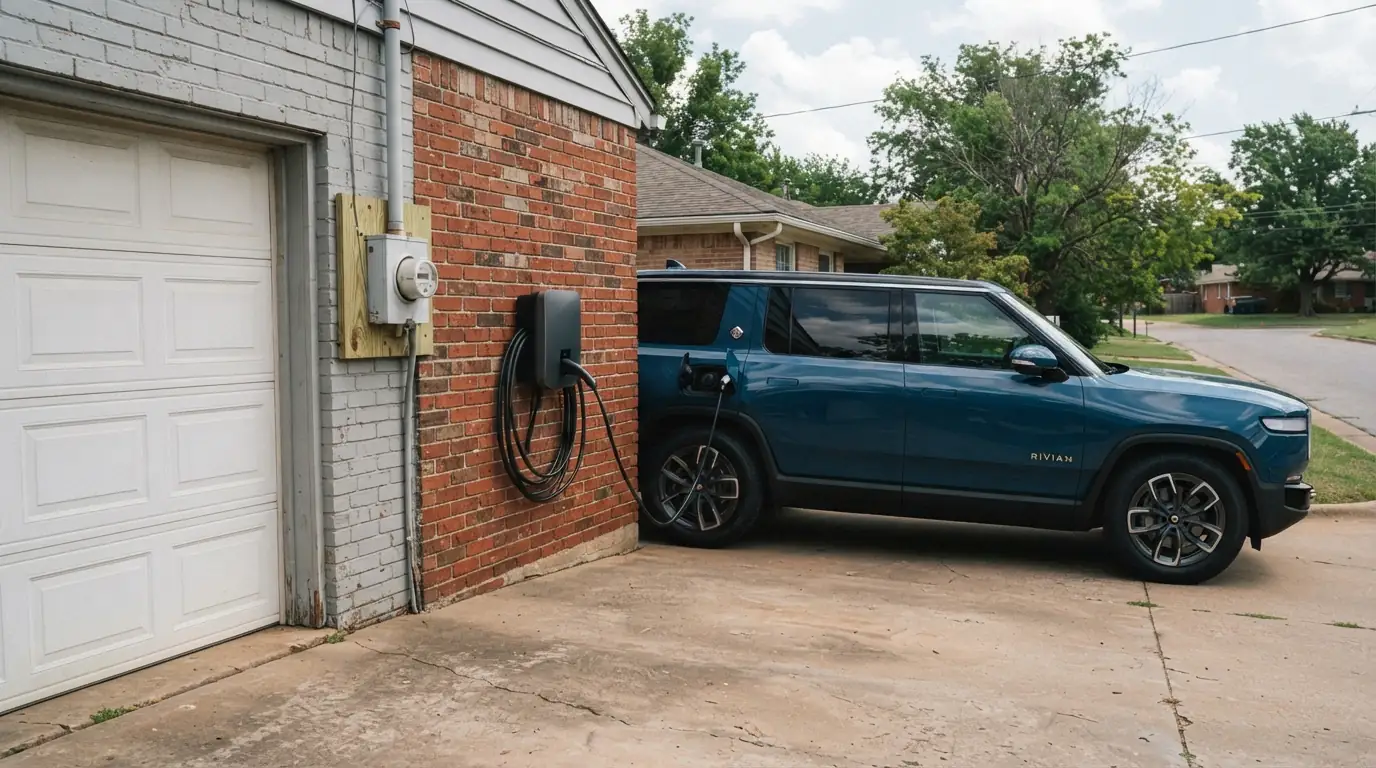
Chargers mounted outside need an enclosure rated for outdoor use, commonly NEMA 3R or NEMA 4, and a mounting spot that keeps the cable off the driveway. Afternoon sun on a dark housing can push a charger into thermal throttling in July, so shade helps.
Cable management matters more outdoors, where cords left on the ground get driven over and caked with ice. A hook or retractor at the right height keeps the connector clean and the cable from being crushed.
What a good quote includes
A good quote states the circuit size and route, the charger current it will be set to, whether a panel upgrade or load management is needed, GFCI protection where required, the permit, and patching or trenching if any. If two quotes are far apart, compare whether one assumes an upgrade and the other does not.
Related services
Where this guide leads
EV Charger Installation
Level 2 hardwired charger.
EV Charger Installation detailsElectrical Panel Upgrade
100 to 200 amp upgrade.
Electrical Panel Upgrade detailsDetached Garage & Shop Wiring
Feeder to the outbuilding.
Detached Garage & Shop Wiring detailsQuestions
Quick questions on this topic
Published 2026 ranges put it at about $1,200 to $3,500, with the circuit alone at about $500 to $2,000.
Only if the load calculation shows the panel cannot carry the charger, even at a lower current.
The difference is small. Hardwired allows higher current; the outlet is portable.
Yes. It is a new circuit, permitted and inspected.
Enough for most daily driving overnight, and it may avoid a panel upgrade.
Keep reading
More guides from the same desk
How to choose an electrician
Hiring an electrician in Oklahoma City?
Read the guideCost to rewire a house
What a whole-house or partial rewire costs in Oklahoma City: national price ranges, what drives them, plaster and access, the panel, permits and patching.
Read the guideSigns your house needs rewiring
Warm outlets, two-prong plugs, cloth wiring or constant trips in an older Oklahoma City home?
Read the guide