Updated October 2026
By Sheldon Talbot, Electrical Guides Editor. Updated October 2026
Quick answer
Federal Pacific Stab-Lok and Zinsco panels are flagged by home inspectors and many insurers because their breakers have a long record of failing to trip under overload, and Zinsco breakers can fuse to the aluminum bus. You can identify them by the brand label inside the panel door and the breaker style. The usual recommendation is replacement with a current panel, typically in one day with the permit and utility coordination included.
How to tell if you have one
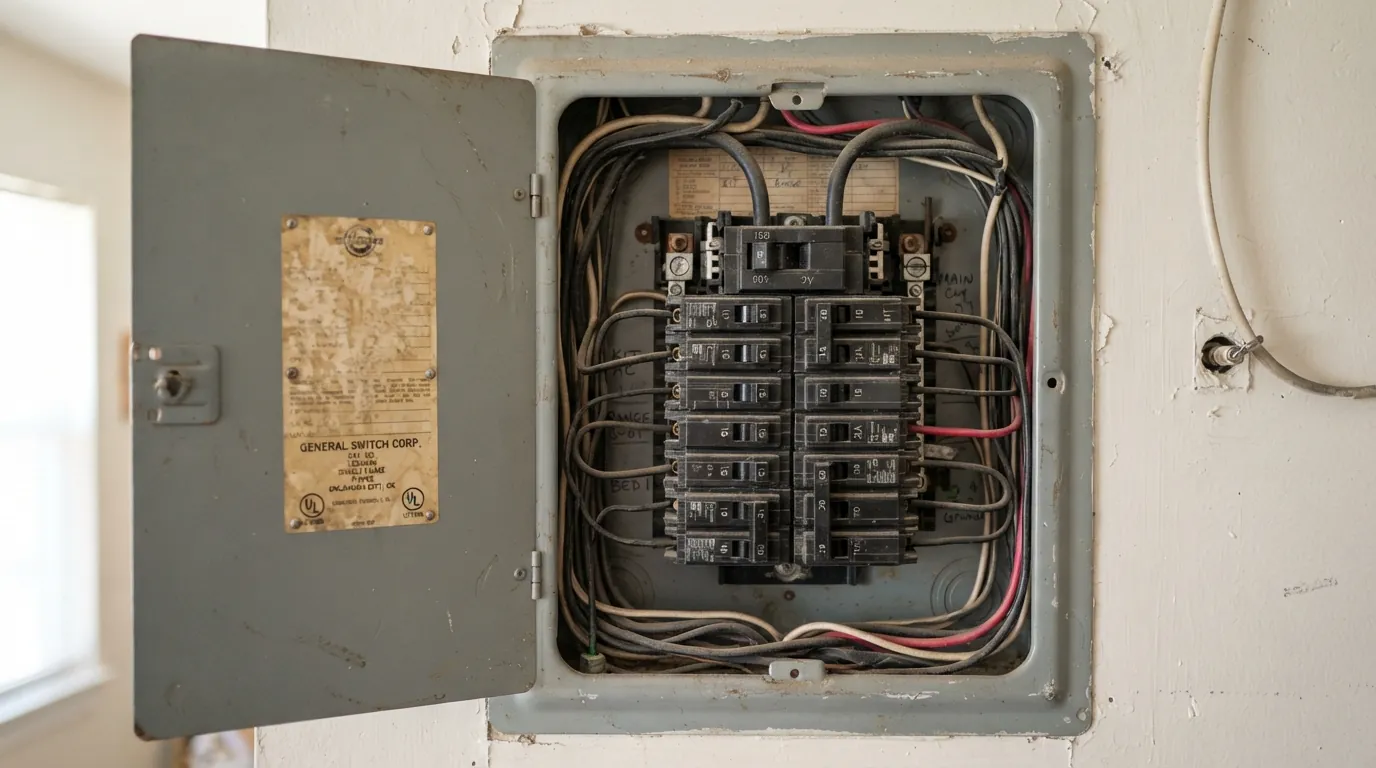
Open the panel door, not the inner cover, and look for the manufacturer label. Federal Pacific panels say Federal Pacific Electric or FPE, and the breakers often carry the name Stab-Lok, with a distinctive thin profile and colored handles. Zinsco panels say Zinsco or Sylvania, and their breakers are often thin and multi-colored.
If the label is missing or unreadable, a photo of the breakers is usually enough for an electrician to identify the brand. Do not remove the inner cover yourself; the parts behind it are live.
Why Federal Pacific panels are flagged
Federal Pacific panels were installed in large numbers from the 1950s into the 1980s. The concern that follows them is that Stab-Lok breakers may not trip when a circuit is overloaded or shorted, which is the one job a breaker must do. Independent testing and years of field reports point to breakers that failed to trip and to loose stab connections on the bus.
The practical problem is that a failure is invisible until the day it matters. A panel that has never caused trouble is not proof that its breakers will trip on the next fault.
Why Zinsco panels are flagged
Zinsco panels, and Sylvania-Zinsco panels that followed, clip breakers onto an aluminum bus. Over time the connection can loosen and overheat until the breaker welds itself to the bus and can no longer trip. When we remove one, discoloration at the bus is common.
As with Federal Pacific, the risk is a breaker that looks normal and does not protect the circuit. Replacement breakers do not solve a bus problem.
What it means for insurance and sales
Many insurers ask about these brands by name, and some will not write or renew a policy without a replacement. Home inspectors flag them on sight during sales, and buyers often ask for a credit or a replacement before closing.
A documented replacement settles the question. Keep the permit record and the electrician invoice with your house papers.
What replacement involves
Replacement swaps the panel for a current one with new breakers throughout. Most homes keep the same amperage or move to 200 amps if a load calculation says they need it. The utility pulls the meter, the panel is replaced, the work is inspected, and the meter goes back in, usually within a day.
Published 2026 figures put a 100 to 200 amp upgrade at about $1,800 to $3,500, and a same-amperage swap usually sits toward the lower end. Damaged wire ends or a failing meter base found during the job add to it.
Found one of these labels?
Send a photo of the panel label when you call. We confirm it and schedule a one-day replacement.
Can you just replace the breakers?
Replacement breakers for these panels exist, but they do not fix the bus connection issues or change the panel design. Most electricians recommend replacing the panel rather than individual breakers, and many insurers will not accept breaker swaps as a fix.
Other panels that raise questions
Federal Pacific and Zinsco are the best-known names, but they are not the only panels electricians look at twice. Old fuse boxes, Pushmatic panels with their push-button breakers, and split-bus panels with no single main breaker all show up in older Oklahoma City homes.
Split-bus panels deserve a special mention: shutting off the house can take several switches, and there is no single main to kill power in an emergency. None of these is an automatic replacement, but each is worth an evaluation, especially before adding load.
Replacing it before you sell
A flagged panel almost always appears in a buyer's inspection report, and it often becomes a negotiation point or an insurance question late in the sale. Replacing it before listing removes the issue and gives you a permit and an inspection record to hand over.
If you would rather not replace it yourself, get a written quote you can share with buyers. A known, documented price is easier to negotiate than an open-ended worry in an inspection report.
What replacement day looks like
A straight panel replacement is usually a one-day job. The power is off while the old panel comes out, the new panel and breakers go in, every circuit is identified and labeled, and grounding and bonding are corrected.
The utility disconnects and reconnects the service and the city inspects the work. Plan for a day without power, keep the refrigerator closed, and expect a panel directory you can actually read at the end of it.
What to do now
If you find one of these labels, there is no need to panic, but do not put it off either. Avoid overloading circuits, pay attention to warm breakers or burning smells, and schedule a replacement. If you are buying or selling, raise it early so it does not surprise anyone at closing.
Related services
Where this guide leads
Federal Pacific & Fuse Box Replacement
Federal Pacific Stab-Lok.
Federal Pacific & Fuse Box Replacement detailsElectrical Panel Upgrade
100 to 200 amp upgrade.
Electrical Panel Upgrade detailsElectrical Safety Inspection
Pre-purchase inspection.
Electrical Safety Inspection detailsQuestions
Quick questions on this topic
The concern is breakers that may not trip on a fault, which you cannot see until it matters.
Check the label inside the door for Zinsco or Sylvania, and look for thin, multi-colored breakers.
Some insurers will not. A documented replacement usually resolves it.
Usually one day, including the utility meter pull and the inspection.
It does not fix the bus problems, and many insurers will not accept it.
Keep reading
More guides from the same desk
Cost to rewire a house
What a whole-house or partial rewire costs in Oklahoma City: national price ranges, what drives them, plaster and access, the panel, permits and patching.
Read the guideIs surge protection worth it
Is a whole-home surge protector worth it in Oklahoma City?
Read the guideSigns your house needs rewiring
Warm outlets, two-prong plugs, cloth wiring or constant trips in an older Oklahoma City home?
Read the guide