Updated October 2026
By Sheldon Talbot, Electrical Guides Editor. Updated October 2026
Quick answer
National 2026 cost guides put a whole-house rewire at about $4 to $15 per square foot, or roughly $10,000 to $30,000 for a typical house; one guide lists about $4,000 to $15,000 for a 1,500 to 2,500 square foot home. In Oklahoma City the final price depends on wall type, attic and crawlspace access, whether the panel is replaced, and whether you rewire the whole house or the kitchen, baths and laundry first.
The range, and why it is so wide
National 2026 cost guides put a whole-house rewire at about $4 to $15 per square foot, which one guide translates to roughly $10,000 to $30,000 for a typical house. Another lists about $4,000 to $15,000 for a home of 1,500 to 2,500 square feet. Those ranges overlap but do not agree, and that tells you something: the square footage is only one input.
Two houses of the same size can be priced thousands apart because one has an open attic and a crawlspace and the other has plaster walls, a finished basement and no attic access. The rest of this guide walks through what actually moves the number.
Size, stories and the number of circuits
More square footage means more cable, more boxes and more hours, but the circuit count matters as much as the area. A modern kitchen alone needs several dedicated circuits, and bathrooms, laundry and HVAC equipment each need their own. A rewire brings the house up to current code, so a 1950s house that had a handful of circuits will end up with many more.
Two-story houses cost more than ranches of the same size, because running cable between floors means more fishing through walls and more openings to patch. A single-story house with an open attic is usually the least expensive kind to rewire.
Walls, attics and crawlspaces
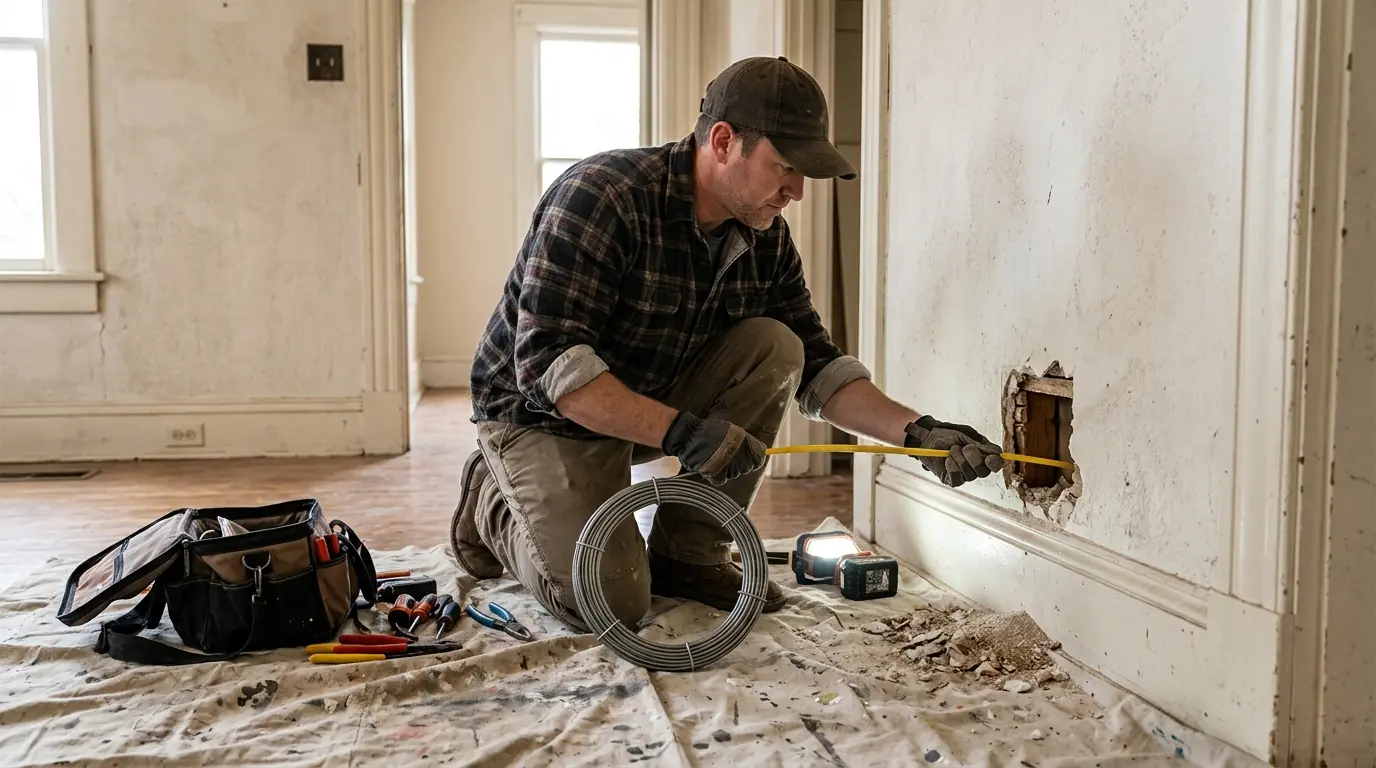
Access is the biggest variable. Electricians run new cable through the attic and crawlspace and fish it down or up into the walls, opening small holes only where they have to. An accessible attic and crawlspace keep openings few and small.
Plaster and lath walls, common in Oklahoma City's early-1900s neighborhoods such as Heritage Hills and Mesta Park, take more care than drywall: they crack if opened carelessly and take longer to patch well. Finished basements, cathedral ceilings and blown-in insulation all slow the work. These are the details a good quote is built on.
Want a rewire quote built on your house?
Call to set up a walk-through. We price your walls, attic and circuits, not a guess.
Whole house or partial rewire
A partial rewire replaces the highest-risk and highest-load circuits first, usually the kitchen, bathrooms, laundry and any circuits on knob and tube or deteriorated cloth wiring. It costs less now and can be done in phases, and it often fixes the problems that prompted the call.
A whole-house rewire makes sense when the wiring method itself is outdated throughout, when the walls are opening for a remodel anyway, or when insurance or a sale depends on it. Doing it all at once avoids paying for the setup, permits and patching twice.
The panel and the service
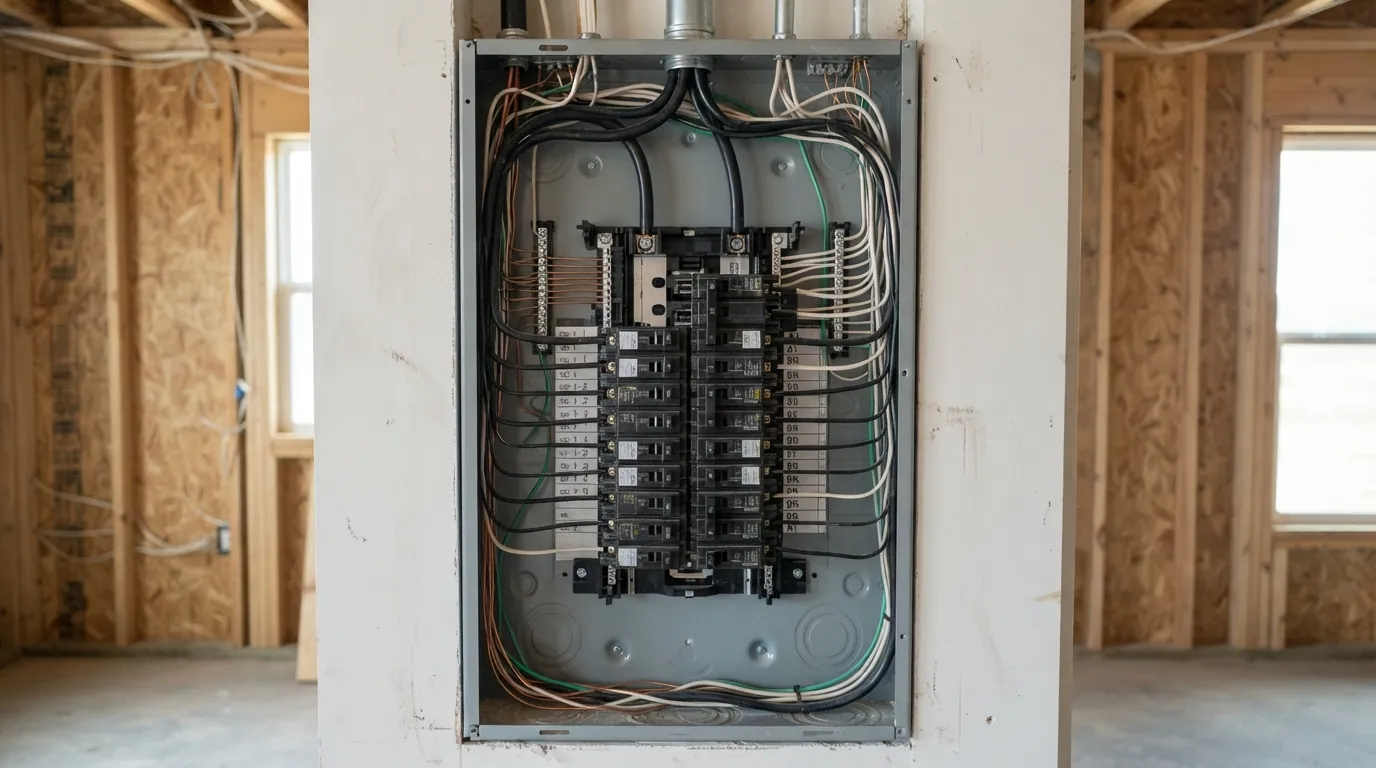
A rewire often includes a new panel, because the old one may be too small for the new circuits, may not accept the AFCI and GFCI breakers current code requires, or may be a brand with a poor record. National 2026 guides put a 100 to 200 amp panel upgrade at about $1,800 to $3,500.
If the service itself is upgraded, the utility pulls the meter and reconnects after inspection, which adds coordination time. Planning the panel and the rewire together usually costs less than doing them a year apart.
Patching, permits and living in the house
Ask every contractor whether patching is included and to what standard. Some quotes stop at rough patching and leave finishing and paint to you; others include finished patches ready for paint. The difference can be significant on a plaster house.
A rewire needs a permit and inspections, usually a rough-in inspection with walls open and a final inspection. Most families stay in the house during a rewire; the work moves room by room, and power is restored to finished areas at the end of each day.
How to get an accurate quote
An accurate rewire quote starts with a walk-through of the attic, crawlspace, panel and every room, not a price per square foot over the phone. It should list the circuits being replaced or added, the panel work, the patching standard, the permit, and what happens if the electrician finds something unexpected behind a wall.
Compare quotes on those details rather than the total alone. The lowest number often leaves out patching, the panel or the permit. Labor runs about $75 to $150 per hour nationally in 2026, so a quote with far fewer hours than the others deserves a question.
Related services
Where this guide leads
Whole-House Rewiring
Full rewire with new panel.
Whole-House Rewiring detailsKnob & Tube Replacement
Attic and wall removal.
Knob & Tube Replacement detailsElectrical Panel Upgrade
100 to 200 amp upgrade.
Electrical Panel Upgrade detailsQuestions
Quick questions on this topic
National 2026 guides range from about $4 to $15 per square foot; your price depends on access, walls and scope.
Yes, and it can be done in phases, starting with the kitchen, baths and laundry.
Usually, because openings must be made and patched carefully.
Often, if the existing panel is too small or outdated for the new circuits.
Usually yes; work moves room by room and power is restored each day.
Keep reading
More guides from the same desk
Federal Pacific and Zinsco panels
Federal Pacific or Zinsco panel in your Oklahoma City home?
Read the guideWhat a panel upgrade costs
How much does a 200 amp panel upgrade cost in Oklahoma City?
Read the guideSmoke and CO alarm placement
Where should smoke and CO alarms go in an Oklahoma City home, how often should you replace them, and is hardwired worth it?
Read the guide