Updated October 2026
By Sheldon Talbot, Electrical Guides Editor. Updated October 2026
Quick answer
Smoke alarms belong in every bedroom, outside each sleeping area and on every level of the home, including the basement. Carbon monoxide alarms belong outside sleeping areas and on each level in homes with gas appliances, a fireplace or an attached garage. Interconnected alarms that sound together are the safest setup, and most alarms should be replaced about ten years after the date printed on the back.
Smoke alarms, room by room
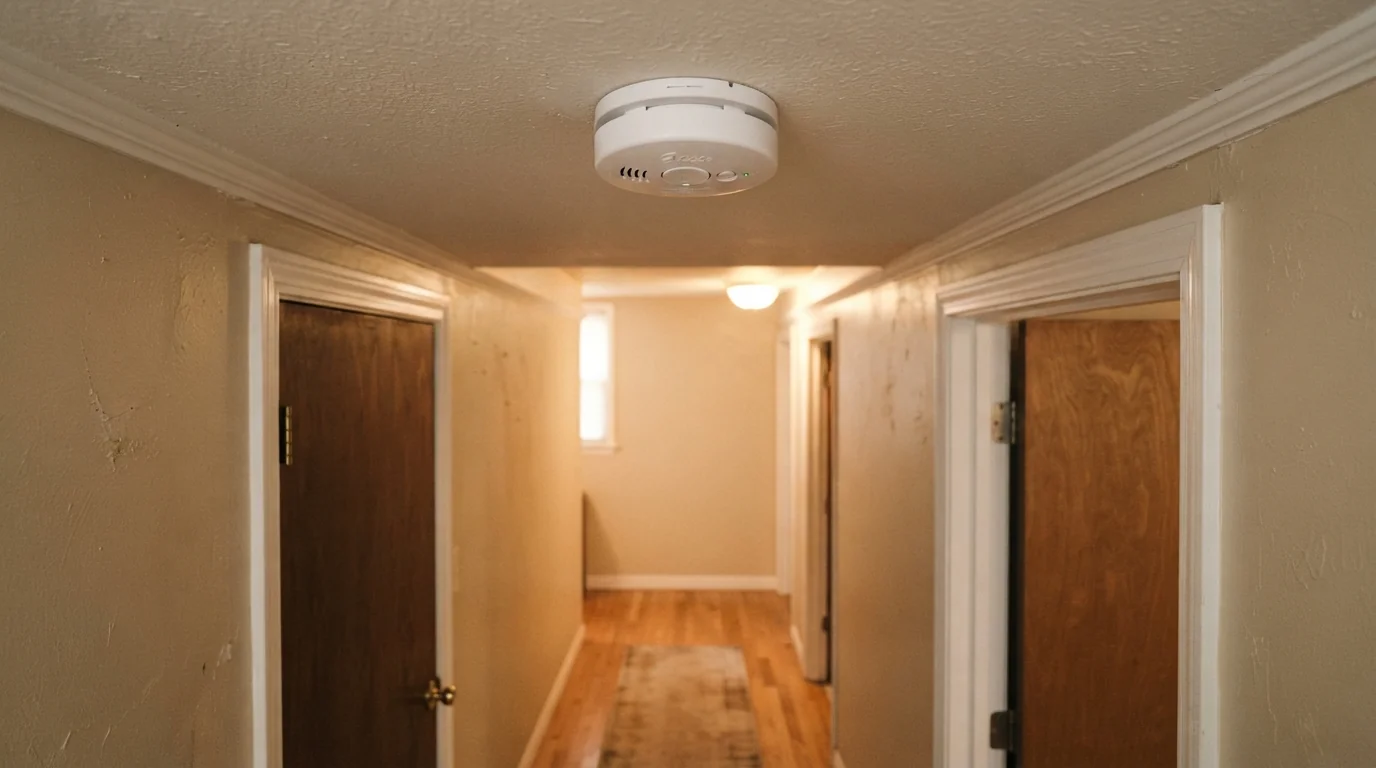
Put a smoke alarm inside every bedroom, one in the hallway or area outside each group of bedrooms, and at least one on every level of the house, including a finished or unfinished basement. In a two-story home with bedrooms upstairs, that usually means one in each bedroom, one in the upstairs hall and one on the main level near the living area.
Mount them on the ceiling or high on the wall, away from corners where air does not move. Keep them several feet away from cooking appliances and bathroom doors, where steam and smoke from cooking cause nuisance alarms that lead people to pull the battery.
Carbon monoxide alarms
Carbon monoxide comes from fuel-burning appliances such as gas furnaces, water heaters, ranges and fireplaces, and from cars running in an attached garage. Any home with one of those needs carbon monoxide alarms, placed outside each sleeping area and on each level. A gas furnace in the garage or a basement utility room is a common reason a house needs more than one.
Combination smoke and carbon monoxide alarms keep the ceiling tidy and are a good fit in hallways outside bedrooms. They use different alert patterns for smoke and CO, and many announce which one they detected.
Why interconnection matters
Interconnected alarms sound together. A fire starting in the garage or basement sets off the alarm in the bedroom at the other end of the house, often minutes before smoke would reach it. That time is the whole point of an alarm system.
Hardwired interconnected alarms are standard in newer construction and the most reliable option. Where running wire is not practical, wireless interconnected alarms give the same whole-house warning, and many can connect to an existing hardwired system through a bridge.
Hardwired or battery
Hardwired alarms run on house power with a battery backup and are the standard in new homes and additions. Replacing old hardwired units is usually quick, especially when the new alarm matches the existing connector. Adding new hardwired locations means running cable through the attic.
Sealed 10-year battery alarms remove the low-battery chirp for the life of the unit and are a good choice for rentals, plaster ceilings and places where wiring is hard to reach. A 2026 cost guide lists hardwired interconnected smoke detectors at about $50 to $100 per detector installed.
When to replace them
Check the manufacture date on the back of each alarm. Most makers call for replacement about ten years after that date, and many carbon monoxide sensors have a shorter life. An alarm that chirps after a fresh battery, or sounds for no reason, is often at the end of its life.
Replace the whole set at the same time when they are the same age, so you are not chasing one chirping unit after another.
Not sure your alarms would wake everyone?
Call to book an alarm check. We place, interconnect and test them so one alarm wakes the whole house.
Testing and maintenance
Press the test button on each alarm monthly, and with interconnected alarms, confirm they all sound when one is tested. Replace backup batteries yearly unless the units have sealed batteries. Vacuum dust from the vents a couple of times a year. Never paint an alarm or cover it.
Kitchens, bathrooms and nuisance alarms
Most false alarms come from cooking smoke and shower steam. NFPA 72 generally keeps smoke alarms about ten feet from cooking appliances, with photoelectric alarms allowed somewhat closer, and at least three feet from the door of a bathroom with a shower.
Moving an alarm a few feet often ends the false alarms without leaving the area unprotected. Taking the battery out is the habit that leads to a silent alarm on the night it matters.
Photoelectric, ionization or both
Photoelectric alarms respond faster to slow, smoldering fires, the kind that start in upholstery or wiring. Ionization alarms respond faster to fast, flaming fires. Dual-sensor alarms combine both.
Many fire safety groups favor photoelectric or dual-sensor alarms in living areas and near kitchens, where photoelectric units also produce fewer cooking false alarms. Whatever the type, interconnection and working batteries matter more than the sensor.
Older homes without hardwired alarms
Hardwiring interconnected alarms is easiest during a remodel or rewire, but older homes do not have to wait. Wireless interconnected alarms with sealed ten-year batteries link every alarm in the house without new wiring.
If you plan to rewire later, the wireless set protects the family now, and hardwired alarms can be added when the walls are open. Either way, every bedroom, every hallway outside bedrooms and every level should be covered.
Special cases
Additions, finished basements and converted attics need alarms like any other part of the house. Rentals need alarms that tenants cannot easily disable, which is where sealed battery units help. Homes with a storm shelter or safe room do not need an alarm inside it, but a battery-backed light there is worth having.
Related services
Where this guide leads
Smoke & CO Detector Installation
Hardwired interconnected alarms.
Smoke & CO Detector Installation detailsElectrical Safety Inspection
Pre-purchase inspection.
Electrical Safety Inspection detailsKitchen & Bath Remodel Wiring
Kitchen circuit layout.
Kitchen & Bath Remodel Wiring detailsQuestions
Quick questions on this topic
In every bedroom, outside each sleeping area and on every level, including the basement.
Outside sleeping areas and on each level in homes with gas appliances, a fireplace or an attached garage.
About ten years after the manufacture date, sooner for some CO sensors.
Hardwired interconnected alarms are the most reliable; wireless interconnected alarms are a good alternative.
A 2026 cost guide lists about $50 to $100 per detector installed.
Keep reading
More guides from the same desk
Storm season electrical prep
Spring storms and ice can cut power for days in Oklahoma City.
Read the guideEV charger installation cost
How much does a Level 2 EV charger install cost in Oklahoma City?
Read the guideIs surge protection worth it
Is a whole-home surge protector worth it in Oklahoma City?
Read the guide