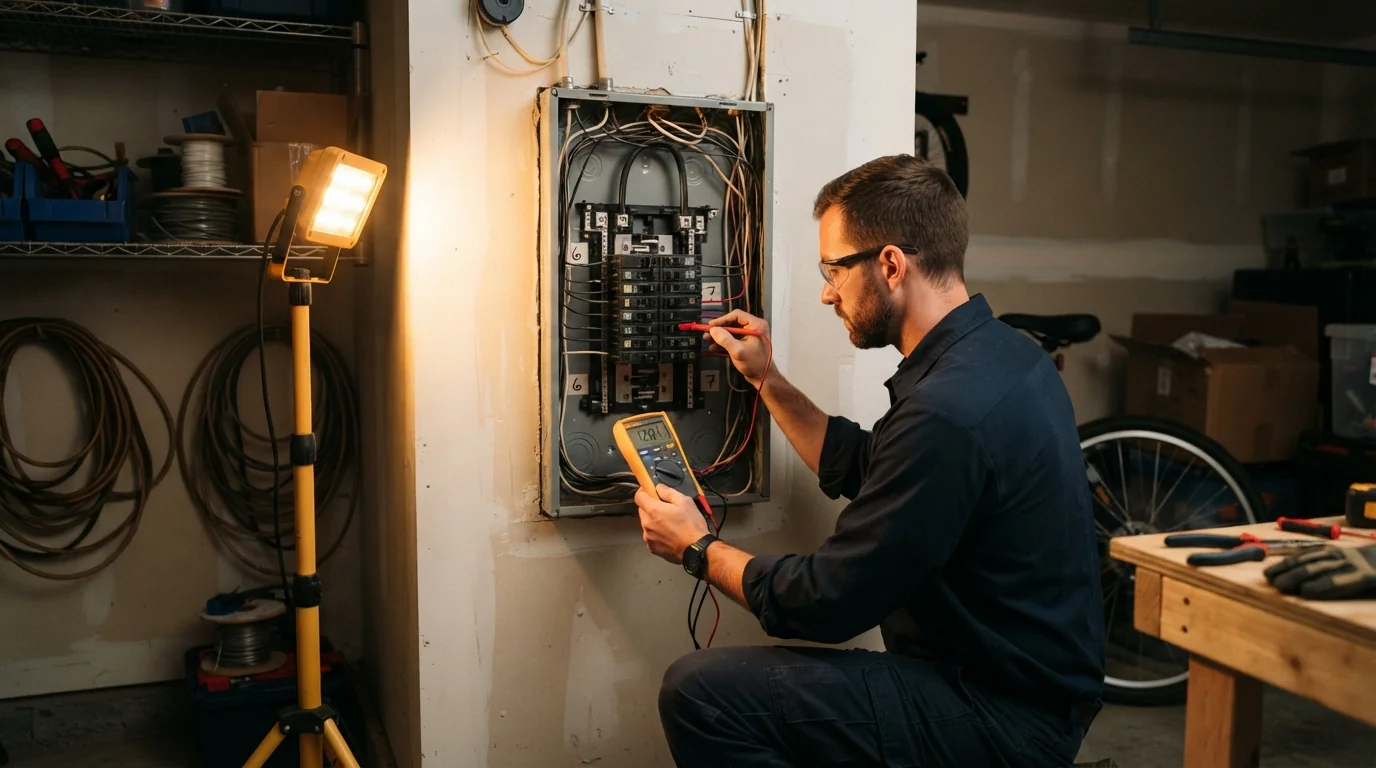
Updated October 2026
By Sheldon Talbot, Electrical Guides Editor. Updated October 2026
Quick answer
An Oklahoma City house likely needs rewiring when the problem is the wiring method rather than a single fault: knob and tube or cloth-insulated wiring still in use, ungrounded two-wire circuits throughout, single-strand aluminum branch wiring, or repeated heat damage at outlets and switches across several rooms. One warm outlet or a single tripping circuit usually means a repair, not a rewire.
Start with the age of the house
The median home in Oklahoma City dates to 1982, but a meaningful share is much older: about 7 percent was built before 1940 and another 5 percent in the 1940s. Homes of those eras, many near downtown, are the ones most likely to still have original wiring behind later walls. Houses built or expanded between 1965 and 1973 are the ones most likely to have aluminum branch wiring.
Age alone does not mean a rewire. A 1950s house that was rewired in the 1990s may be fine. A 1920s house with a new panel on top of original circuits may not be. What matters is the wiring behind the walls.
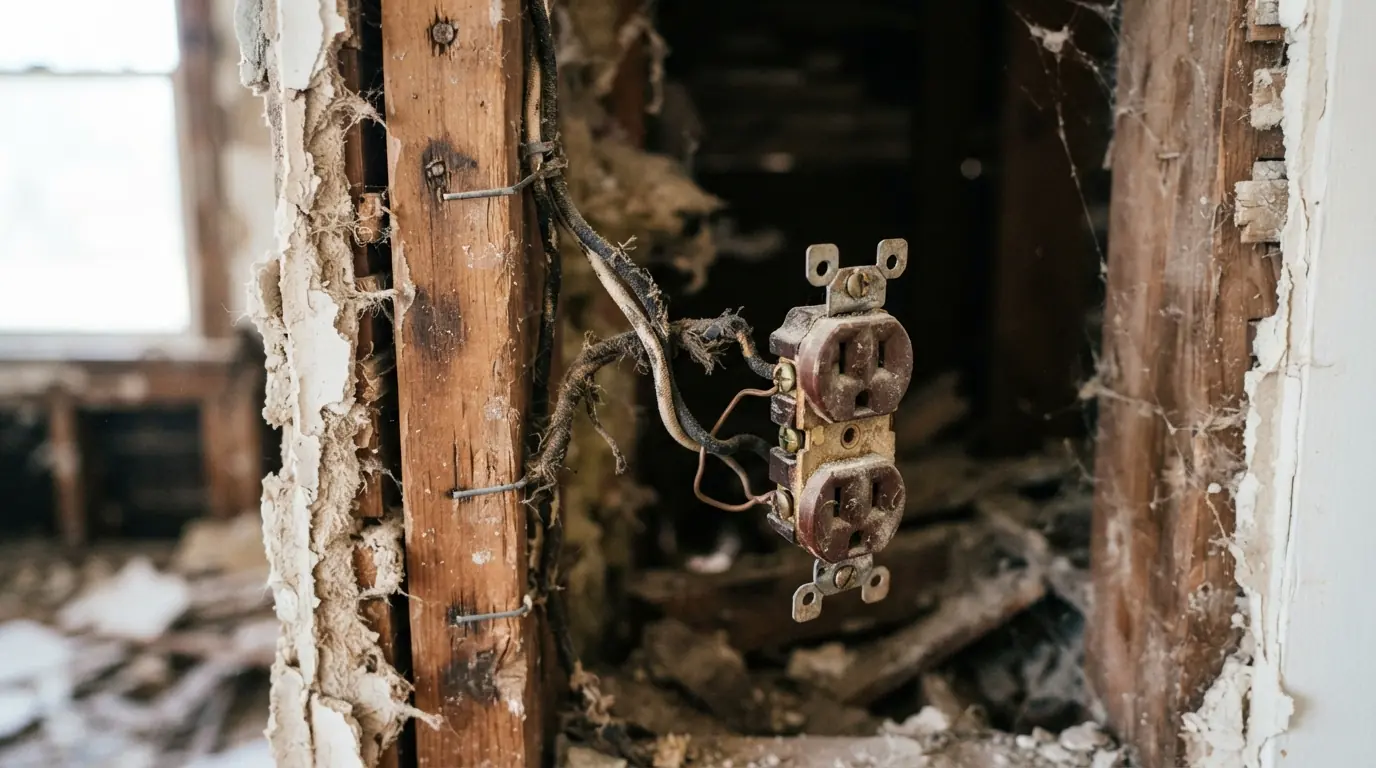
Knob and tube or cloth wiring
Knob and tube runs single wires through porcelain tubes and along porcelain knobs in the attic and walls. It has no ground, its insulation becomes brittle with age, and it was designed to be open to the air, not buried in insulation. Cloth-covered cable from the 1940s and 1950s has similar insulation problems. If either is still live, most insurers and electricians treat it as a rewire item.
You can often spot knob and tube in an unfinished attic or basement. Cloth wiring shows up when an outlet or fixture is opened. Either way, the first step is tracing which circuits are still energized.
Two-prong outlets throughout
Two-prong outlets mean the circuits have no equipment ground. One or two in an otherwise grounded house can be fixed individually. A whole house of them means the wiring system itself predates grounding.
GFCI protection on ungrounded outlets is allowed by code and makes them safer against shock, but it does not give surge protectors or electronics a true ground. When most of the house is ungrounded, a rewire is often the more complete answer.
Aluminum branch wiring
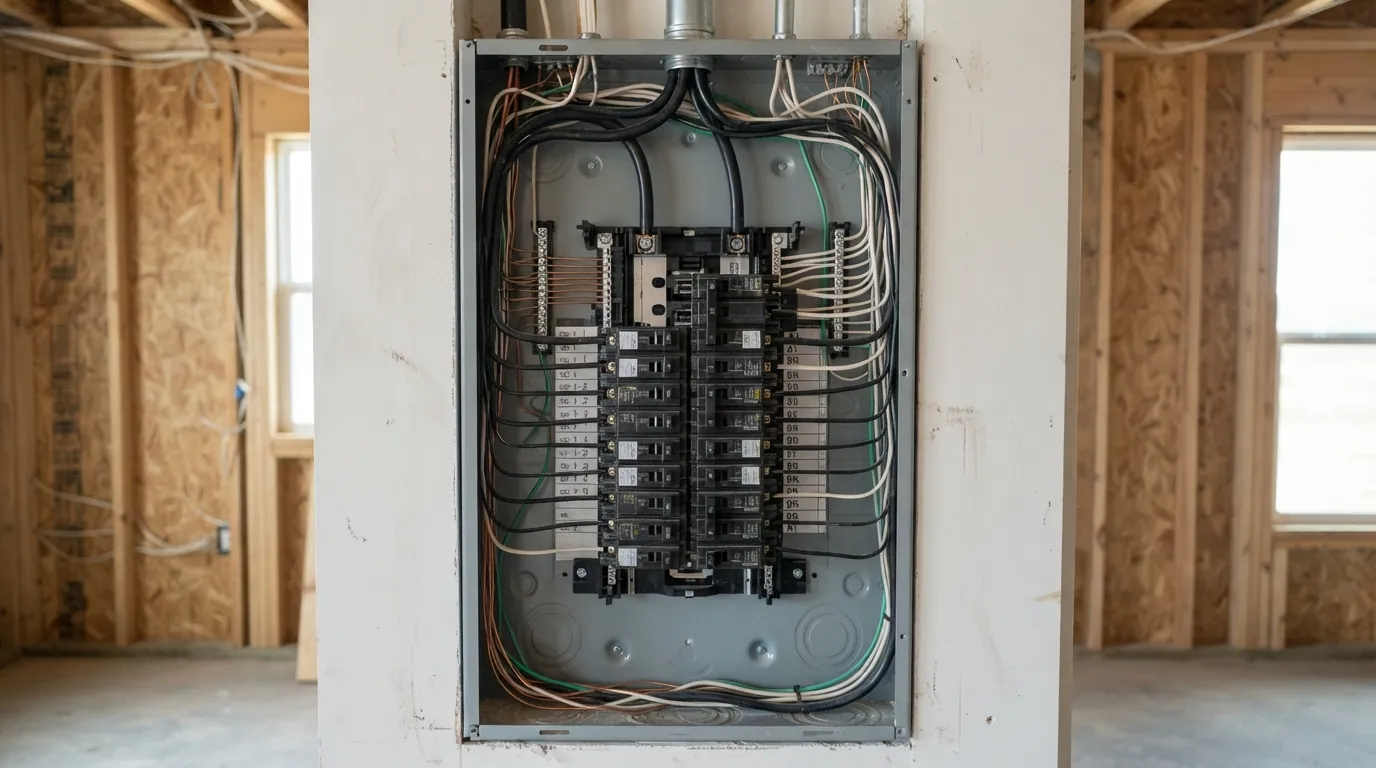
Single-strand aluminum wiring was used in many homes built or expanded between 1965 and 1973. The risk is at the connections, which can loosen and overheat; CPSC-funded research found pre-1972 aluminum-wired homes far more likely to have a connection reach fire-hazard conditions than copper-wired homes.
Aluminum wiring does not always mean a rewire. Repairing every connection with COPALUM crimps or listed connectors is a recognized alternative. A rewire makes sense when the house also has other problems, or when a remodel is opening the walls anyway.
Symptoms across many rooms
Warm outlet or switch plates in several rooms, lights that flicker in different parts of the house, outlets that have stopped working one after another, or scorch marks at devices are signs of connections failing throughout. That pattern points to the wiring system, not one bad outlet.
A single warm outlet or one tripping circuit is different. That is a repair: find the failed connection, fix it, and test the rest of the circuit.
Wondering what is behind your walls?
Call to book an inspection. We tell you plainly whether the house needs repairs or a rewire.
Repair or rewire
Repairs make sense when the wiring method is sound and the problems are specific. A rewire makes sense when the wiring method itself is outdated, when problems keep appearing in new places, or when insurance or a sale depends on it. A partial rewire, the kitchen, baths and laundry first, is a common middle ground.
National 2026 cost guides put a whole-house rewire at about $4 to $15 per square foot. One lists about $4,000 to $15,000 for a 1,500 to 2,500 square foot home, another about $10,000 to $30,000 for a typical house, which shows how much access and wall type matter.
What insurers and home inspectors look for
Home inspectors and insurers tend to flag the same items: live knob and tube, cloth-insulated wiring, single-strand aluminum branch circuits, ungrounded outlets throughout, and panels with a poor record such as Federal Pacific and Zinsco. Some insurers ask about the wiring method directly when a policy is written or renewed.
If you are buying, those items are worth pricing before closing. If you are selling, a documented repair or rewire with a permit answers the question before a buyer's inspector raises it.
Historic districts and plaster walls
Oklahoma City's Historic Preservation districts, among them Heritage Hills, Mesta Park, Edgemere Park and Crown Heights, are full of early twentieth-century homes where original wiring is most likely to survive. Changes to the outside of those houses go through Historic Preservation Commission review, which can matter when a rewire includes moving the service mast or meter.
Inside, plaster and lath walls call for a careful approach: cable fished through attics and floors, small openings in planned places, and patches made to match. Rewiring a plaster house is very doable; it just takes more time than drywall.
Renovation is the best time to rewire
The cheapest wall to rewire is one that is already open. A kitchen remodel, a bathroom gut or an addition exposes exactly the wiring that matters most, and new work there has to meet current code anyway.
If a remodel is coming, have the rest of the house evaluated at the same time. Extending the rewire to adjoining rooms while the crew, the permit and the patching are already in place costs far less than coming back later.
What to do next
If you recognize these signs, book an electrical safety inspection. You get a ranked list of what is wrong, photos, and a clear answer on whether repairs, a partial rewire or a full rewire fits the house. If you are buying an older home, do it before closing.
Related services
Where this guide leads
Whole-House Rewiring
Full rewire with new panel.
Whole-House Rewiring detailsKnob & Tube Replacement
Attic and wall removal.
Knob & Tube Replacement detailsAluminum Wiring Repair
COPALUM crimp remediation.
Aluminum Wiring Repair detailsQuestions
Quick questions on this topic
Look for knob and tube, cloth wiring, ungrounded circuits throughout, aluminum branch wiring, or heat damage in many rooms.
No. Some older homes were already rewired. An inspection tells you.
Yes, with a ground or GFCI protection, but many of them points to a rewire.
National 2026 guides put it at about $4 to $15 per square foot.
Yes. Most rewires are done room by room with the family at home.
Keep reading
More guides from the same desk
Smoke and CO alarm placement
Where should smoke and CO alarms go in an Oklahoma City home, how often should you replace them, and is hardwired worth it?
Read the guideIs surge protection worth it
Is a whole-home surge protector worth it in Oklahoma City?
Read the guideHow to choose an electrician
Hiring an electrician in Oklahoma City?
Read the guide