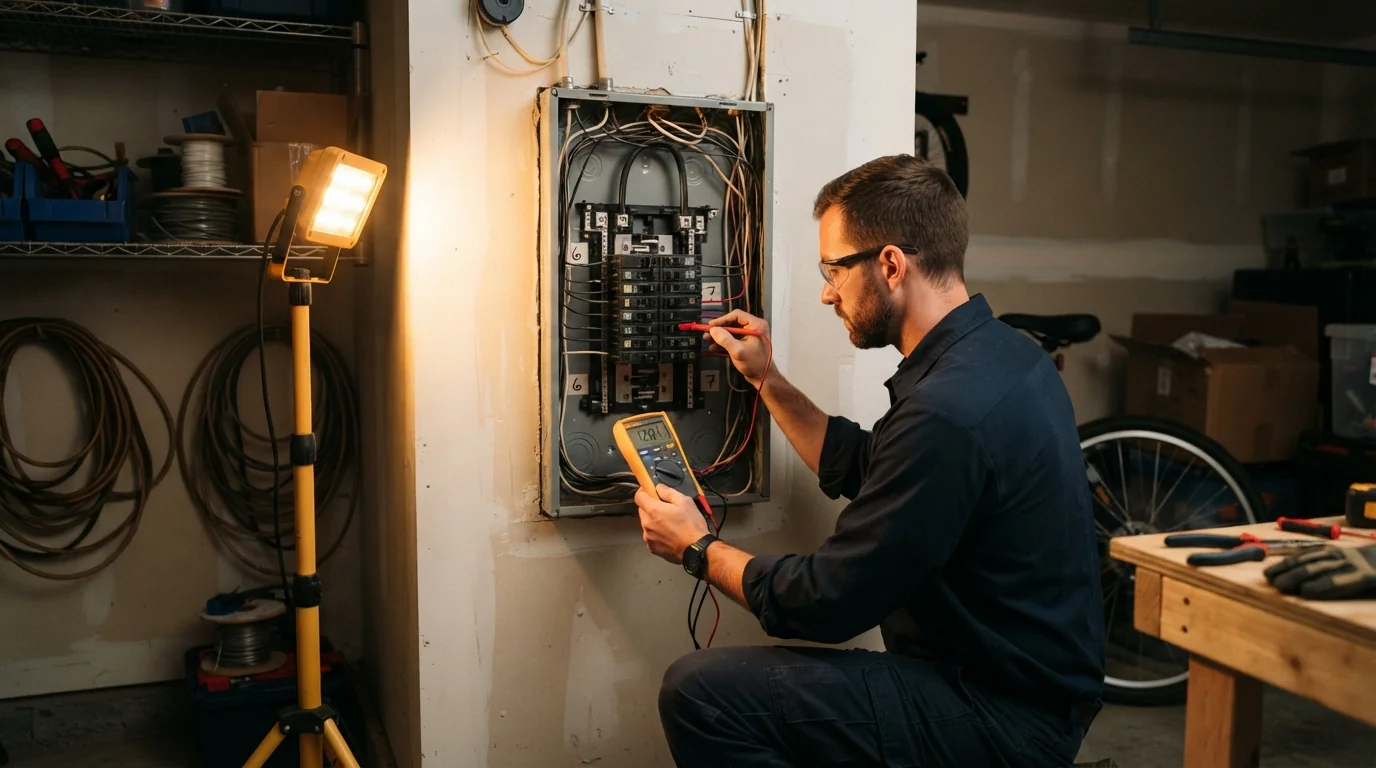
Updated October 2026
By Sheldon Talbot, Electrical Guides Editor. Updated October 2026
Quick answer
When half the house loses power while the rest still works, one of the two 120-volt legs feeding the house has usually failed, either on the utility side, at the service entrance, in the meter base or at the main breaker. Switch off large appliances such as the air conditioner, dryer and range, check the main breaker, then call the utility and an electrician. Lights that dim and brighten as appliances run are a sign of the same problem.
Why it happens
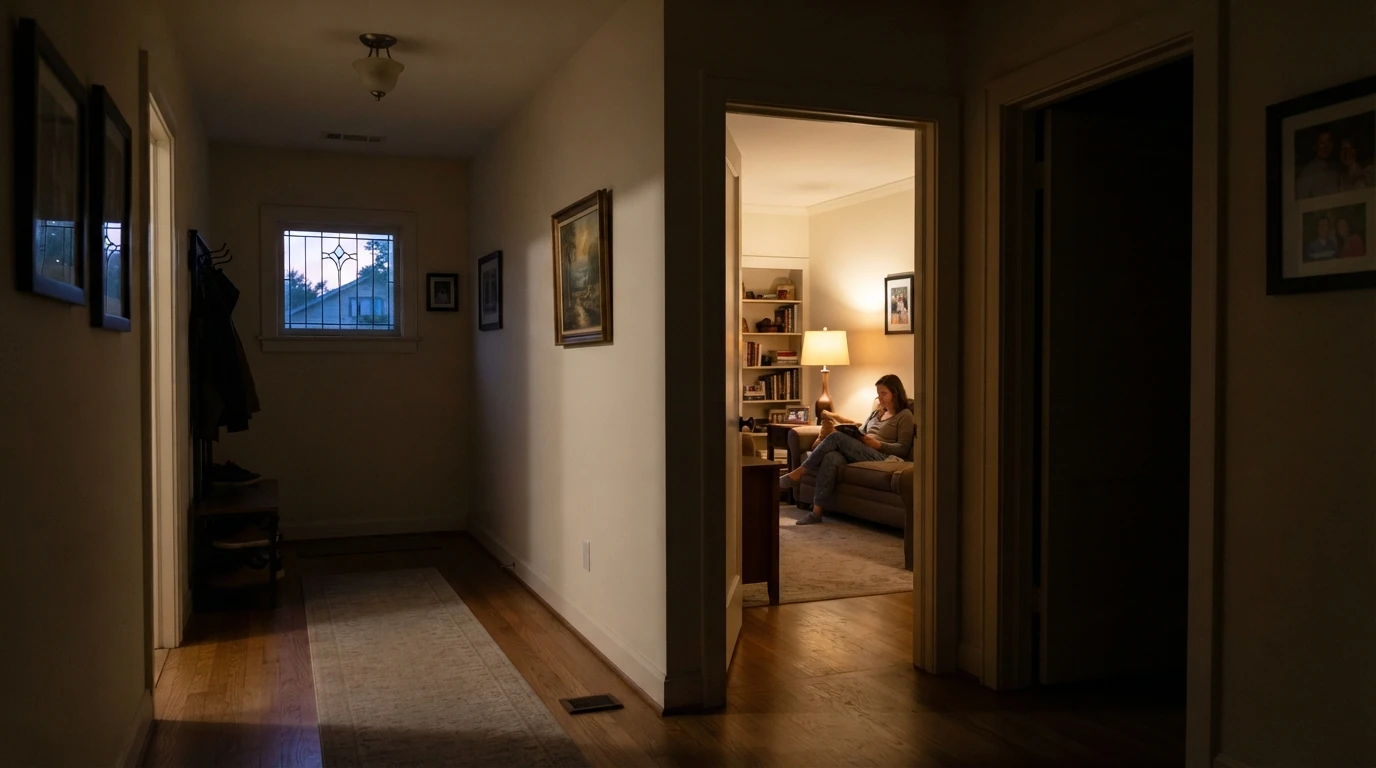
Most homes receive power as two 120-volt legs that together make 240 volts. Every other breaker in the panel is fed by one leg or the other, so when one leg fails, roughly half the circuits go dead while the rest keep working. The 240-volt appliances, such as the range, dryer and air conditioner, may stop, hum or run weakly because they need both legs.
A failed leg can come from the utility side, such as a damaged transformer connection or a service drop pulled loose, or from the house side, such as a burned connection at the weatherhead, the meter base or the main breaker.
What to do first
Switch off large appliances: the air conditioner or heat pump, the electric dryer, the range and the water heater if it is electric. Motors and heating elements can be damaged running on one leg or on low voltage. Then look at the main breaker. If it is tripped or sitting in the middle, reset it once.
If power stays half on, call the utility first to ask whether there is an outage or a known problem on your line. If neighbors have the same problem, it is almost certainly the utility side. If only your house is affected, it may be the service entrance or the panel.
The dim and bright pattern
Sometimes the problem is not a full failure but a loose connection, often on the neutral. The symptoms are lights that get brighter in some rooms and dimmer in others when appliances turn on, bulbs that burn out quickly, or electronics that fail. This is more dangerous than a clean outage because voltage in some rooms can rise well above normal.
A loose neutral should be treated as urgent. Switch off sensitive electronics and large appliances and call. An electrician measures voltage on both legs under load and finds the loose connection, which may be at the panel, the meter base or the utility connection.
Utility side or house side
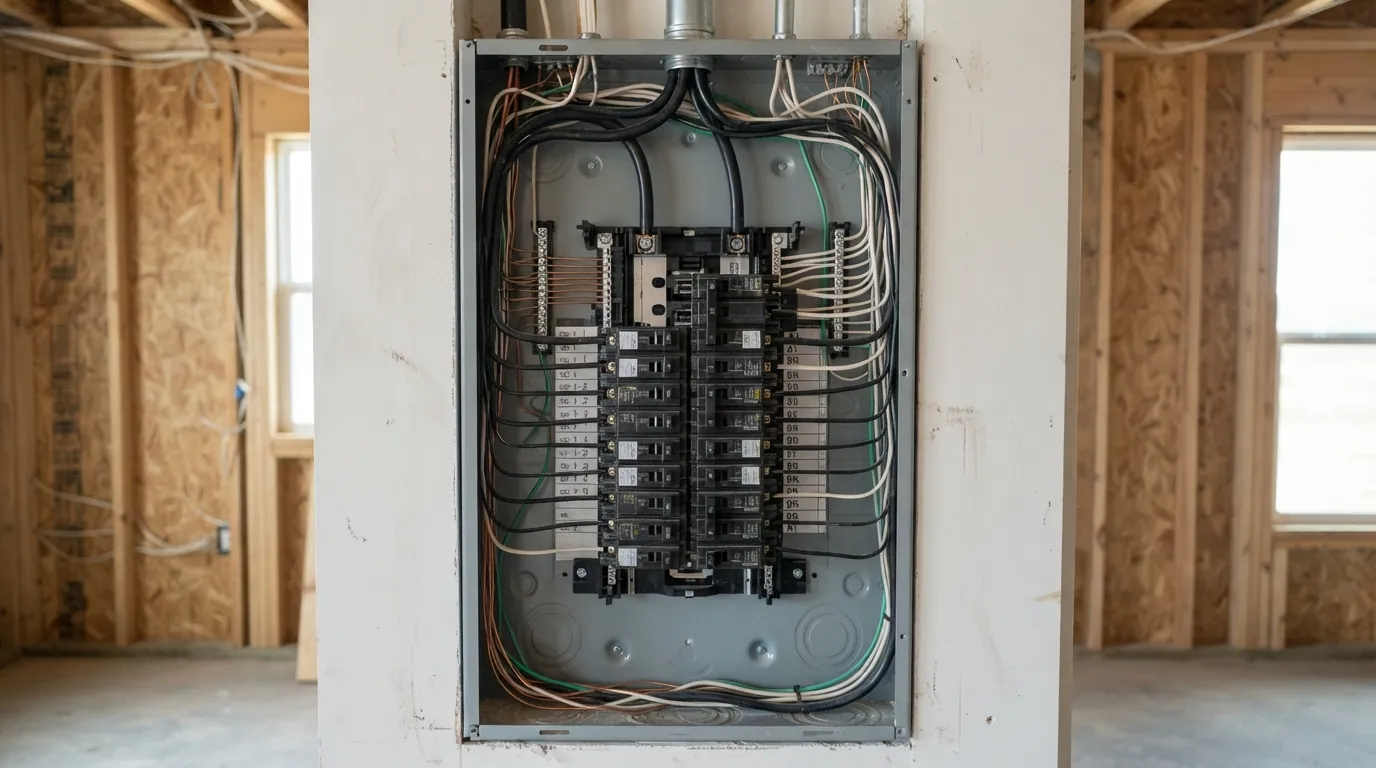
The utility owns the transformer, the service drop and the meter. The homeowner owns the mast, weatherhead, meter base and the service conductors to the panel. If the utility finds its side is fine, the problem is in the service entrance or the panel, and an electrician has to repair it.
In storms, it is often both. A limb or ice load can damage the drop and pull the mast at the same time. The utility will not reconnect until the homeowner side is repaired and inspected, so calling an electrician early saves time.
What the electrician checks
Voltage at the main lugs on both legs, then at the meter base. The main breaker for heat, damage or a failed pole. The service conductors and connections at the meter base and weatherhead for burning or corrosion. The neutral connection for tightness. Once the failed point is found, it is repaired and the voltage is checked under load.
If the meter base is burned or the main is failing, replacement may need the utility to pull the meter, and an older panel may be better replaced than repaired.
Half the house dark right now?
Switch off the big appliances and call. The line is answered 24/7.
What not to do
Do not keep resetting the main breaker if it trips again. Do not run large appliances to test them. Do not open the meter base or touch the service wires; they are energized by the utility and cannot be switched off from inside the house. If you smell burning at the meter or panel, or see smoke, leave the area and call 911.
Why it often follows storms and heat
Half-power problems cluster around two kinds of weather. Storms and ice put limbs on the service drop, stretching or breaking one leg or damaging the neutral. Long hot spells keep air conditioners running hard, and a service connection that was already loose heats, cools and loosens further until one leg drops out.
That is why the problem often appears at the worst moment, in the middle of a heat wave or the morning after a storm, and why the repair is worth doing properly rather than waiting for it to come back.
A failing main or two-pole breaker
Sometimes the cause is inside the panel: a main breaker that has failed internally on one side, or a two-pole breaker feeding a subpanel that has tripped or failed on one pole. The panel looks normal, but half the circuits lose one of their two legs.
An electrician can test voltage on both sides of the main and of each two-pole breaker with the panel cover off, which pins down whether the house side or the utility side is at fault in a few minutes.
Protecting your equipment while you wait
While half the house is out, the half that works may be seeing unstable voltage. Unplug computers, televisions and anything with a circuit board, and switch off large 240 volt appliances such as the dryer, range and air conditioner at their breakers.
If lights are flickering or running unusually bright, switch off the main breaker until the cause is found. It is a short inconvenience compared with replacing a houseful of electronics.
After the repair
Once power is restored on both legs, check the devices that were running when it happened. HVAC control boards, electronics and appliance motors can be damaged by low or uneven voltage. If several failed, ask about surge protection at the panel, and document the damage for insurance.
Related services
Where this guide leads
Emergency Electrician
Sparking or hot outlet.
Emergency Electrician detailsService Mast & Meter Base Repair
Bent or pulled mast.
Service Mast & Meter Base Repair detailsElectrical Troubleshooting
Flickering or dimming lights.
Electrical Troubleshooting detailsQuestions
Quick questions on this topic
One of the two incoming legs has usually failed, on the utility side or at the service entrance, meter base or main breaker.
Both. The utility checks its side; an electrician checks and repairs the house side.
It can damage appliances, and a loose neutral can raise voltage in some rooms. Treat it as urgent.
A loose neutral connection can push voltage up in some circuits. Switch off electronics and call.
Once. If it trips again or the problem stays, leave it and call.
Keep reading
More guides from the same desk
Signs your house needs rewiring
Warm outlets, two-prong plugs, cloth wiring or constant trips in an older Oklahoma City home?
Read the guideStorm season electrical prep
Spring storms and ice can cut power for days in Oklahoma City.
Read the guideElectrical permits in Oklahoma City
Which electrical jobs need a permit in Oklahoma City, who pulls it, what inspections involve, how suburbs differ, and what to do about unpermitted work.
Read the guide