Updated October 2026
By Sheldon Talbot, Electrical Guides Editor. Updated October 2026
Quick answer
Whole-home surge protection is worth it for most Oklahoma City homes. A panel-mounted surge protector, listed in 2026 cost guides at about $300 to $600 installed, clamps voltage spikes from nearby lightning, utility switching and large motors before they reach the furnace, air conditioner, appliances and electronics. It cannot stop a direct lightning strike, and it works best paired with plug-in protectors at sensitive electronics and a sound grounding system.
What a surge actually is
A surge is a voltage spike lasting a tiny fraction of a second, but carrying enough energy to damage electronics. Most do not come from a direct lightning strike on the house. They come from lightning striking nearby and inducing current on the lines, from the utility switching loads as power is restored after an outage, and from large motors inside the house, such as an air conditioner compressor, starting and stopping.
Small surges happen many times a year and wear electronics down gradually. Large ones kill a board outright. The typical pattern after a spring storm is several things failing at once: a garage door opener, a furnace or AC control board, a router, sometimes a television.
Why Oklahoma City houses are exposed
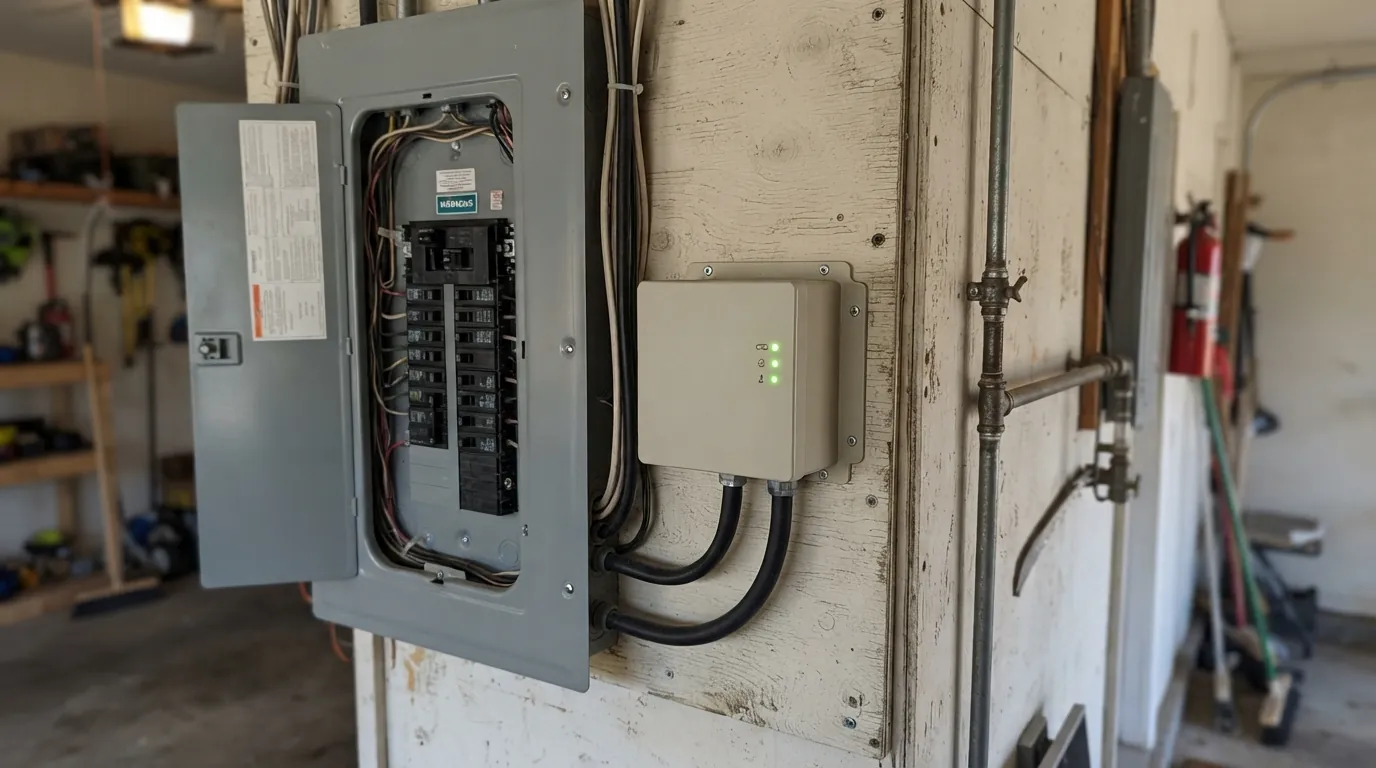
Central Oklahoma sits in one of the most active lightning regions in the country; the Oklahoma Climatological Survey maps cloud-to-ground strike density for the March to May season from two decades of detection data. The spring severe season runs from mid-April into early June, and storms often come with outages, which bring their own switching surges when power returns.
Modern houses are also more vulnerable than older ones. Variable-speed HVAC equipment, touch-panel appliances, smart thermostats and networked electronics all rely on circuit boards that tolerate far less than the incandescent bulbs and mechanical switches of the past.
What it costs
A 2026 cost guide lists a panel-mounted whole-home surge protector at about $300 to $600 installed. That is roughly the price of one replacement HVAC control board, and less than many appliance repairs. Installation usually takes about an hour and needs a free two-pole space in the panel.
A Type 1 protector at the meter base, for homes with overhead service, generators or a history of lightning damage, adds cost and requires the utility to pull the meter. Plug-in protectors at the television and computers are a small additional cost.
What it cannot do
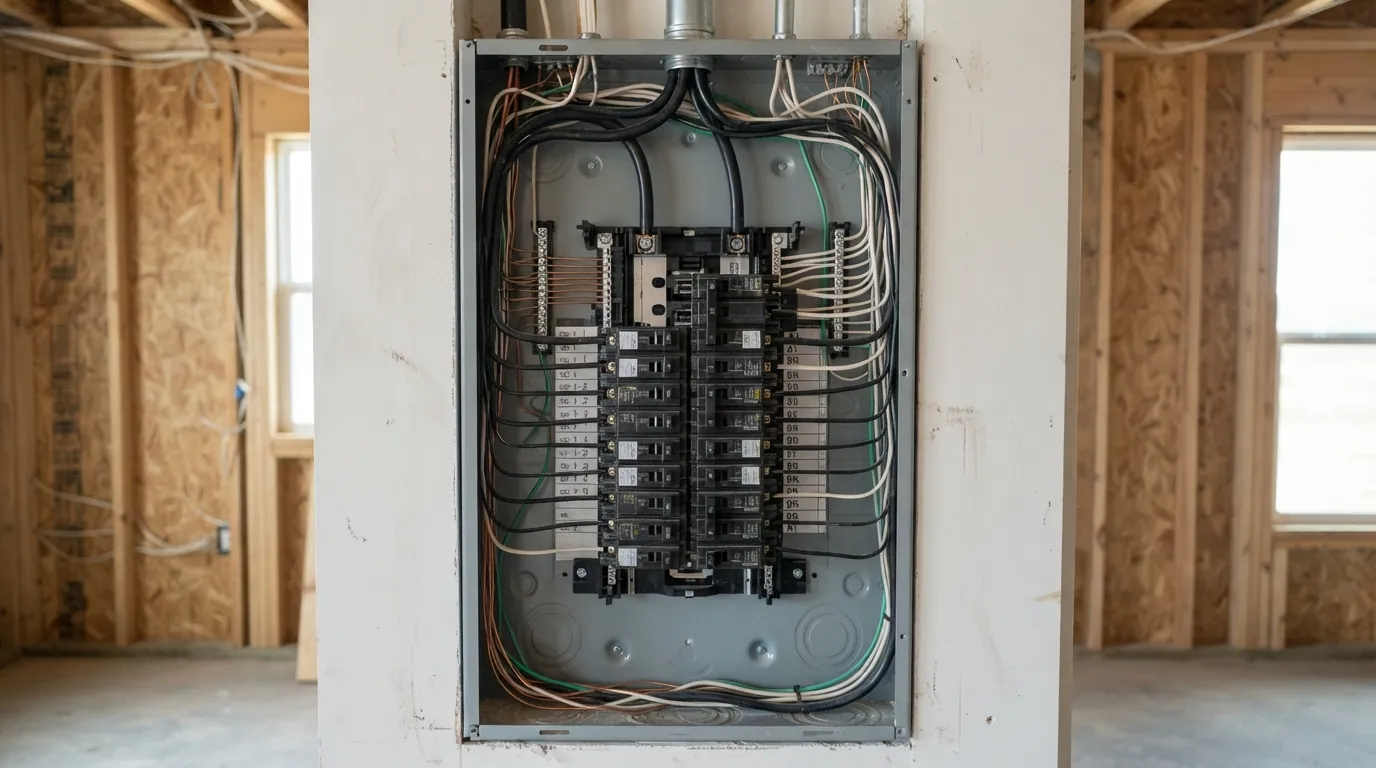
No surge protector stops a direct lightning strike on the house; the energy is simply too large. A panel protector also cannot stop surges generated inside the house downstream of it, such as a motor on the same circuit as a computer, which is why plug-in protectors at sensitive electronics still matter.
It also relies on the grounding system. A surge protector diverts energy to ground, so a missing ground rod, a corroded clamp or a broken bonding jumper can leave it with nowhere to send the surge. Checking the grounding is part of a proper install.
How to layer it
The best protection comes in layers. A Type 2 protector at the main panel handles surges arriving on the service and protects every circuit. Quality plug-in protectors, with a listed joule rating and clamping voltage, protect televisions, computers and network gear from what gets through and from internal surges. Homes with overhead service or a standby generator can add a Type 1 protector at the meter.
Remember that plug-in strips wear out, and many cheap power strips are not surge protectors at all. Replace strips after a big storm or every few years.
Ready to stop replacing circuit boards?
Call to book a whole-home surge protector. Most installs take about an hour.
Signs you already need one
If several devices failed after a storm, if lights flicker when the AC starts, or if you have replaced an HVAC board, a garage door opener or a router more than once, the house is already taking surges. So is any home with expensive HVAC equipment, a home office, or medical or security equipment that must stay up.
Surges that start inside the house
Not every surge comes from lightning or the utility. Large motors and compressors in the house, the air conditioner, refrigerator and well pump, create smaller transients every time they cycle on and off. Each one is minor, but electronics take thousands of them over the years.
A whole-home device at the panel catches the large surges from outside; point-of-use protectors near sensitive equipment handle the smaller ones generated inside. That is the reason a layered approach outperforms either piece alone.
Cable, phone and network lines
Surges do not only arrive on the power wires. Coaxial cable, phone lines and outdoor network cable can carry a surge straight into a television, modem or router, bypassing a perfect panel protector.
The fix is bonding those services to the same grounding point as the electrical system where they enter, and using point-of-use protectors that cover the data lines as well as the plug. Ask your electrician to check that bonding while the surge protector is going in.
Reading the warranty fine print
Many surge protectors come with a connected-equipment warranty. Those warranties usually carry conditions: installation by a qualified electrician, proper grounding, a claim within a set time, and sometimes proof that the protected equipment was plugged in at the time.
Read them before relying on them. The real value of a surge protector is equipment that never gets damaged, not a claim afterward.
Choosing a good unit
Look for a surge protector rated for your service size, with a surge current rating in the tens of kiloamps, a status indicator that shows when it has absorbed a large surge, and a manufacturer connected-equipment warranty. Mount it as close to the main breaker as the panel allows, with short leads, which is what makes it effective.
Related services
Where this guide leads
Whole-Home Surge Protection
Type 2 panel-mounted SPD.
Whole-Home Surge Protection detailsGrounding & Bonding Repair
Ground rod and electrode system.
Grounding & Bonding Repair detailsStorm Damage Electrical Repair
Downed service drop.
Storm Damage Electrical Repair detailsQuestions
Quick questions on this topic
For most Oklahoma City homes, yes. It costs about $300 to $600 installed in 2026 guides and protects every circuit.
Against nearby strikes and induced surges, yes. Nothing stops a direct strike.
Yes. Plug-in protectors at electronics are the second layer.
Until it absorbs a large surge; the status light tells you when it needs replacing.
Yes. We check the grounding as part of the install.
Keep reading
More guides from the same desk
Standby vs portable generator
Choosing backup power in Oklahoma City?
Read the guideWhat a panel upgrade costs
How much does a 200 amp panel upgrade cost in Oklahoma City?
Read the guideFederal Pacific and Zinsco panels
Federal Pacific or Zinsco panel in your Oklahoma City home?
Read the guide